
Creosote is the dark, flammable residue that condenses inside your flue every time you burn wood. A little builds up in a single season; left alone, it hardens into a stubborn coating that a chimney can no longer shed on its own. Because creosote is the fuel a chimney fire feeds on, removing it is the single most important thing you can do to keep a wood-burning fireplace or stove safe. Chimney creosote removal is the professional process of measuring how much has accumulated, identifying its stage, and clearing it with the right tools for that hardness. If you smell a sharp, smoky, tar-like odor, see black flakes falling into the firebox, or simply haven't had the flue looked at in a year or more, this is the service you're looking for.
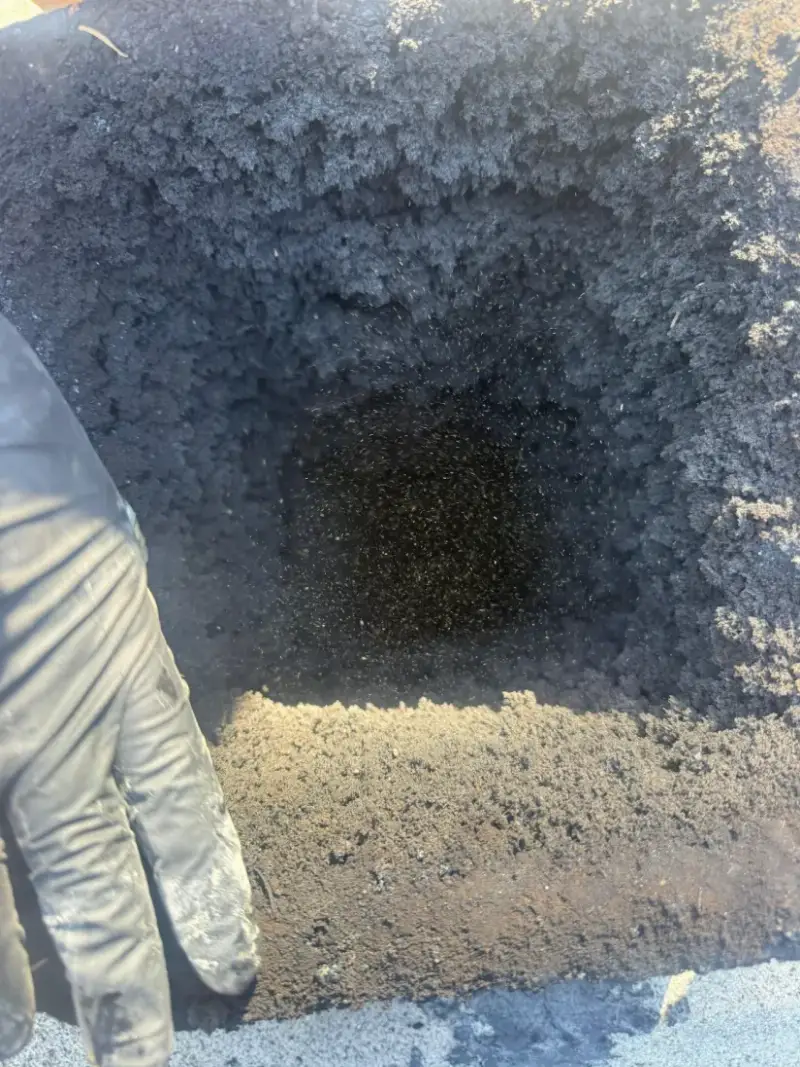
What creosote is and why it forms
When wood burns, it releases smoke, water vapor, and unburned gases. As those gases rise into the cooler upper flue, they condense and stick to the walls as creosote. Slow, smoldering fires, unseasoned or wet wood, and a cold flue all make more of it. In your region, where damp air and long, cool burning seasons are the norm, flues rarely stay hot and dry enough to fully self-clean, so buildup tends to accumulate faster than many homeowners expect.
To understand the residue itself in more detail, see what creosote is and why it's dangerous.
The three stages of creosote
How creosote is removed depends entirely on how far it has hardened. The fire-safety standard (NFPA 211) recognizes three general stages:
- First-degree (light): A dusty, flaky soot that a standard brush and rotary cleaning clear readily. This is the ideal time to have it removed.
- Second-degree (tar-like): Harder, shiny, crunchy flakes that a simple brushing may not fully lift. This stage typically calls for rotary tools and sometimes a chemical treatment applied first to loosen it.
- Third-degree (glazed): A dense, hardened, glass-like coating bonded tightly to the flue. This is the most dangerous and the hardest to remove. A standard sweep alone often can't clear it; specialized tools and professional-grade treatments are required, and in some cases the deposit cannot be fully removed and the liner condition must be evaluated on-site.
For a closer look at these categories, read the types of creosote in a chimney and whether glazed creosote can be removed.
Signs you may need creosote removal
- A strong, tar-like or smoky smell, especially in warm or humid weather
- Black, flaky debris falling into the firebox or on the damper
- A thick, shiny, or crusty black coating visible on the flue walls or damper
- Fires that are hard to start, burn sluggishly, or smoke back into the room
- It has been a year or more since your last inspection or cleaning
Several of these overlap with draft and airflow problems. If smoke is entering the room, this guide on smoke coming back into the house can help you describe what's happening when you call.
What to expect during the service
Every visit begins with an inspection, because we can't safely choose a removal method without seeing the flue. Here's the typical process:
- Inspect and measure. We assess how much creosote is present and identify its stage, often with a camera for glazed or hard-to-see deposits.
- Protect your home. We set up drop cloths and containment and use vacuum systems to control soot and dust indoors.
- Remove with the right tool. Light and moderate buildup is cleared with brushes and rotary systems; harder or glazed deposits may need a loosening treatment applied first, then specialized tools.
- Verify. We re-check the flue after removal so you know how much came off and what condition the liner is in.
Wondering how a general cleaning differs from targeted creosote work? Our services overview lays out the related options, and what's included in a professional sweep explains the standard visit in detail.
Why this is a job for a professional
Glazed creosote is stubborn and combustible, the tools that remove it can damage a liner in untrained hands, and the chemical treatments used on hardened deposits need to be matched to the situation. A trained technician also does something a DIY brush can't: evaluate whether the flue liner behind the creosote is sound. Heavy third-degree buildup can hide cracks or damage, and a compromised liner is a safety issue in its own right, as this piece on whether a cracked liner is safe explains. On-site assessment, not a phone-based guess, is the only reliable way to judge liner condition.
your local area context
Our wet, mild climate is hard on chimneys in ways that speed creosote buildup and complicate removal. Cool, damp flues encourage condensation, moisture can react with creosote to accelerate corrosion inside the liner, and long shoulder seasons mean more low-and-slow fires. Timing your creosote removal before the heart of the burning season is the practical move here; see the best time of year for a chimney sweep for how to plan it.
Frequently Asked Questions
Is creosote removal the same as a chimney sweep?
They overlap but aren't identical. A standard sweep removes soot and lighter buildup as part of routine maintenance. Creosote removal is more specific: it's about clearing tar-like or glazed deposits that a routine brushing may not lift, sometimes using treatments and specialized tools. Every visit still starts with an inspection to determine which is needed.
Can all creosote be removed in one visit?
First- and second-degree creosote usually can. Third-degree, glazed creosote is harder: it may require a loosening treatment and specialized tools, and occasionally it cannot be fully removed by cleaning alone. In those cases we assess the flue liner on-site and explain your options rather than guessing.
How much does chimney creosote removal cost?
It depends on the stage and amount of buildup, the flue's size and access, and whether glazed deposits require special treatment. Light buildup is at the lower end; heavy or glazed creosote costs more because of the extra tools and time. Because every chimney differs, request a quote for an accurate figure rather than relying on a flat rate.
How often should creosote be removed?
There's no fixed interval, which is why the standard is an annual inspection: a professional looks at the flue each year and removes creosote whenever the amount present warrants it. How fast it builds depends on how much you burn, your wood, and your burning habits.
Can I remove glazed creosote myself with a brush?
No. Glazed, third-degree creosote is bonded to the flue and won't come off with an ordinary brush. The tools and chemical treatments used to remove it can damage a liner if misapplied, and heavy buildup can conceal liner damage that only an on-site inspection will catch. This one is best left to a trained technician.