
By the Miles Chimney Sweep team · Published Aug 21, 2026
A professional chimney sweep has four parts: protecting your home (drop cloths at the hearth, a vacuum running for dust control), mechanically cleaning the full length of the flue with rods and brushes sized to your chimney, clearing the smoke chamber and smoke shelf above the firebox, and finishing with a visual once-over of the system's accessible parts. If any of those four is missing, you didn't get a complete sweep.
Here's the part that surprises most homeowners: the brushing is only half the visit. The other half, the looking, is where real problems get caught early, and it's the reason sweeping and inspection are two different services that work best together.
The Four Parts of a Complete Sweep
1. Containment comes first
Before a brush ever enters the flue, the work area gets protected: drop cloths across the hearth, and the fireplace opening sealed or a vacuum running so soot stays out of your living room. This isn't a courtesy, it's a competence signal. The Chimney Safety Institute of America notes that trained sweeps are equipped to clean an entire system without leaving a mess behind, so a tech who starts brushing with nothing on your floor is telling you something about the rest of the job.
2. Mechanical cleaning of the full flue
The core of the service is physical: rods and brushes matched to your flue's size, shape, and material, run the entire length of the chimney to scrub soot and creosote off the walls. The loosened deposits are then vacuumed out rather than left where they fall.
3. The smoke chamber and smoke shelf
This is the step that separates a complete sweep from a quick one. The smoke chamber is the funnel-shaped area above your firebox, and the smoke shelf behind the damper is where much of what gets knocked loose, creosote flakes, leaves, sometimes old nesting debris, actually lands. CSIA's homeowner guidance is explicit that a proper sweeping covers the flue and the smoke chamber, not just the straight run of pipe.
4. Firebox, damper, and a condition check
The visit ends at the bottom: the firebox is cleaned, the damper is checked for smooth operation, and the tech looks over the accessible parts of the system for obvious cracks, gaps, and blockages. This look-over is where problems tend to surface early, while they're still small and inexpensive.
What a Standard Sweep Doesn't Include
A sweep removes deposits. It is not, by itself, a camera evaluation of your liner, a repair, or proof that everything hidden inside the masonry is sound. Cracked flue tiles and failing mortar joints often can't be confirmed from a visual glance, that's what a camera-assisted chimney inspection is for, and it's why the two services are usually paired once a year.
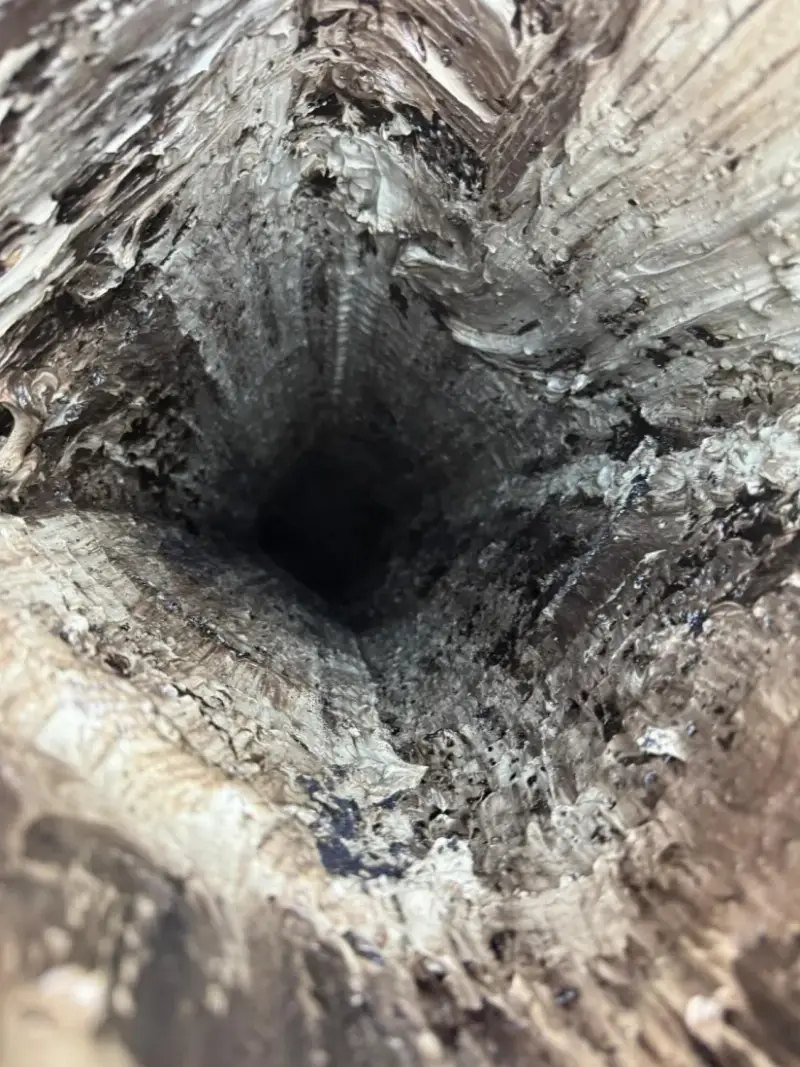
Glazed creosote is the other exception. Once creosote hardens into a shiny, tar-like layer, ordinary brushes won't take it off, and it typically requires professional creosote removal as a separate, more involved service.
Red Flags of a Rushed Job
- In and out in minutes, with no vacuum running and nothing protecting your floors
- The smoke chamber and smoke shelf were never touched
- No word on the condition of your flue, just "you're all set"
- No notes, photos, or paperwork you can keep for your records
- A hard push toward major repairs with nothing shown to justify it
What You Can Safely Do Before the Visit
- Stop burning at least 24 hours ahead so the system is fully cool
- Clear the mantel and move rugs and furniture a few feet back from the hearth
- Write down symptoms you've noticed, smoke odor on rainy days, sluggish draft, noises in the flue
- Keep pets in another room while equipment is running
What you shouldn't do: climb on the roof to "check things first." Rooftop work is squarely professional territory, and there's nothing up there a homeowner needs to verify in advance.
How to Make Your Next Sweep Faster and Cheaper
The amount of creosote in your flue mostly comes down to what you burn. The EPA's Burn Wise guidance is to burn only dry, split wood seasoned to below 20 percent moisture, which takes at least six months of proper storage. That last part matters around your area: wood stacked uncovered through a your region fall rarely gets dry enough, so store it off the ground with only the top covered and give it a full dry season. Wet wood burns cool and smoky, and cool smoke is exactly what condenses into creosote.
Then keep the cadence: an inspection every year, a sweep whenever deposits call for one. For a deeper look at timing, see how often your chimney should be swept.
Frequently Asked Questions
How long does a professional chimney sweep take?
It varies with buildup and access, commonly under an hour for a routine sweep, longer when deposits are heavy or the chimney is hard to reach. Be more suspicious of a visit that seems too short than one that runs long: a few minutes of brushing with no containment and no condition check isn't a complete service.
Will chimney sweeping make a mess in my house?
It shouldn't. Professional sweeps work with drop cloths and vacuum dust control, and CSIA notes that trained technicians are equipped to clean a chimney without dirtying the home. A messy sweep reflects the company, not the service.
Does a gas fireplace need this kind of service too?
Gas burns cleaner than wood, so heavy creosote isn't the usual concern, but gas venting still needs an annual inspection. Blockages, corrosion, and animal nests don't care what fuel you burn, and a blocked gas vent can push combustion gases back into the house.
What happens if the sweep finds glazed creosote?
Glaze is creosote that has hardened into a dense, shiny layer that standard brushes can't remove, and it's the most flammable form, so it shouldn't be left in place. Removing it is a separate process using specialized tools or treatments, and cost depends on how severe the glazing is, along with access and regional pricing.
Is a store-bought brush kit the same as a professional sweep?
The ground-level parts, ash removal, firebox cleanup, are fine to do yourself once everything is cold. A full sweep is harder than it looks: brushes must match the flue exactly, the smoke shelf is awkward to reach, deposits need to be evaluated as they come off, and roof access is genuinely dangerous. Stay off the roof and leave the full service to a pro.