
By the Miles Chimney Sweep team · Published Aug 21, 2026
You can get a rough idea by looking at the deposits just inside the firebox and around the damper, where creosote is most visible. Fire experts describe three stages. Stage 1 is loose, flaky black or gray soot that brushes off easily. Stage 2 is harder, crunchy, tar-like flakes with a shiny edge. Stage 3 is a slick, glazed, hardened coating that looks almost painted on. The higher the stage, the more flammable and the harder it is to remove.
Here is the honest catch: the small patch you can see near the damper rarely tells the whole story. Creosote often changes character higher up the flue where you cannot see, so the appearance at the bottom is a clue, not a verdict. A proper reading takes a light, a mirror or camera, and trained eyes on the full flue.
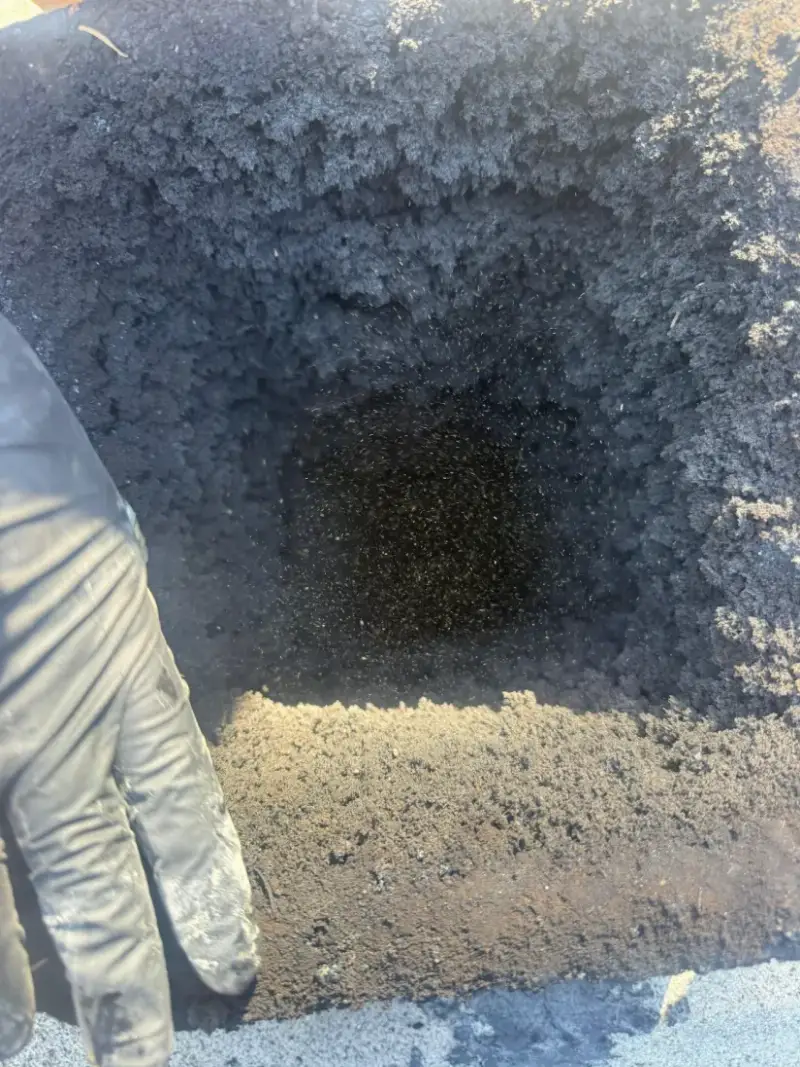
The three stages, and what each one looks like
Creosote is the residue left when wood smoke does not burn completely and cools inside the flue. As the U.S. EPA's Burn Wise program explains, unseasoned wood and a smoldering, air-starved fire produce more smoke, and more smoke means more deposit. Over time that deposit hardens through three recognizable stages.
Stage 1, flaky and sooty
- Looks like dull black or gray dust and loose flakes.
- Light, powdery texture; a stiff brush moves right through it.
- The least dangerous stage, but it still burns.
Stage 2, crunchy and tar-like
- Harder, thicker flakes with a shiny or tarry look.
- Feels crunchy and porous rather than powdery.
- Denser and more flammable than Stage 1; needs more aggressive rotary tools to remove.
Stage 3, glazed and shiny
- A slick, hardened, glass-like coating that looks almost painted onto the flue wall.
- Often tied to burning wet wood, a cool chimney, or repeated slow, smoky fires.
- The most flammable stage and the toughest to remove, a standard sweep frequently cannot touch it.
What you can safely check yourself
From inside the room, with the fire cold and out, you can shine a flashlight up past the open damper and note the color and texture of what you see. Loose black dust, crunchy tar flakes, or a wet-looking shine each point toward a different stage. That is the limit of safe home checking.
Do not climb onto the roof, reach deep into the flue, or try to scrape glaze yourself. Roof access and flue work are genuinely hazardous, and glazed creosote is stubborn enough that DIY attempts often just polish it smoother. Judging severity by eye also misses what is happening in the parts of the flue you cannot reach.
Warning signs that buildup is getting serious
- Fires that are hard to start or keep going, or that smoke back into the room, often a sign the flue is restricted. (More on struggling fires here.)
- A strong, tarry, campfire-like odor from the fireplace, worse in humid weather.
- Black, oily flakes falling into the firebox.
- A dense, rumbling, or roaring sound during a fire, that can indicate a chimney fire in progress, which needs immediate attention.
Any smoke entering the room is worth investigating, never something to wave off as normal.
The professional solution
Because appearance at the damper only hints at the real condition, the reliable answer is a professional inspection. A technician evaluates the full flue, often with a camera, identifies the stage accurately, and recommends the right method, brushing for Stage 1 and 2, or specialized treatment for glaze. Learn what creosote is and why it matters in this overview, and what happens with the toughest deposits in can glazed creosote be removed. If buildup is heavy, a standard sweep may not be enough, see when a chimney is too dirty for a standard sweep.
Prevention keeps you in Stage 1
- Burn only dry, well-seasoned wood, the single biggest factor, per the CSIA and EPA.
- Build hot, bright fires instead of slow smoldering ones.
- Give the fire enough air; a starved fire makes far more creosote.
- Keep to an annual inspection so deposits are caught before they harden into glaze.
Remember the standard: your chimney should be inspected every year, and cleaned whenever the deposits or condition call for it. Those are two different things, and the inspection is what tells you which.
Frequently Asked Questions
Can I identify the creosote stage just by looking near the damper?
You can get a rough idea of color and texture there, but not a full assessment. Creosote often changes higher in the flue where you cannot see, so a damper-level look is a clue only. An inspection with a light or camera is needed to read the whole flue accurately.
Is glazed (Stage 3) creosote something I can scrub off myself?
No. Glazed creosote is hardened and slick, and a standard brush usually cannot remove it, DIY scraping often just smooths it. It typically requires specialized professional treatment, and severity should be judged on-site, not from the hearth.
Does the stage of creosote change how flammable it is?
Yes. All stages burn, but the danger rises with the stage. Stage 3 glaze is the most flammable and concentrated, which is part of why higher-stage buildup is treated more urgently.
Why does my chimney seem to build creosote so fast?
Burning unseasoned or wet wood, running slow smoldering fires, and a cool flue all increase smoke and deposit. The damper-level appearance can help, but a technician can confirm the cause and current stage during an inspection.
How often should I have creosote checked?
Have the chimney inspected annually, and cleaned whenever the deposits or condition require it. Annual inspection is the standard that catches buildup before it hardens into the harder-to-remove stages.