
By the Miles Chimney Sweep team · Published Aug 21, 2026
Creosote is the dark, tar-like residue that wood smoke leaves behind on the inside of your chimney. When you burn wood, the smoke carries unburned gases and tiny particles upward. As that smoke hits the cooler surfaces of the flue, it condenses and sticks to the walls, hardening layer by layer over a season of fires. It is dangerous for one simple reason: creosote is highly combustible. Once enough of it accumulates, a hot fire or a stray ember can ignite it, and a chimney fire can reach temperatures high enough to crack a liner or spread into the house.
The tricky part is that creosote builds up quietly. You cannot see most of the flue from your living room, and the buildup that matters most is often the buildup you never notice until an inspection or a sweep reveals it.
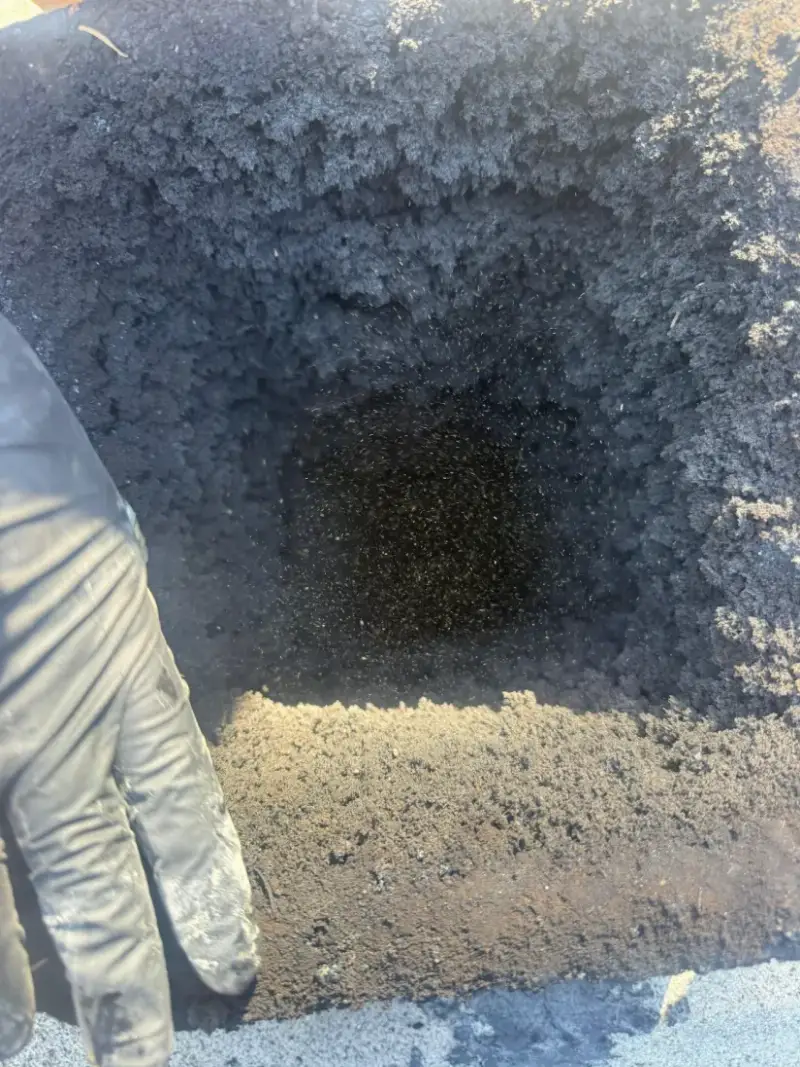
Where creosote comes from
Every wood fire produces smoke, and smoke is not just "air." It carries water vapor, unburned wood gases, and fine particles that did not fully combust. When that warm smoke rises into a cooler flue, the gases and particles condense on the walls the same way steam fogs a cold mirror. What settles there is creosote.
Three conditions make creosote build up faster:
- A cool flue. When smoke cools too quickly, it condenses sooner and sticks more. Short, smoldering fires and an oversized or exterior flue can both keep temperatures low.
- Unseasoned or wet wood. Burning wood with high moisture content forces the fire to spend energy boiling off water instead of producing heat, which means cooler, smokier fires. The EPA recommends burning wood seasoned at least six months, at a moisture content below 20 percent.
- Restricted air. A damper that is not open far enough, or a fire starved of combustion air, produces slow, smoky burning that deposits more creosote than a bright, hot fire.
The three degrees of creosote
Chimney professionals and NFPA 211 describe creosote in three stages, and the distinction matters because each one behaves differently and requires a different response.
- First degree. A loose, flaky soot that a standard brush removes during a routine sweep. This is the easiest to manage and the most normal to find.
- Second degree. A shinier, crunchy, tar-flake buildup that is harder and more stubborn. It usually calls for more aggressive rotary tools rather than a simple brush.
- Third degree (glazed). A hard, shiny, tar-like glaze coating the flue. This is the most hazardous form. It is concentrated fuel that ignites readily, and it does not brush off. Removing it is a specialized job, and in some cases the flue is too far gone for a standard sweep to handle.
Only an on-site look, often with a camera, can tell you which degree you are dealing with and how much is present. Nobody can diagnose glazed creosote from a photo or a description over the phone. If you want to understand the stages in more depth, see our companion article on the types of creosote in a chimney.
Why it is genuinely dangerous
Creosote is fuel sitting inside a structure that routinely carries fire and hot gases. When it ignites, a chimney fire can burn intensely, and it can crack tile liners, damage masonry, or find a path to nearby framing. Heavier buildup also narrows the flue, which restricts draft and can push smoke back into the room. The most unsettling detail is that a chimney fire does not always announce itself. Some are slow and quiet, leaving damage a homeowner never noticed. We cover that in whether a chimney fire can happen without the homeowner knowing.
Warning signs worth taking seriously
- A strong, tarry, or smoky odor from the fireplace, especially in warm or humid weather.
- Fires that are hard to start or keep going, or smoke drifting back into the room.
- Black, flaky, or shiny buildup visible just inside the firebox or damper area.
- Dense smoke from the fires you burn, which signals incomplete combustion.
Any of these is a reason to have the chimney looked at. Smoke entering the room is never "just a nuisance" to live with; it points to a draft or buildup problem that deserves investigation.
What you can safely do, and what belongs to a professional
You can control the biggest input yourself: burn only well-seasoned, dry wood, build hotter and brighter fires rather than slow smoldering ones, and make sure the damper is fully open. These habits slow creosote formation dramatically. What you should not do is climb onto the roof or attempt to scrape glazed creosote out of a flue yourself, as neither is safe or reliable from the homeowner side.
The professional side is inspection and removal. The widely recommended standard is an annual chimney inspection, with cleaning performed when the amount and condition of deposits call for it. Inspection and cleaning are not the same thing: the inspection tells you what is there, and the cleaning addresses it if warranted. For how frequently sweeping tends to be needed, see how often your chimney should be swept. If a technician finds heavy or glazed buildup, removal may require specialized tools or treatment beyond a standard sweep, and that is a job to request a quote for rather than tackle alone.
Prevention that actually works
- Burn wood seasoned at least six months, ideally under 20 percent moisture.
- Favor hot, well-fed fires over long, smoky, low-air burns.
- Open the damper fully and give the fire enough combustion air.
- Keep to an annual inspection so buildup is caught before it reaches the glazed stage.
Creosote is a normal byproduct of burning wood. The goal is not to eliminate it entirely, which is impossible, but to keep it in the first-degree range where a routine sweep handles it easily, and to never let it quietly climb toward the dangerous end of the scale.
Frequently Asked Questions
Does every wood fire create creosote?
Yes. Any wood fire produces smoke, and smoke leaves some residue as it cools in the flue. The goal is not zero creosote but keeping it in the light, first-degree range that a normal sweep removes, rather than letting it harden into stubborn or glazed buildup.
How quickly can creosote build up to a dangerous level?
It depends heavily on how you burn. Wet wood, slow smoldering fires, and restricted air can build meaningful creosote within a single active season, while good burning habits keep it minimal for much longer. Because the rate varies so much, an annual inspection is the reliable way to know where you stand.
Is a thin layer of creosote still a problem, or only heavy buildup?
Even a thin layer deserves attention, because creosote is flammable at any thickness and buildup is cumulative, this season's light coat becomes next season's heavier one. The goal is to catch it while it is still the loose, first-degree type a routine sweep removes, rather than waiting until it hardens into stubborn or glazed buildup.
Is soot the same thing as creosote?
They are related but not identical. Soot is the fine black powder left by incomplete combustion, while creosote is the tar-like condensed residue that hardens onto the flue walls. Both come from burning wood, but creosote is the flammable buildup that can fuel a chimney fire.
Does creosote form faster in some chimneys than others?
Yes. A cool, oversized, or exterior flue lets smoke condense sooner, and slow, smoky, low-air fires deposit far more than hot, well-fed ones. Two homes burning the same wood can build creosote at very different rates depending on the flue and how the fires are burned.