
By the Miles Chimney Sweep team · Published Aug 21, 2026
No. If you know, or even suspect, that your chimney liner is cracked, the fireplace should stay out of service until the flue has been examined from the inside, usually with a camera. The liner is the sealed wall between a live fire and the wooden structure of your house, and a crack means that wall is breached in a place you cannot see.
Here is the part that surprises most homeowners: a cracked liner rarely misbehaves in ways you would notice. The fire lights, the smoke rises, the room stays clear. The failure moves sideways instead, letting heat reach hidden framing and letting combustion gases drift into wall cavities and living space. That is exactly why this is a stop-and-inspect problem, not a watch-and-wait one.
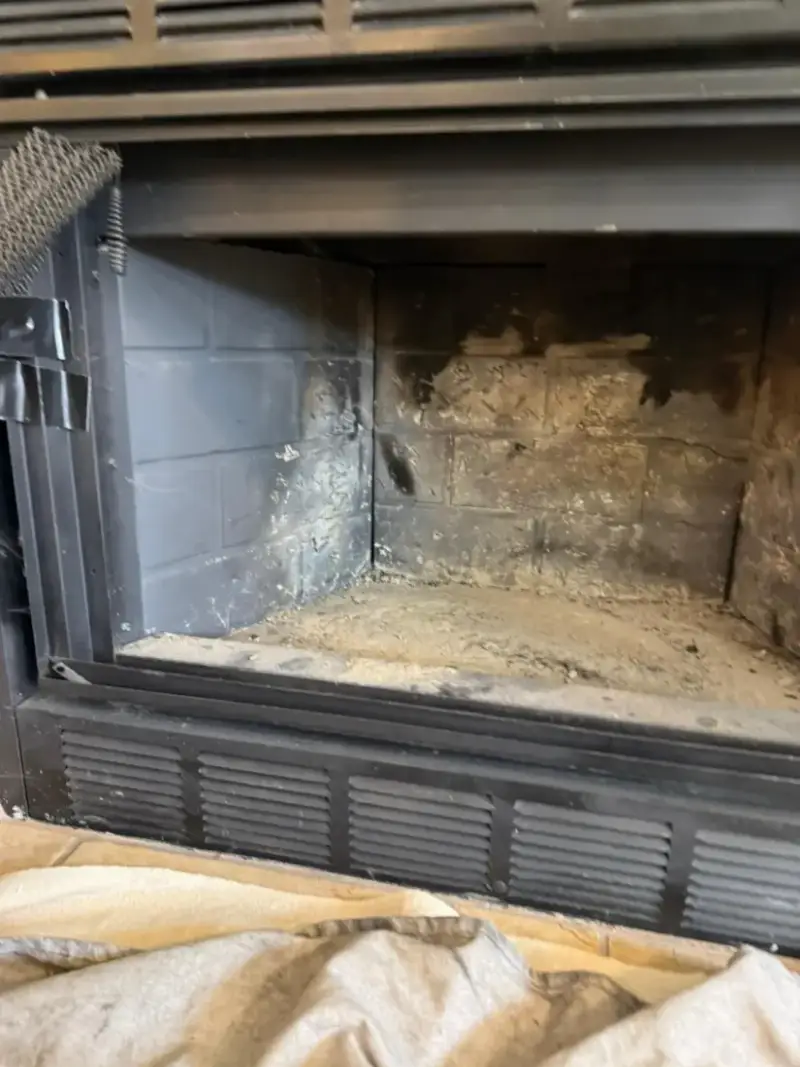
What the liner is doing while your fire burns
A flue liner has three jobs, and all of them are safety jobs. It keeps the intense heat of flue gases from reaching the wood framing that often sits just inches from the chimney. It gives smoke and combustion gases a sealed, correctly sized path out of the house. And it protects the brick and mortar from acidic combustion byproducts that would otherwise eat the chimney from the inside out.
The heat-transfer job is the one people underestimate. When the old National Bureau of Standards tested masonry chimneys without liners, heat passed through the chimney wall quickly enough to ignite nearby woodwork within hours. A cracked liner is not as bad as no liner, but every crack is a gap in that same defense, at a spot nobody chose.
How liners crack in the first place
- Chimney fires. When creosote ignites inside the flue, clay tiles heat suddenly and unevenly, and the thermal shock splits them. Many chimney fires are slow and quiet, so the damage often goes unnoticed until an inspection finds it.
- Moisture. Water soaking into masonry weakens tiles and the mortar joints between them. In a damp climate, where chimneys stay damp for months at a time, this is a slow but steady force.
- Acidic flue gases and condensate. Combustion byproducts are corrosive, and gas appliances in particular produce moisture that can flake clay liners apart over years.
- Movement. Settling foundations and seismic shaking, which western your area sees its share of, can crack rigid clay tile that was never designed to flex.
- Age. Mortar joints between tiles erode, opening gaps that behave exactly like cracks.
Why "it still draws fine" is the wrong test
Draft and containment are two different things. Draft is the chimney pulling smoke upward, and a flue with a cracked liner usually still does that well. Containment is the liner keeping heat and gases inside the flue for the entire trip up, and that is what a crack defeats.
Three things can go wrong on the other side of that crack. First, escaping heat reaches framing, and wood that is repeatedly warmed undergoes a slow change that lowers the temperature at which it can ignite, so risk builds across many ordinary fires, not just extreme ones. Second, carbon monoxide can migrate through the breach into the house instead of exiting the top. The CDC notes that CO poisoning symptoms such as headache, dizziness, nausea, and confusion are easily mistaken for the flu, which is part of what makes low-level leaks so dangerous. Third, acidic gases attack the surrounding masonry through the opening, so the crack widens season by season. The Chimney Safety Institute of America points to damaged flue liners as one of the recurring conditions behind carbon monoxide incidents in homes.
Warning signs you might actually notice
- Thin shards or flakes of clay tile in the firebox, on the smoke shelf, or in the cleanout, a symptom sweeps call shaling
- Gritty tile debris that reappears after you have cleaned it out
- A smoky or campfire odor in rooms above or beside the chimney while a fire is burning
- New staining on interior walls or ceilings along the chimney chase
- A carbon monoxide alarm that sounds during or after fireplace use
The uncomfortable truth is that most liner cracks produce none of these clues. Cracks hide between tiles, behind offsets, and on the far side of the flue where no flashlight from the firebox will ever land.
What to do right now, without getting on the roof
- Stop using the fireplace or stove connected to that flue, and leave it out of service until the flue is verified.
- Make sure you have working carbon monoxide alarms on every level and near sleeping areas. The CPSC recommends alarms meeting the UL 2034 standard alongside yearly professional inspection of fuel-burning systems, including chimneys and flues.
- Do not climb onto the roof or lower lights and phones down the flue to look for yourself. Roof work is genuinely hazardous, and a partial view can be falsely reassuring.
- Schedule an inspection that includes a camera scan of the flue interior. Our guide to the three chimney inspection levels explains when a Level 2 with video scanning is called for.
How a cracked liner actually gets fixed
The camera scan determines everything, because the fix depends on what the damage looks like and how far it extends. Limited cracking or eroded joints can sometimes be repaired with resurfacing systems applied inside the existing flue. More widespread damage usually means relining, most often with a stainless steel liner sized to the appliance, and severe structural damage can require masonry work beyond the liner itself. Pricing varies widely with flue height and size, the extent of damage, the repair method, and local labor rates, so treat any number offered before a camera inspection with skepticism and ask for a written scope. If you want a starting point, our chimney liner repair service begins with exactly that interior assessment, or you can request a quote and we will walk you through it.
Keeping the next liner from cracking
An annual inspection is the standard for every chimney, with cleaning done when the inspection finds deposits or conditions that call for it. That rhythm matters here because the two biggest liner killers, chimney fires and moisture, are both preventable. Keeping creosote thin removes the fuel for the thermal shock that splits tiles, and if you are unsure where your flue stands, here is how to tell if your chimney needs cleaning. A proper chimney cap keeps rain out of the flue and keeps birds and other wildlife from nesting where they should not, and fixing crown or flashing leaks early keeps the masonry around your liner dry enough to last.
Frequently Asked Questions
Can I use the fireplace just a few more times before repairing a cracked liner?
No. A single fire can push heat against framing that earlier fires have already made easier to ignite, and carbon monoxide leakage does not scale politely with use. Until a camera inspection establishes what you are dealing with, the safe number of additional fires is zero.
Can a chimney fire crack my liner without me knowing a fire ever happened?
Yes, and it is common. Many chimney fires burn slowly and quietly rather than roaring, so the first evidence is often cracked or spalled tiles found at a later inspection. If you ever notice a sudden intense burn, loud rumbling, or dense smoke from the chimney top, treat the flue as damaged until it is scanned.
Will a new chimney cap or damper repair make a cracked liner safe to use?
No. Caps and dampers control what enters and exits at the top and bottom of the system, but a liner crack is a breach in the wall of the flue itself, often midway up the chimney. Nothing bolted to either end changes what escapes through that opening while a fire burns.
Does a cracked liner mean my whole chimney needs to be rebuilt?
Usually not. Many cracked liners are handled by resurfacing the flue interior or installing a new stainless steel liner inside the existing chimney. Full rebuilds are reserved for chimneys with structural masonry damage, which is exactly what the camera inspection is there to identify or rule out.
I only burn gas logs. Does a cracked liner still matter?
Yes. Gas burns cleaner than wood, but its byproducts include carbon monoxide and corrosive moisture, and a cracked liner gives both a path into the house. Gas flues also deteriorate in their own way, since the acidic condensate can flake clay tiles apart over time, so annual inspection applies to gas appliances too.