
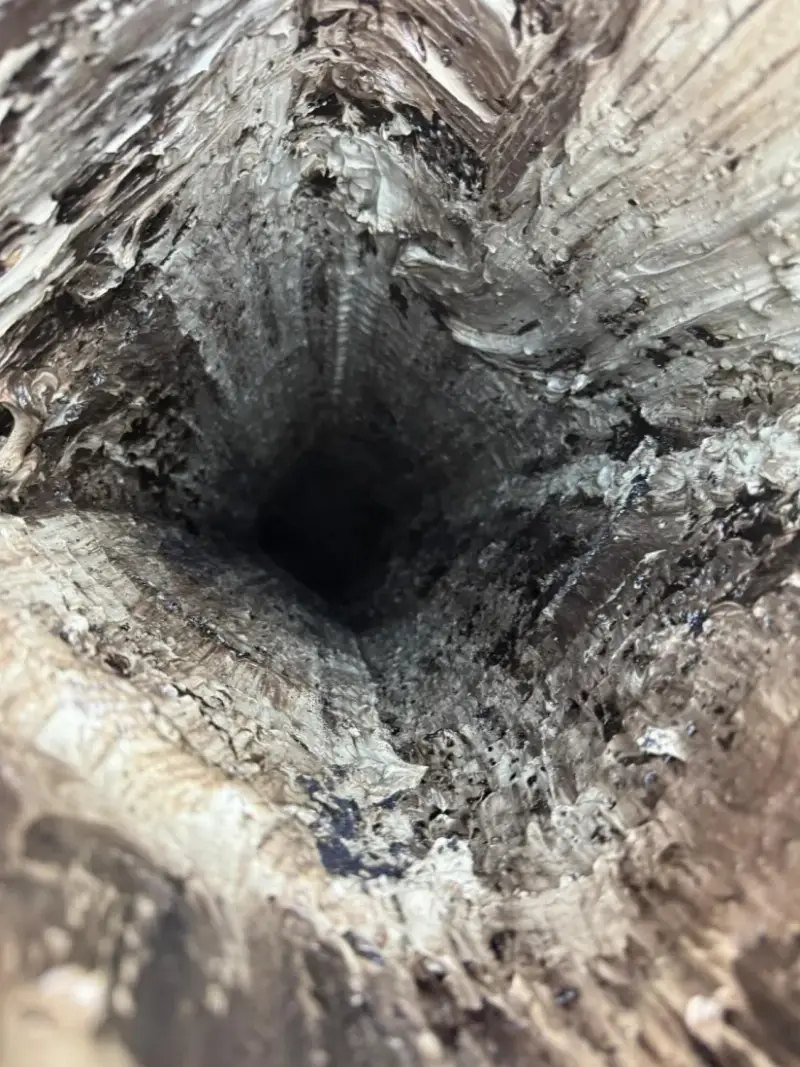
Chimney deep cleaning is a more aggressive level of cleaning for flues coated in stubborn, hardened creosote that a standard brush-and-rod sweep can't fully remove. Instead of a hand brush alone, a technician uses rotary tools, a flexible cable with rotating whips or chains driven by a drill, to scour flaky, tar-like second-degree creosote off the flue walls. If your chimney hasn't been serviced in several years, you burn frequently, or a recent inspection turned up thick, crusty deposits, this is the service that gets the flue back to a safe, usable condition. It's not the routine annual sweep, and it's not the same as removing glazed third-degree creosote, which needs its own approach.
What chimney deep cleaning includes
Deep cleaning starts the same way any thorough service does, with an inspection of the flue so the technician can see what's actually on the walls and choose the right tools. From there, the work goes further than a routine sweep:
- Rotary cable cleaning: a powered flexible rod fitted with rotating whips, chains, or a rotary loop scrubs the flue walls to lift hardened, flaky creosote that a straight brush can't dislodge.
- Full-length flue coverage: the tool is worked along the entire flue so buildup isn't left behind in sections a brush would skip.
- Firebox, smoke chamber, and damper: these areas are cleaned by hand where deposits collect.
- Debris containment: a HEPA vacuum and drop cloths keep soot out of your living space.
- A findings report: after cleaning, the technician can see the bare flue and note anything that needs attention, like a cracked liner or damaged crown.
Signs you may need deep cleaning, not just a sweep
- It's been several years, or you're not sure how long, since the chimney was last serviced.
- A sweep or inspection reported thick, crusty, or tar-like deposits rather than light soot.
- You burn wood often, burn unseasoned or wet wood, or run slow, smoldering fires that produce more creosote.
- You've noticed a strong, tarry smell, poor draft, or fires that are hard to keep going.
What to expect during the visit
The technician sets up floor and hearth protection, inspects the flue, and selects a rotary head matched to your liner type and the deposits present. Rotary cleaning is more involved than a standard sweep, so a heavily loaded flue can take longer. Because the tools are aggressive, this is careful, on-site work, the flue condition and liner material dictate what's safe to use, which is one reason it isn't a DIY job. When the flue is clean, you'll get a straightforward account of what was found and whether any repairs are worth planning. To see how a routine visit compares, our guide to what's included in a professional chimney sweep lays out the baseline service.
Deep cleaning vs. glazed creosote removal
Rotary deep cleaning is the right tool for second-degree creosote, the flaky, hardened, tar-like layer. It does not, on its own, reliably remove third-degree glazed creosote, the shiny, baked-on coating that runs like hardened tar down the flue. Glaze usually has to be broken down with a professional creosote treatment first, and in severe cases it points to a liner that needs evaluation. If your buildup is in that category, read can glazed creosote be removed to understand the difference, and let the on-site inspection confirm which service you actually need.
Why a professional handles it
Rotary tools cut both ways: powerful enough to clear hardened creosote, and capable of damaging a fragile clay tile or metal liner if used incorrectly. A trained technician matches the head and speed to your flue, works the cable safely, and reads the flue condition as the deposits come off, often confirming borderline areas with a camera. Chimney work also touches fire and carbon-monoxide safety, so the standard set by groups like the Chimney Safety Institute of America is professional inspection and cleaning rather than guesswork from the hearth. You can browse everything we offer on our services page.
your local area conditions
Our wet, cool climate works against chimneys in two ways. Long, damp burning seasons mean more frequent fires and more creosote accumulation, and persistent moisture can worsen any masonry or liner issues a deep cleaning uncovers. That combination is why homeowners who burn regularly often find buildup has crossed from light soot into the hardened range between services.
Frequently Asked Questions
How is deep cleaning different from a standard chimney sweep?
A standard sweep uses brushes and rods to clear loose soot and light, first-degree buildup. Deep cleaning adds rotary tools, a powered cable with rotating whips or chains, to break loose the hardened, flaky second-degree creosote that a brush can't remove. Which one your chimney needs is determined on-site, not in advance.
Will deep cleaning remove glazed, shiny creosote?
Not by itself. Rotary deep cleaning targets flaky, hardened second-degree creosote. The glassy, baked-on third-degree glaze usually has to be broken down with a professional creosote treatment first, and heavy glaze can signal a liner that needs evaluation. An on-site inspection determines the right approach.
Can rotary cleaning damage my chimney liner?
In untrained hands, yes, that's why it isn't a DIY job. Rotary heads are aggressive and can crack a fragile clay tile or scar a metal liner if the wrong tool or speed is used. A professional matches the head to your specific liner and reads the flue condition as the work progresses.
How do I know if I need deep cleaning instead of a routine sweep?
Common signs include several years since the last service, a report of thick or tar-like deposits, frequent burning of wet or unseasoned wood, a strong tarry odor, or poor draft. The reliable answer comes from an inspection, since the amount and type of creosote can only be assessed by looking at the flue.
How often should this be needed?
Deep cleaning isn't a set schedule, the standard is an annual inspection, with cleaning done whenever deposits warrant it. Most homes need only a routine sweep each year; deep cleaning becomes necessary when buildup has been allowed to harden, often after missed years or heavy use.