
Chimney crown repair is the work of sealing a cracked but structurally sound crown - the sloped concrete or mortar slab that caps the top of the masonry and sheds rain away from the flue. Repair means cleaning the surface, patching hairline and moderate cracks with a masonry patch, and brushing on a flexible, waterproof crown coat that bridges small gaps and flexes with temperature swings instead of cracking. It is the right fix when the crown is essentially intact and the damage is limited to surface cracking, not crumbling or structural failure. Catching it at the crack stage keeps water out of the joint between crown and flue, protecting the brick, mortar, and the ceilings below. Note the crown is the slab itself, not the metal cap that sits over the flue opening.
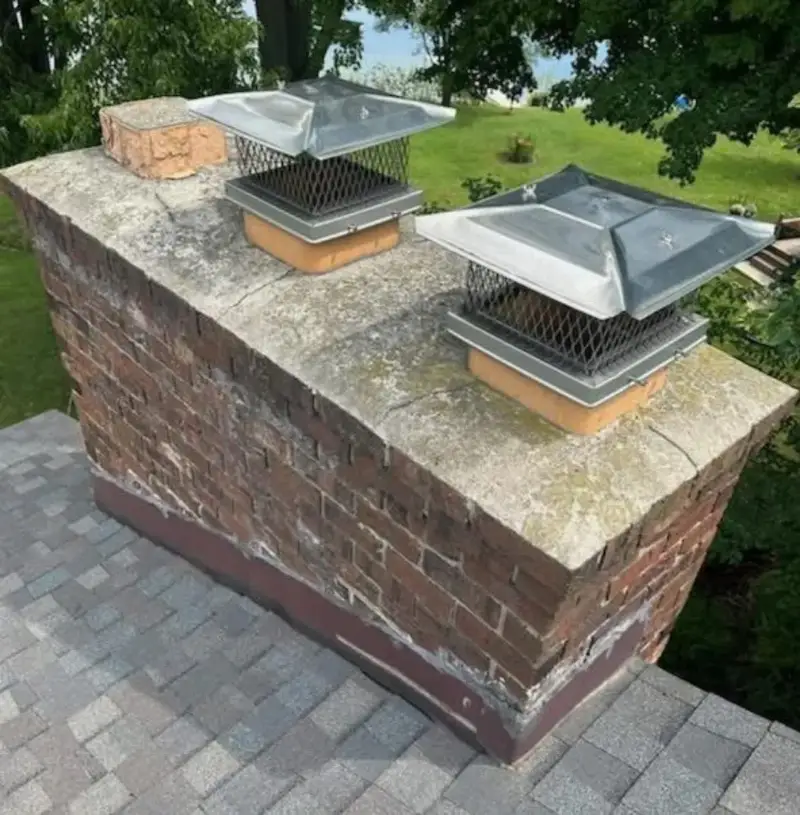
What crown repair covers
The crown takes the full brunt of wet weather - rain, then freeze-thaw cycles that pry at any opening. Repair addresses a crown that is still doing its job structurally but has developed cracks that let water begin to seep in. A typical repair includes:
- Cleaning the crown surface of debris, moss, and loose material so a patch or coat can bond
- Filling hairline and moderate surface cracks with a masonry patching compound
- Brushing or troweling on a flexible, elastomeric crown coat that bridges small gaps and moves with the slab as it heats and cools
- Sealing the joint where the crown meets the flue tile, a common entry point for water
Repair does not include tearing out and re-pouring the slab. If the crown is spalling apart, has wide structural cracks, or has already let water rot the masonry beneath it, that scope belongs to crown replacement, which is a rebuild rather than a coating. A separate cap or chase cover job handles the metal hardware over the flue.
Signs your crown needs attention
- Visible cracks across the top slab - hairline lines are the early stage; wider or branching cracks are more urgent
- Small chips or flaking on the crown's surface
- Water staining on the chimney brick just below the crown, or on the ceiling near the chimney
- Pieces of concrete or mortar found at the base of the chimney or in the gutters
- A crown coat applied years ago that has worn thin, chalked, or peeled
Because the crown sits at the very top of the chimney, an accurate read of how deep the cracks go and whether the slab is still sound needs an on-site look - it is not something to judge from the ground or from a photo. If you're seeing water inside the house, don't assume the crown is the only cause; leaks also come from the cap, flashing, or masonry. Our chimney leak diagnosis service traces the actual source before anyone recommends a fix.
What to expect from the service
A technician inspects the crown up close, confirms the cracks are surface-level and the slab is structurally sound, and identifies whether repair is genuinely the right call or whether the crown has passed the threshold into replacement. If repair is appropriate, the surface is cleaned and prepped, cracks are patched, and a flexible crown coat is applied and left to cure. The coat is designed to flex rather than crack, which is what makes it hold up through the region's wet winters and freeze-thaw swings. A well-applied crown coat buys years of protection, though it isn't permanent - crown coatings are periodically renewed as they weather.
Why use a professional
Crown work happens at the top of the chimney and calls for a safe way to reach and assess the slab, the judgment to tell a surface crack from a structural one, and the right products for the job. A patch smeared over a crown that actually needs rebuilding just hides the problem while water keeps working underneath. A technician documents the crown's condition, explains what they see, and gives you an honest repair-versus-replace recommendation rather than defaulting to the bigger job. For a fuller breakdown of where that line falls, see our guide on chimney crown repair vs replacement.
your local area relevance
Our climate is hard on crowns. Long wet stretches keep the slab saturated, and when temperatures dip around freezing, water trapped in a hairline crack expands and widens it - the freeze-thaw cycle that turns a small crack into a real leak. A crown that might last untreated in a dry climate benefits from an early seal here. Renewing the crown coat before winter, while cracks are still small, is one of the most cost-effective ways to protect a chimney in this region.
Frequently Asked Questions
Is my chimney crown the same as the chimney cap?
No. The crown is the sloped slab of concrete or mortar that covers the entire top of the chimney and sheds water off the masonry. The cap is the smaller metal hood mounted over the flue opening to keep out rain and animals. Crown repair seals cracks in the slab; a cap is a separate part with its own repair or replacement.
How long does a crown coat last before it needs to be redone?
A quality elastomeric crown coat typically protects for several years, with the exact span depending on the product, how well the surface was prepped, and how much weather exposure the chimney takes. In a wet, freeze-thaw climate, it's worth having the coat checked periodically and renewed before it wears thin, rather than waiting for cracks to reopen.
At what point is my crown too far gone to just repair?
Repair works while the crown is structurally sound and the damage is limited to surface cracks and minor chips. Once the slab is crumbling, breaking into pieces, or has wide structural cracks running through it - or once water has been getting in long enough to damage the masonry below - a coating won't hold, and the crown needs to be rebuilt. An on-site inspection is the only reliable way to tell which side of that line your crown is on.
Can I just seal the crown cracks myself with caulk?
Ordinary caulk isn't built for the crown's job. The slab needs a masonry-grade patch for the cracks and a flexible crown coat that bonds to concrete and flexes through temperature swings, all applied to a properly cleaned surface at the top of the chimney. Done wrong, a seal traps moisture or peels within a season. It's safer and longer-lasting to have it done professionally.