
By the Miles Chimney Sweep team · Published Aug 21, 2026
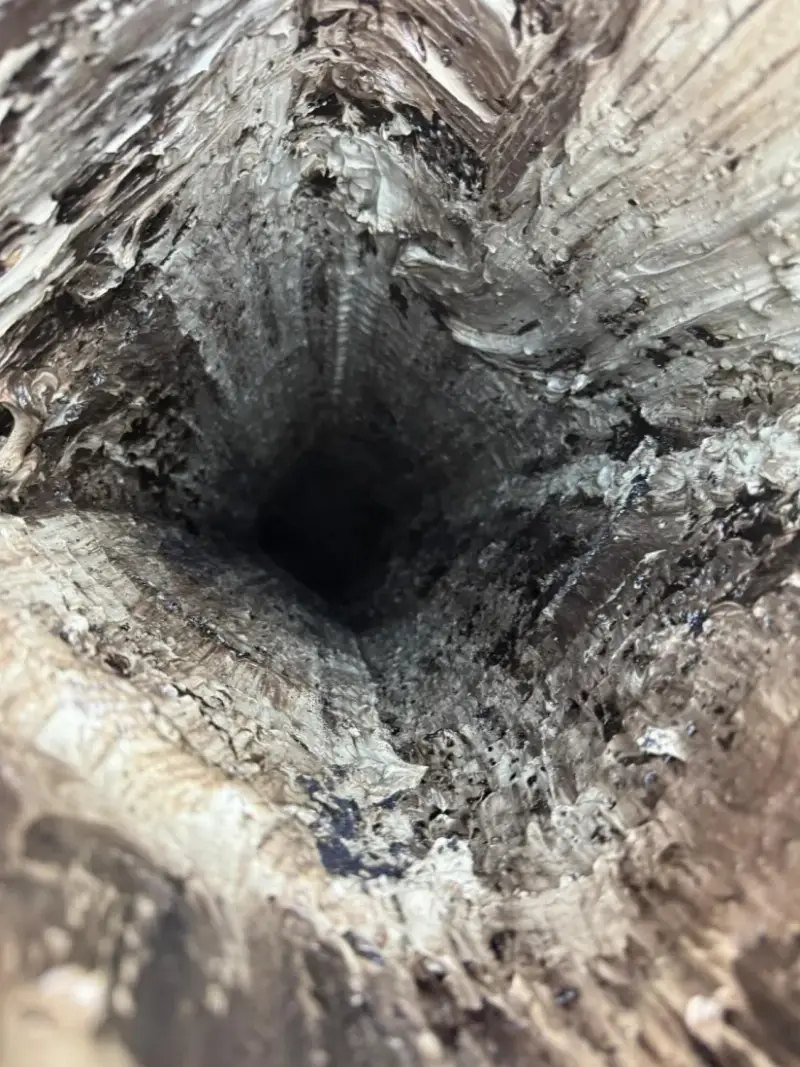
In many cases, yes, glazed creosote can be removed, but not by a standard chimney sweep. Glazed creosote (often called stage-3 or third-degree creosote) is a hard, shiny, tar-like layer baked onto the flue wall. A brush and rod pass right over it. Removing it usually takes a professional treatment: a specialized chemical product that softens the glaze so it can be scraped or rotary-cut off, sometimes over more than one visit. Whether it can be fully removed depends on how thick it is, what the flue is made of, and its condition underneath, which is why no honest sweep will guarantee a result without seeing it first.
That last part is the catch most homeowners don't expect. The same deposit that looks like a quick cleanup can be the reason a routine sweep gets turned into a bigger job, or paused entirely until the flue is inspected.
Why a Standard Brush Doesn't Touch Glazed Creosote
Creosote forms in stages as wood smoke cools and condenses inside the flue. The Chimney Safety Institute of America describes it in three degrees: first degree is soft and sooty, second degree is crumbly and flaky, and third degree is the black, glassy, tar-like layer people call glazed creosote (CSIA). The first two brush away. The third has fused to the flue like hardened varnish.
A sweep's rotary brush is built to knock loose powdery and flaky buildup. Drag it across glaze and it mostly polishes the surface. That's the core reason a homeowner can pay for a sweep, watch the technician work, and still have a chimney that isn't safe to burn. If you want the fuller picture of how these deposits differ, see our guide to the types of creosote in a chimney.
Why Glazed Creosote Is Worth Taking Seriously
Glaze isn't just stubborn, it's concentrated fuel. It's highly flammable and is a leading contributor to chimney fires. A layer thick enough to catch can burn hot enough to crack a clay liner or ignite nearby framing, and a chimney fire can happen without the homeowner ever noticing it (here's how that happens). That's why leaving glaze in place and "burning carefully" isn't a safe plan.
Warning Signs You May Have Glaze
You can't confirm glaze from the living-room side, but these clues raise the odds:
- A shiny, black, almost wet-looking coating visible in the firebox or at the damper
- A previous sweep who said the flue "wouldn't come clean" with a brush
- Long stretches of burning unseasoned or wet wood, or lots of slow, smoldering fires
- A wood stove damped down low overnight, over and over
- Reduced draft or a fire that's suddenly hard to keep going
These are reasons to have it looked at, not to self-diagnose the severity. Only an on-site inspection, often with a camera, can tell how deep the glaze runs and whether the flue underneath is sound.
What You Should (and Shouldn't) Do
Safe homeowner steps are simple: stop burning if you suspect heavy glaze, and book a professional inspection. Do not climb onto the roof, and do not try to chip, scrape, or torch glaze yourself, aggressive DIY methods can crack liner tiles or spread the problem. Over-the-counter "creosote remover" logs and powders may help reduce soft buildup over time, but they are not a substitute for removing an existing stage-3 layer.
How Professionals Actually Remove It
Once glaze is confirmed on-site, a trained sweep has real options that a brush alone doesn't:
- Chemical treatment: A professional-grade product is applied to the glaze to break down and soften it, changing its structure so it can be removed. This often needs time to work and a return visit.
- Mechanical removal: After softening, rotary tools, scrapers, or chain-type heads cut the loosened deposit off the flue wall.
- Re-inspection: With the glaze gone, the technician can finally see the liner underneath and check it for cracks or damage the deposit was hiding.
Because glaze can be so heavy, this sometimes crosses into the territory where a chimney is too dirty for a standard sweep and needs a specialized removal job priced separately. Costs vary widely with the amount of glaze, flue type, and access, so ask for a quote after an inspection rather than expecting a flat sweep rate.
Preventing It From Coming Back
Glaze is far easier to avoid than to remove. Burn only well-seasoned, dry firewood (the EPA's Burn Wise program recommends properly dried wood for cleaner, hotter fires), give fires enough air instead of damping them down to a slow smolder, and don't overload the firebox. Above all, keep to the annual standard: CSIA recommends every chimney be inspected once a year, with sweeping done as the buildup requires. Catch creosote while it's still soft, and it should never reach the glazed stage in the first place.
Frequently Asked Questions
Will a regular chimney sweep remove glazed creosote?
Usually not. A standard sweep is designed to remove soft, flaky first- and second-degree creosote with a brush. Hardened, glassy stage-3 glaze has to be chemically softened and then mechanically removed, which is a separate, specialized job that a technician quotes after inspecting the flue.
Is a chemical creosote remover enough on its own?
For existing glaze, a professional applies the chemical to break the deposit down, but it typically still has to be scraped or rotary-cut off afterward, sometimes on a return visit. The over-the-counter remover logs and powders sold for home use are meant to reduce soft buildup, not strip an established stage-3 layer.
Can you tell how bad my glaze is over the phone?
No. The thickness of glaze, the condition of the liner beneath it, and whether it can be fully removed can only be judged on-site, often with a camera inspection. Anyone promising a guaranteed result before seeing the flue is guessing.
Is it safe to keep using my fireplace with glazed creosote?
It's not recommended. Glazed creosote is highly flammable and a major cause of chimney fires. If a sweep identifies stage-3 glaze, stop burning until it has been treated and the flue re-inspected.
How do I keep glaze from forming again?
Burn dry, seasoned wood, give fires enough air rather than smoldering them low, avoid overloading the firebox, and keep to an annual inspection so creosote is removed while it's still soft. Deposits caught early never reach the glazed stage.