
Chimney cap installation adds a metal cover over an open, uncapped flue so rain, animals, leaves, and airborne embers stay out while smoke and combustion gases still vent freely. If you look up your flue and see nothing but open clay tile or metal pipe, your chimney is unprotected. A properly sized cap sits over the flue opening (or the whole crown), pairs a rain hood with a mesh screen, and is fastened to the top of the flue or crown. This page is about adding a cap where none exists or upgrading a first-time setup, not repairing or swapping out a cap you already have.
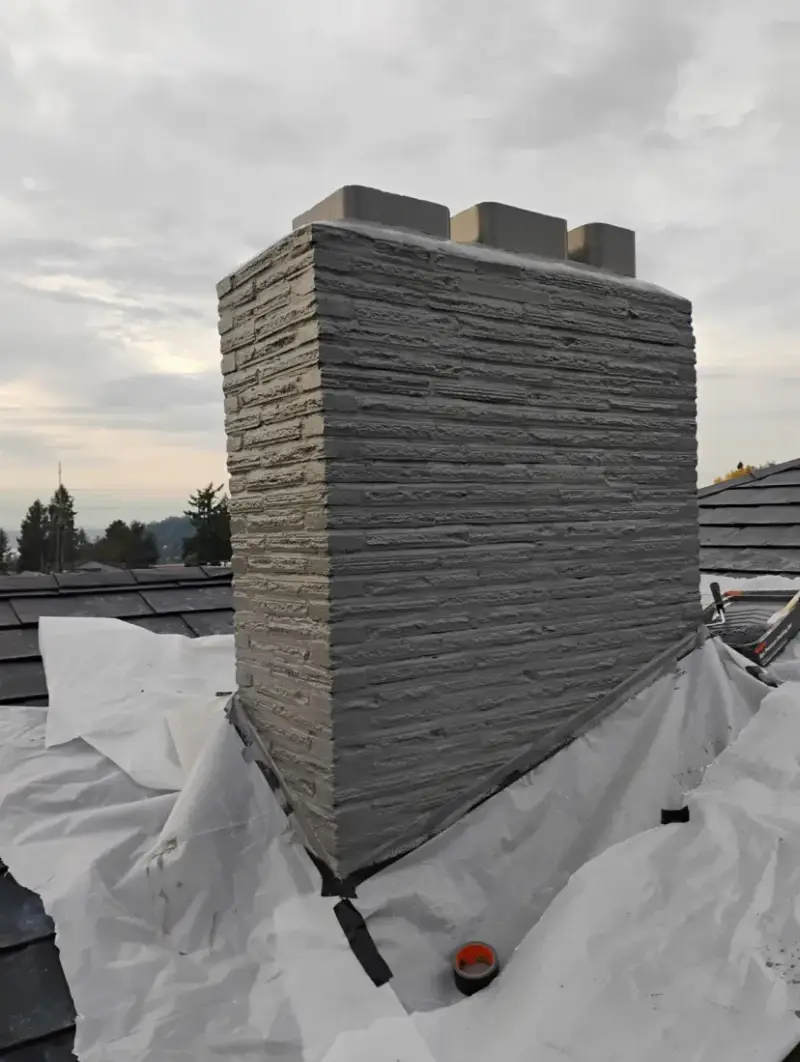
What a chimney cap is and what it covers
A chimney cap is a metal cover, usually stainless steel, copper, or galvanized steel, that mounts over the top of your flue. Most caps combine two features in one piece: a solid top or hood that keeps rain out, and a mesh screen around the sides that blocks animals and larger debris while still letting smoke pass. On masonry chimneys a single-flue cap slips over and clamps to the exposed clay tile; a multi-flue or full-width cap can cover several flues and shield the crown at the same time.
Installing a cap where there was none does four jobs at once:
- Keeps rain out of the flue. Water is the number-one enemy of a chimney. An open flue funnels rain directly onto the smoke shelf, damper, and liner.
- Blocks animals. Birds, squirrels, and raccoons treat a warm open flue as shelter and a nesting spot. The mesh screen closes that door.
- Contains embers. The screen acts as a spark arrestor, catching hot embers that rise up the flue so they don't land on your roof or yard.
- Stops debris and downdrafts. Leaves and twigs can't drop in, and the hood helps wind pass over the opening instead of pushing smoke back down.
Signs your chimney needs a cap installed
You may need a first-time cap if you notice any of these:
- You can see straight down an open flue with no cover of any kind.
- Rain sounds or water stains appear inside the firebox after storms.
- Birds, chirping, flapping, or nesting material turn up in the chimney or fireplace.
- Leaves, twigs, or grit collect on the smoke shelf.
- A downdraft or backdraft pushes smoke and odor into the room on windy days.
What to expect during installation
Every cap should be sized to your specific flue, so the process starts on-site, not from a photo. A technician measures the flue opening (or the crown footprint for a full-width cap), checks the condition of the masonry it will attach to, and recommends a size and material. From there, installation typically involves setting the cap over the flue or crown and securing it, either by tightening its clamp band onto the tile or fastening a base to the crown. A good installer confirms the fit is snug, the mesh is intact, and nothing obstructs the draft. Most straightforward single-flue installs are completed in one visit.
Choosing a material
- Stainless steel is the common all-around choice: durable, corrosion-resistant, and well-suited to the damp Northwest.
- Copper is the premium option, highly weather-resistant and attractive, and it weathers to a natural patina.
- Galvanized steel costs less up front but is more prone to rust over time in a wet climate, so it may need replacing sooner.
Because material, flue size, single- versus multi-flue design, and roof access all affect the price, we quote each job after seeing it rather than posting a flat figure. Request a quote and we'll give you a real number.
Why use a professional
A cap has to be sized and fastened correctly to do its job. An undersized or loosely mounted cap can blow off in a windstorm, restrict the draft, or leave gaps animals slip through. Installation also means working at the top of the chimney, which is not a safe DIY spot for most homeowners. A professional measures accurately, secures the cap to code-appropriate standards, and inspects the crown and flue while up there, so you learn about any other issues before they grow. To read the annual chimney inspection performed by our team, see our services overview.
Why this matters in a wet climate
Our long wet season and winter freeze-thaw cycles make water intrusion especially damaging here. Rain that gets into an uncapped flue soaks the masonry; when temperatures drop, that moisture freezes, expands, and slowly breaks the brick and mortar apart. Adding a cap is one of the simplest, most cost-effective steps you can take to protect a chimney from our climate.
Frequently Asked Questions
My chimney has never had a cap. Is it required?
A cap isn't universally mandated by code for moisture and animal protection, but leaving a flue uncapped exposes it to rain, wildlife, and embers. The ember-blocking spark-arrestor function is required in many wildfire-prone areas. Practically, nearly every open flue benefits from a cap, and adding one is inexpensive protection.
Can one cap cover more than one flue?
Yes. If your chimney has several flues, a multi-flue or full-width cap can cover them all under a single hood and shield the crown at the same time. We measure on-site to determine whether individual single-flue caps or one larger cap is the better fit for your chimney.
Will adding a cap hurt my fireplace's draft?
A correctly sized cap won't. It's engineered so smoke and gases pass freely while blocking rain and debris. Draft problems come from a cap that's undersized, clogged with soot on the mesh, or installed too low over the flue, which is exactly why professional sizing matters.
How long does a chimney cap last after installation?
It depends on the material. Stainless steel and copper caps are corrosion-resistant and can last many years in our wet climate, while galvanized caps tend to rust sooner. Mesh screens should be checked during your annual inspection since they can collect soot or take storm damage over time.