
By the Miles Chimney Sweep team · Published Aug 21, 2026
When your chimney leaks only when it rains, water is getting in through one of five common weak points: a damaged or missing cap, a cracked crown, failing flashing where the chimney meets the roof, porous brick and mortar, or condensation inside the flue. The tricky part is that the leak you see indoors often starts several feet away from the wet spot, so the cap is not automatically the culprit. In a damp climate, where soft, steady rain can last for days, even a small opening has plenty of time to find its way inside. The Chimney Safety Institute of America calls water masonry's biggest enemy for exactly this reason. Here is how each source gives itself away.
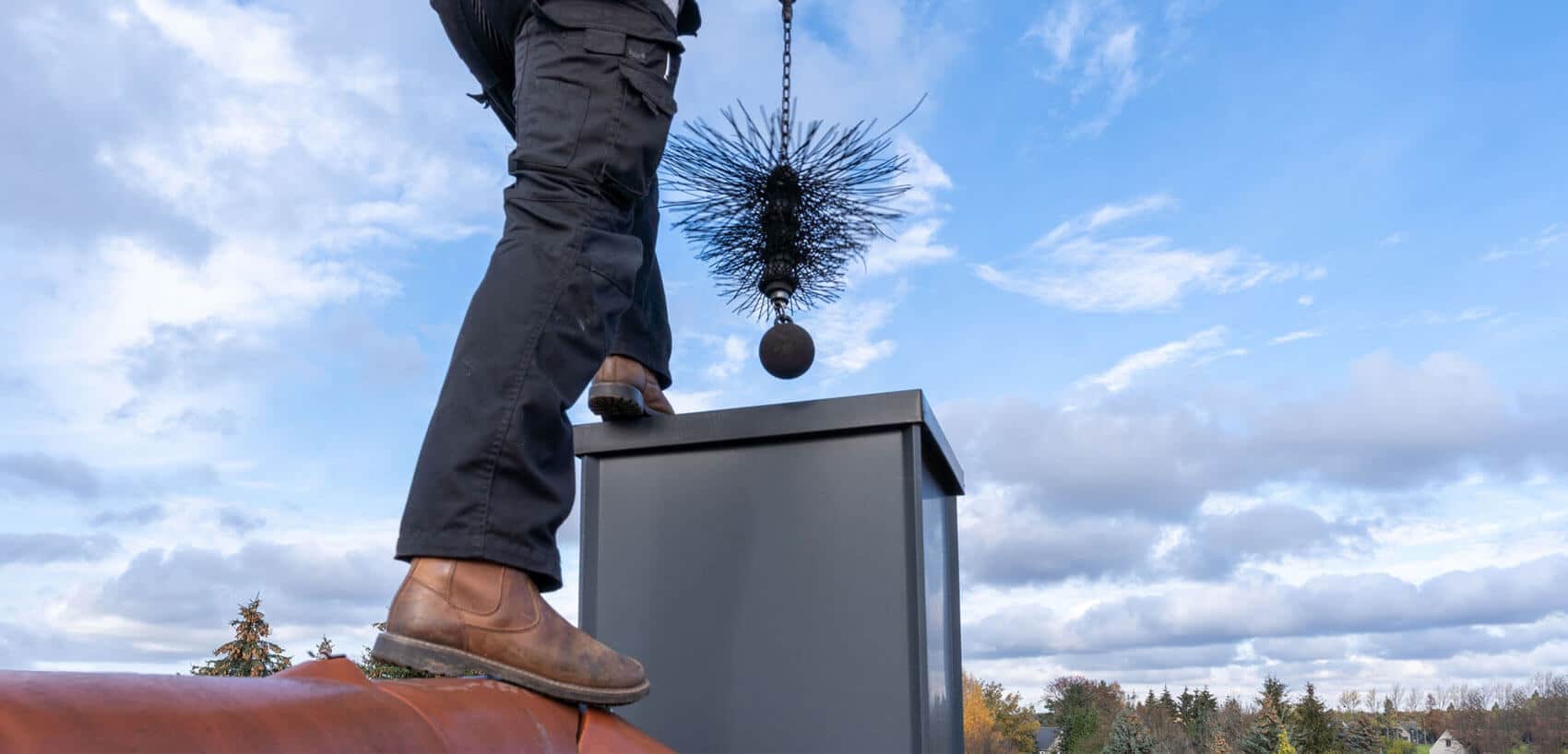
The five usual suspects, and how each one tells on itself
Rain-only leaks almost always trace back to one of these five areas. Each leaves a different fingerprint, so noticing when and where the water shows up helps narrow it down long before anyone gets on a roof.
1. The chimney cap
The cap is the covering over the top opening of the flue. When it is missing, undersized, or rusted through, rain falls straight down the chimney and can drip into the firebox or damp the walls of the flue. The tell: moisture or a musty smell that seems to come from deep inside the chimney, sometimes with debris or nesting material, because an open flue also lets in animals and leaves.
2. The crown
The crown is the sloped masonry or concrete slab at the very top that seals around the flue. Freeze-thaw cycles and years of weather open hairline cracks, and once water sits in them it works its way down into the chimney structure. The tell: staining or efflorescence high on the exterior brick, near the top, that worsens after prolonged rain. Because cap and crown problems look similar from the ground, telling them apart is exactly the kind of distinction our guide on whether your leak is the cap, crown, or flashing walks through.
3. The flashing
Flashing is the layered metal that waterproofs the joint where the chimney passes through the roof. It is the single most common source of rain leaks, because that seam takes constant runoff and the metal can lift, corrode, or pull loose when a roof is worked on. The tell: a stain on the ceiling right beside the chimney, often on one side, appearing during or shortly after rain rather than days later. A leak here is a roof-and-chimney overlap, which is why deciding whether to call a roofer or a chimney company can be confusing.
4. Porous brick and mortar
Brick and mortar are absorbent by nature. Aged mortar joints and unsealed masonry soak up rain like a sponge, then release it inward, especially during the long soaking rains common in wet regions. The tell: damp patches that appear only after extended wet stretches, chalky white white staining on the brick, or crumbling, flaking brick faces. Whether a breathable water repellent will help is covered in our piece on chimney waterproofing.
5. Condensation (the impostor)
Not every rainy-day drip is a true leak. When warm flue gases meet cold masonry, or when a high-efficiency appliance vents into an oversized flue, water vapor condenses on the inside and runs down. The tell: moisture that shows up in cold weather and heavy use rather than tracking cleanly with rainfall, sometimes with an acidic, sooty residue. Diagnosing this correctly matters because the fix is about flue sizing and liner condition, not roof sealant.
Warning signs worth acting on
- Ceiling or wall stains next to the chimney that darken during rain
- A damp, musty, or smoky smell from the fireplace after storms
- White, chalky deposits or flaking, spalling brick on the exterior
- Rusty firebox parts, a rusted damper, or dripping inside the firebox
- Peeling paint or wallpaper on nearby walls
What you can safely do yourself
Stay off the roof. Wet roofs and chimney tops are genuinely dangerous, and a fall causes far worse damage than a leak. From the ground you can safely note when the stain appears relative to the rain, photograph the exterior with a zoom lens, and check the attic (from a stable, dry vantage) for daylight or water tracks near the chimney chase. Stop using the fireplace until the cause is known if you see rust or interior dripping, since persistent water can degrade the liner and firebox.
How a professional pins down the real source
Because the entry point and the stain are often far apart, a reliable diagnosis needs eyes on the actual structure, not a guess over the phone. A technician inspects the cap, crown, flashing, and masonry, and when the trail leads inside the flue, a camera inspection can reveal cracked tiles or liner gaps that a ground-level look never would. The industry standard is an annual inspection so small failures are caught before a your area winter turns them into interior damage. From there, the correct repair follows the actual cause, whether that is a new cap, crown resealing, flashing work, breathable waterproofing, or liner repair. If you are unsure where to start, our team can help you diagnose and repair a chimney leak.
Preventing the next rainy-season leak
- Keep a properly sized cap installed and in good condition
- Have the crown and flashing checked during the annual inspection
- Address hairline masonry cracks and worn mortar joints early
- Consider a professionally applied, breathable water repellent on sound masonry
- Clear roof debris that traps water against the chimney base
Rain leaks rarely fix themselves, and each wet season tends to widen the opening. Catching the right cause early is almost always cheaper than repairing the water damage it leaves behind.
Frequently Asked Questions
My chimney only leaks during long rains, not short showers. Why?
That pattern often points to absorbent brick and mortar or a slow path through the crown. Brief showers do not saturate the masonry, but the prolonged soaking rains common in your region give water time to soak through and travel inward before it appears indoors.
Is a leaking chimney always the cap?
No. The cap is one of five common sources, alongside the crown, flashing, porous masonry, and condensation. Flashing at the roof joint is actually the most frequent culprit for rain-triggered leaks, so blaming the cap without an inspection often leads to the wrong repair.
Can you tell me exactly where my chimney is leaking without visiting?
Not reliably. The indoor stain rarely sits below the true entry point, and issues like a cracked liner or hidden flashing gap can only be confirmed on site, sometimes with a camera. Any honest diagnosis of the exact source requires an in-person inspection.
Could the water be condensation rather than a leak?
Sometimes, yes. If moisture shows up mainly in cold weather and heavy fireplace use rather than tracking with rainfall, condensation inside the flue may be the cause. This is diagnosed differently and usually relates to flue sizing or liner condition, not the roof.
Should I keep using my fireplace while the chimney is leaking?
If you see rust, interior dripping, or a musty smell, it is best to pause use until the cause is identified. Ongoing water intrusion can degrade the liner and firebox, and a compromised liner raises safety concerns worth checking before your next fire.