
By the Miles Chimney Sweep team · Published Aug 21, 2026
You often can narrow it down before anyone climbs a ladder. As a rule of thumb: water that shows up inside the firebox or straight down the flue points toward the cap or crown, while a stain that appears on the ceiling or wall right beside the chimney points toward the flashing where the chimney meets the roof. The catch is that these three parts sit within a foot or two of each other, so their symptoms overlap and one failing part can mimic another. The tells below help you form an educated guess, but the exact source is only confirmed on site, with the roof and interior examined together. Here in a wet climate, water is the single biggest threat to a masonry chimney, so it is worth diagnosing correctly the first time.
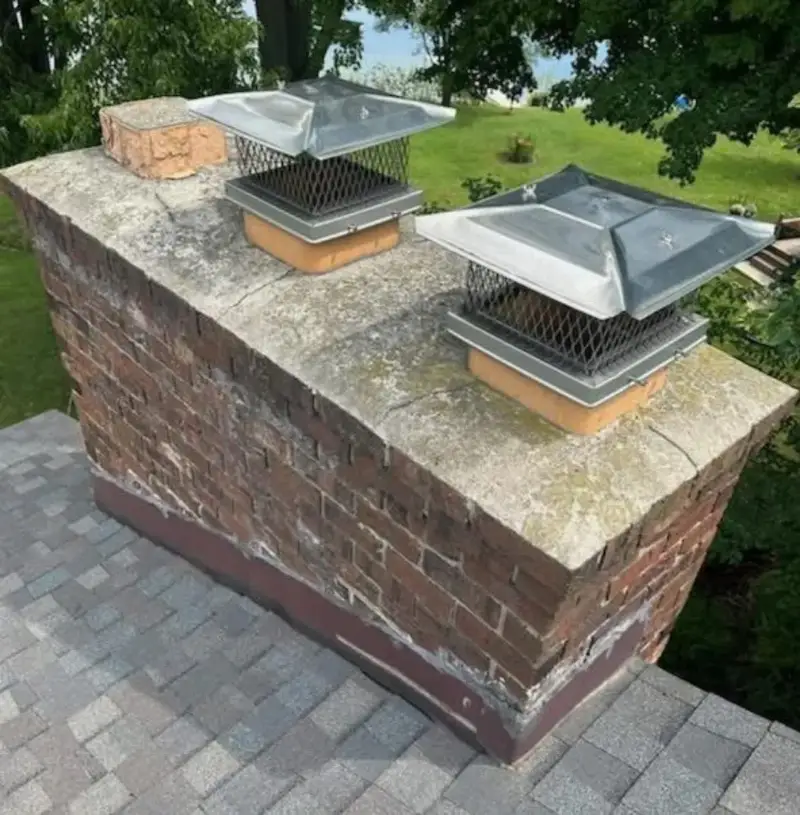
First, know what each part actually does
These three names get used interchangeably, but they are separate parts guarding different edges of the chimney:
- Cap: the metal cover (usually with mesh) sitting over the flue opening. It blocks rain, animals, and embers from dropping straight down the flue.
- Crown: the sloped concrete or mortar slab across the top of a masonry chimney. It sheds rain outward, away from the flue and the brick below.
- Flashing: the layered metal that seals the joint where the chimney passes through the roof. It keeps water from running down between the chimney and the roof deck.
According to the Chimney Safety Institute of America, water causes more damage to masonry chimneys than fire does, which is why pinning down the entry point early is worth the effort.
Homeowner-observable tells for each source
You can watch where the water shows and when it shows. Those two clues do most of the sorting.
Signs that point toward the cap
- Water, debris, or a rusty drip appearing inside the firebox or on the smoke shelf.
- A leak that only shows up during direct, straight-down rain rather than wind-driven storms.
- You can see from the ground that the cap is missing, tilted, or rusted through. A missing cap means rain falls directly into the flue.
Signs that point toward the crown
- White chalky staining (efflorescence) or damp patches on the exterior brick a foot or two below the top, a symptom explored in our guide to white stains on chimney bricks.
- Brick faces near the top starting to flake or crumble after repeated wet-then-freezing spells.
- Moisture that seems to move down the outside masonry rather than appearing inside the flue.
Signs that point toward the flashing
- A ceiling or upper-wall stain right next to the chimney, sometimes several feet from the fireplace itself.
- Leaking that flares up during wind-driven or heavy rain and quiets down in light drizzle.
- Visible gaps, lifted metal, rust, or dried-out cracked sealant at the base of the chimney where it meets the roof.
Why the tells only get you halfway
These clues narrow the field, but they cannot close the case. A cracked crown and failed flashing can produce nearly identical interior stains. A leak blamed on the cap sometimes turns out to be a hairline crown crack a few inches away. And a chimney leak is not automatically the cap, even though that is the easiest part to see from the yard. Confirming the true source means examining the crown surface, the flashing seams, the mortar joints, and the interior together, often during or right after rain. That is on-site work; no one can pinpoint it reliably from a photo or a phone description.
What you can safely do yourself
- Note the date, weather, and exact spot each time water appears. Wind-driven versus straight-down rain is a genuinely useful data point.
- Photograph interior stains and anything you can see of the chimney top from the ground.
- Move stored items and electronics away from the damp area to limit secondary damage.
Stay off the roof. Chimney tops and wet roofing are genuinely hazardous, and a close look at the crown or flashing is not worth a fall. Leave that to a technician with proper footing and equipment. For the wider picture of how these parts let water in, see why your chimney leaks when it rains.
The professional fix, matched to the source
Once the source is confirmed on site, the repair follows from it: a new or corrected cap, crown resealing or rebuilding, or flashing repair or replacement with fresh counter-flashing and sealant. When the diagnosis is uncertain, a professional water-penetration evaluation isolates the entry point before any work is quoted. After masonry repairs are done, applying a vapor-permeable chimney waterproofing sealant adds a second line of defense, letting the brick breathe while shedding rain.
Prevention that pays off in a wet climate
The CSIA recommends an annual chimney inspection, which is the standard well ahead of any single repair. In a rain-heavy region, an inspection each year, ideally after winter, catches a lifting flashing edge or a fine crown crack while it is still a minor fix rather than a rotted ceiling. Keeping a sound cap, an intact crown, and tight flashing in good order is far cheaper than chasing the water damage they were built to prevent.
Frequently Asked Questions
Can one storm really tell me which part is leaking?
It can point you in a direction. If water only appears during wind-driven rain, the flashing is a strong suspect; if it shows during any straight-down rain, look higher toward the cap or crown. It is a clue, not a diagnosis, because the parts sit so close together that their symptoms overlap. The source is confirmed on site.
My chimney only leaks sometimes. Does that rule out the flashing?
No. Intermittent leaks are common with flashing because they often depend on wind direction and rain intensity. A leak that appears only in driving rain and stays dry in light drizzle actually raises suspicion of a flashing or sealant gap rather than ruling it out.
What is the difference between a cap leak and a crown leak?
The cap is the metal cover over the flue opening, so a cap leak tends to send water straight down inside the flue and firebox. The crown is the sloped slab sealing the whole masonry top, so a crown leak more often shows as damp or flaking brick and staining on the outside of the chimney below the top. They sit inches apart and can overlap, which is why the entry point is confirmed on site rather than guessed from the stain alone.
Should I climb up to look at the crown and flashing myself?
We do not recommend it. Chimney tops and wet or steep roofs are genuinely dangerous, and a proper look at the crown surface and flashing seams needs safe footing and the right vantage point. Photograph what you can from the ground and leave the height to a technician.