
By the Miles Chimney Sweep team · Published Aug 21, 2026
For most chimney leaks, start with a chimney company for the diagnosis, then let the right trade do the repair. Here is the honest division of labor: a roofer owns the flashing and shingle interface where the roof surface meets the chimney, while a chimney company owns the crown, cap, masonry, and flue, plus the on-site diagnosis of where water is actually getting in. The two trades overlap at the flashing, and the surprising part is this: the spot most people blame, the flashing, is only one of several entry points, and pinpointing the real one usually requires a chimney professional to rule the others out first.
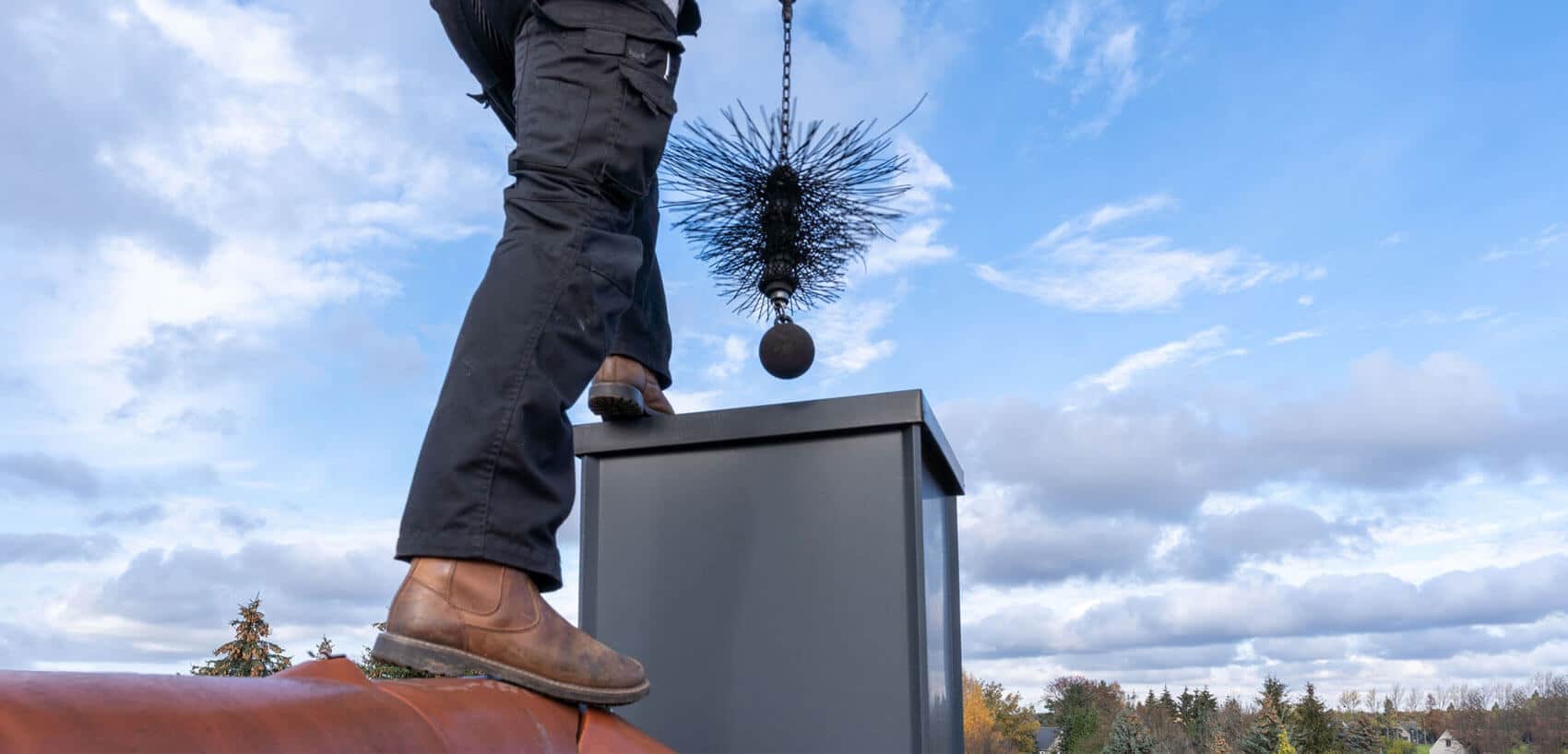
Why the answer is not simply 'call a roofer'
Water stains near a fireplace feel like a roof problem, so the roofer is a natural first call. Sometimes that instinct is right. But a chimney is not just a hole in the roof; it is a masonry system with several independent places water can enter, and only one of them belongs to the roofer. If you fix the flashing and the leak continues, the real entry point was somewhere else all along.
What a roofer owns
- Flashing and counter-flashing where the chimney passes through the roof plane. This is the metal that bridges the joint between masonry and shingles, and it is a genuinely vulnerable spot because the two materials expand and contract at different rates.
- Shingles and underlayment immediately around the chimney base.
- The roof deck if water has already reached and rotted it.
When a leak is clearly a flashing failure, a skilled roofer is exactly the right trade. Good chimney companies say so plainly and are not threatened by it.
What a chimney company owns
- The crown, the sloped concrete or mortar cap at the very top. Cracks here let water run straight down into the chimney.
- The cap over the flue opening. A missing or damaged cap lets rain fall directly into the flue.
- The masonry, brick and mortar joints that absorb water and admit it through spalled or cracked faces.
- The liner and flue, which need an on-site look and often a camera inspection to evaluate.
- Waterproofing of the masonry with a vapor-permeable sealer.
Where the two trades overlap
Flashing is the shared border. A roofer installs and repairs it as part of the roof's waterproofing, and a chimney company works right up against it when repairing the surrounding masonry. Problems happen when work is done out of order, for example new flashing sealed against crumbling brick, or fresh masonry poured before the flashing is corrected. The cleanest jobs sequence the two trades so each finishes cleanly against the other.
Warning signs to watch for
- Brown staining on the ceiling or wall near the chimney breast.
- A damp or musty smell in the firebox after rain.
- White, chalky stains on the exterior brick, a sign water is moving through the masonry.
- Flaking, popping, or crumbling brick faces.
- Rust on the damper or firebox metal.
Safe things a homeowner can do
From the ground, note when the leak appears, only during rain, only during wind-driven rain, or all the time, and photograph any interior staining. Those details genuinely speed up diagnosis. Do not climb onto the roof to inspect flashing or the crown yourself; roofline and chimney-top work is a fall hazard and, near the crown, easy to damage further. Leave elevated inspection to a professional with the right equipment.
The professional path that avoids paying twice
Because the flashing is only one suspect, starting with a diagnosis usually saves money. A chimney company can inspect the crown, cap, masonry, and flue on-site and tell you whether the water is entering through the chimney structure or through the roof flashing. If it is the flashing, a qualified roofer handles it; if it is the chimney, the chimney company does. The Chimney Safety Institute of America notes that a proper exterior assessment checks the flashing seals, the crown for cracks, and the cap all together, precisely because any of them can be the culprit. If your situation is specifically flashing-versus-chimney, our companion guide on whether it is the cap, crown, or flashing walks through the tells. Either way, our chimney leak repair service starts with finding the real entry point before anyone quotes a fix.
Prevention that reduces future leaks
- Keep an annual chimney inspection on the calendar so crown, cap, and flashing issues are caught small.
- Have masonry waterproofed with a breathable sealer when a professional recommends it, and see whether waterproofing actually works.
- Make sure a proper cap is installed and secure.
- After a major windstorm, have the chimney and flashing checked, since driven rain and movement expose weak points.
Not sure which trade you need? Call Miles Chimney Sweep at 866-309-2130 or request a quote, and we will start by finding where the water is really coming from.
Frequently Asked Questions
If I only call a roofer, will the leak be fixed?
Only if the flashing was the actual entry point. Roofers own the flashing and shingle interface, but if the water is coming through a cracked crown, an open flue, or absorbent masonry, new flashing will not stop it. That is why an on-site diagnosis of the whole chimney comes first, so you fix the right thing once.
Can a chimney company repair flashing too?
Many chimney companies do work at the flashing since it borders the masonry they repair, and some coordinate the flashing as part of the job. The key is sequencing: masonry and flashing should be corrected in the right order so each finishes cleanly against the other rather than being sealed over a hidden problem.
Why can't you just tell me over the phone whether it's the roof or the chimney?
Because the same interior stain can come from flashing, a crown crack, a missing cap, spalled brick, or condensation, and telling them apart needs an on-site look, sometimes including a camera pass on the flue. Anyone diagnosing the exact source remotely is guessing, and a wrong guess means paying for a repair that does not stop the leak.
Who handles the ceiling damage the leak already caused?
That is usually separate drywall or paint work, not the chimney or roofing repair itself. First the water entry point is fixed and the area is allowed to dry; then the interior damage is repaired. Our guide on whether a leaking chimney can damage your ceiling explains what to check for.