
By the Miles Chimney Sweep team · Published Aug 21, 2026
There is no single price for chimney leak repair because "a leak" can mean five very different problems. A minor fix, like a new chimney cap or resealing a small crown crack, typically lands in the lower hundreds of dollars. Larger work, such as rebuilding a crown, replacing rusted flashing, or repointing failing masonry, can run into the low thousands. The real cost depends on where the water gets in, how high and how accessible your chimney is, the materials involved, and how far the damage has already spread. Here is what actually moves the number, and why a good diagnosis matters more than a quote.
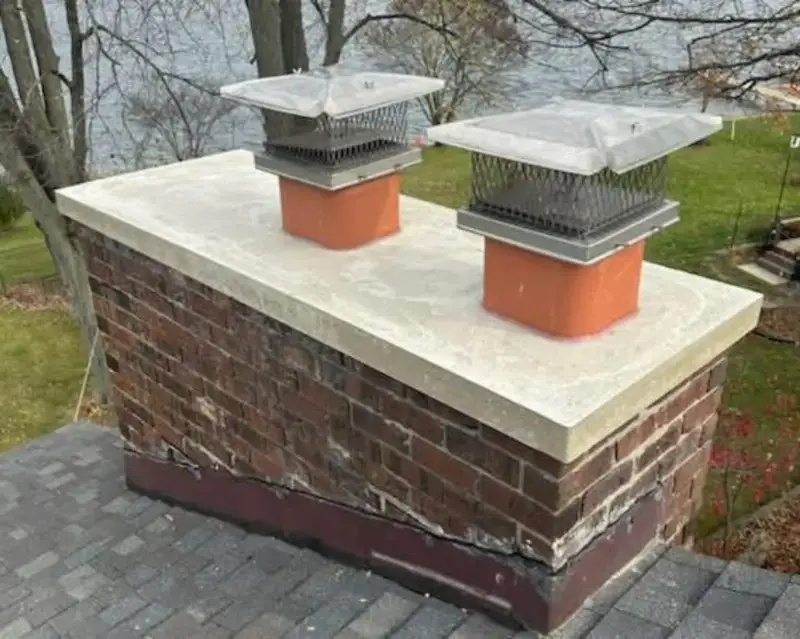
Why chimney leak repair has no flat price
Two homeowners can both say "my chimney leaks" and need completely different work. One needs a $200 cap; the other needs $2,500 of masonry repointing. The words are the same, but the water is entering through different failures. That is why any honest cost estimate starts with finding the actual entry point, not with a menu price. A quote given over the phone, before anyone has looked, is a guess.
Water can enter a chimney through the cap, the crown, the flashing, the masonry joints, or a combination. Each has its own repair scope and its own cost band. Our companion guide on whether your leak is coming from the cap, crown, or flashing walks through how these sources differ.
The cheaper end: caps and sealant
The least expensive repairs address the top of the chimney and small, early-stage cracks:
- Chimney cap replacement. A missing or rusted cap lets rain fall straight down the flue. A new stainless cap is usually one of the most affordable fixes and often prevents future problems, not just the current one.
- Crown sealing. If the crown (the concrete slab at the top) has hairline cracks but is structurally sound, a flexible waterproof coating can seal it for a fraction of a full rebuild.
- Masonry water repellent. Brick is porous. A breathable water-repellent treatment reduces absorption on a chimney that is still in good shape. Whether that treatment holds up is covered in our guide on chimney waterproofing.
These are the fixes that keep costs down, which is exactly why catching a leak early is so valuable.
The bigger end: crowns, flashing, and masonry
When damage has progressed, the work gets more involved and the price climbs:
- Crown rebuild. A crown that is crumbling rather than cracked cannot just be coated; it has to be rebuilt. That means demolition, forming, and new concrete work at the top of the chimney.
- Flashing replacement. Flashing is the metal seal where the chimney meets the roof. Rusted or improperly installed flashing usually needs to be replaced, and that work sits at the intersection of roofing and masonry, which is part of why people ask whether a roofer or a chimney company should handle the leak.
- Tuckpointing and repointing. When mortar joints erode, water travels through the wall itself. Grinding out and repacking joints is labor-intensive and priced by the extent of the affected area.
- Brick replacement. Spalling or crumbling brick, discussed in our guide on why chimney bricks crumble, may require removing and replacing units, which is among the more expensive repairs.
The variables that change your number
Beyond the type of repair, several factors shift the total up or down:
- Height and access. A tall chimney, a steep roof, or a hard-to-reach location adds staging, safety equipment, and time.
- Materials. Stainless steel outlasts galvanized; a custom-fabricated cap costs more than a stock size; matching historic brick is pricier than standard.
- Extent of damage. A single cracked joint is minor; widespread deterioration across a whole face is major.
- Hidden damage. Long-term leaks can rot framing or soak drywall, which is why we address how a leaking chimney can damage a ceiling. Interior repairs are separate from the chimney work.
Costs also vary by region and by the time of year. Prices in the your local area area will differ from national averages, and any range you read online should be treated as a rough starting point, not a firm figure for your home.
Warning signs worth acting on
Do not wait for a visible drip. Watch for:
- Brown stains on the ceiling or wall near the chimney
- A musty or damp smell in the firebox
- White staining on the exterior brick
- Flaking or crumbling brick and mortar
- Rust on the damper or firebox
What to do, and what to leave to a pro
The safe homeowner action is limited to observation from the ground: note when the leak appears, whether it tracks with rain, and where the stains show up inside. Do not climb onto the roof to inspect the crown or flashing yourself, and avoid over-the-counter tar patches, which can trap moisture and complicate a proper repair later.
Pinpointing the true source often requires an on-site inspection, and sometimes an interior camera inspection, because water frequently enters at one point and shows up at another. A professional diagnosis is what turns "my chimney leaks" into an accurate scope and an honest price. When you are ready, you can request a quote for chimney leak repair and we will assess the actual source before recommending work.
Prevention keeps costs down
The cheapest leak repair is the one you never need. Annual inspection is the standard the industry follows. Per the Chimney Safety Institute of America, chimneys should be inspected at least once a year for soundness and correct condition, echoing NFPA 211. Catching a hairline crown crack or an early cap failure during a routine inspection is what keeps a small bill from becoming a large one. You can read more about what a chimney inspector looks for to understand how these problems get caught early.
Frequently Asked Questions
Can you give me a price over the phone?
Not accurately. Because "a leak" can come from the cap, crown, flashing, or masonry, a real price requires seeing where the water actually enters. We can describe typical ranges, but a firm number comes after an on-site look.
Is a chimney cap really the cheapest fix?
Often, yes. A missing or rusted cap is usually one of the most affordable repairs and it frequently prevents future problems too. But a cap only helps if the cap is where your water is getting in, which is why diagnosis comes first.
Why is a crown rebuild so much more expensive than crown sealing?
Sealing coats an intact crown that has only hairline cracks. A rebuild is needed when the crown is crumbling, which means removing the old concrete, forming, and pouring new material at the top of the chimney. It is far more labor and material.
Does the leak repair include fixing my stained ceiling?
Usually not. Stopping the leak at the chimney and repairing interior water damage are separate jobs. We focus on the source; drywall, paint, or framing repairs are typically handled separately.
Will regular maintenance actually lower my repair costs?
It tends to. Annual inspection catches small problems, like an early crown crack or a failing cap, while they are still inexpensive to fix, before freeze-thaw and rain turn them into rebuilds and repointing.