
By the Miles Chimney Sweep team · Published Aug 21, 2026
In most cases, a chimney crown with tight hairline cracks can be repaired by resurfacing it with a flexible waterproof coating, while a crown that is spalling, deeply cracked, crumbling, or built from the wrong material usually needs to be rebuilt. The crown is the sloped slab at the very top of the masonry that sheds rain away from the flue and brickwork, so the deciding factor is not the age of the crown but whether its surface can still form a watertight shield. Here is the surprising part: the same crack width that is harmless on a poured concrete crown can be a rebuild signal on one that was cast in ordinary mortar. Only an on-site look tells you which crown you actually have.
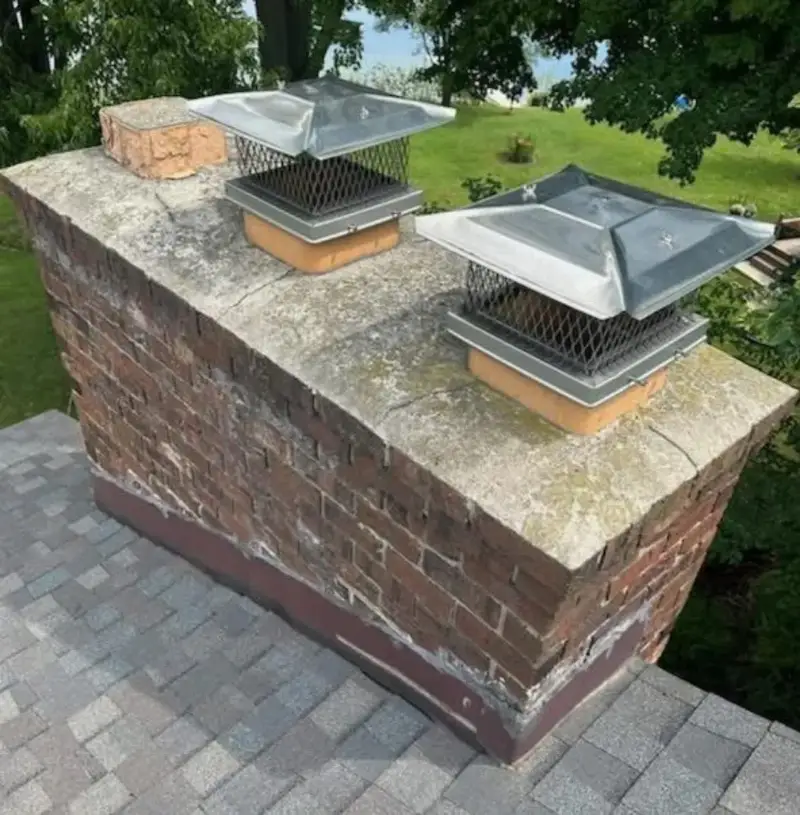
What the chimney crown actually does
The crown is the concrete or masonry slab that caps the top of a brick chimney, spanning from the flue liner out to the outer edges. Its job is simple and important: it slopes outward so rain and snowmelt run off the sides instead of pooling on top or seeping into the chimney walls. The Chimney Safety Institute of America describes the crown as the seal covering the top of the chimney from the liner to the edge, and a failed crown is one of the most common entry points for water in a masonry chimney.
your local area get a long, damp season, and that steady wet-then-dry cycling is exactly what stresses a crown. When a crown loses its seal, water travels down into the masonry below, and that leads to the crumbling and staining problems homeowners notice months later.
Warning signs your crown is failing
- Visible cracks across the top slab, from thin hairlines to gaps you can slip a coin into.
- Spalling where the surface is flaking, pitting, or shedding concrete crumbs.
- Chunks missing from the edges or corners of the slab.
- Pooling or a dip that holds water instead of draining it off.
- New leaks or damp spots inside, or crumbling bricks just below the crown.
When a repair is enough
If the crown is structurally sound and the cracks are tight, resurfacing is usually the right call. A chimney professional cleans the slab, patches minor chips, and brushes on an elastomeric crown coating that flexes with temperature swings and bridges fine cracks to restore the waterproof seal. This crown-coat approach preserves the existing slab and is the lower-cost path when the damage is cosmetic or early-stage.
Pairing a crown repair with masonry waterproofing and a good chimney cap gives the top of the chimney a full defense against Northwest rain, since the cap keeps water out of the flue while the crown sheds it off the top.
When a rebuild is the honest answer
A crown has usually passed the point of sealing when it shows wide or deep structural cracks, active spalling across the surface, large missing sections, or a slope that has failed so water sits on top. A common underlying reason is that the crown was originally cast in mortar rather than proper concrete, which breaks down faster and cannot simply be coated over. In those cases the old crown is removed and a new, correctly sloped concrete crown is formed with an overhang that directs water clear of the brick.
Why this needs an on-site call
You cannot reliably judge a crown from the ground. The width and depth of cracking, whether spalling has reached the reinforcement, the slope, and the original build material all have to be examined up close, typically during a Level 1 or Level 2 inspection under the standards a certified sweep follows. That is why a trustworthy answer of repair versus replace comes from an inspection, not a phone estimate. If you are also chasing a leak, our guide on why chimneys leak when it rains explains how the crown fits into the bigger water picture.
What it costs and what drives the range
Costs vary widely with crown size, height and roof access, the severity of the damage, and local labor rates, so treat any figure as a ballpark until a technician sees the chimney. As a rough guide, a resurfacing crown coat sits at the low end, partial rebuilds in the middle, and a full replacement at the top. For how crown work fits alongside other masonry costs, see how much chimney repair costs.
How to prevent crown trouble
- Have the chimney inspected every year so hairline cracks are caught while a coat still solves them.
- Keep a properly sized cap in place to reduce direct water and debris on the crown.
- Address small cracks promptly rather than waiting for the freeze-thaw cycle to widen them.
- Avoid climbing onto the roof to inspect or patch the crown yourself; leave roof access and crown work to a professional.
If you are unsure which category your crown falls into, request a quote for an inspection or call 866-309-2130 and we can assess it on-site.
Frequently Asked Questions
What makes one chimney crown last decades and another crack early?
Build quality is the deciding factor. A properly poured concrete crown with a good overhang can last for decades, while a crown cast in ordinary mortar may start breaking down in a fraction of that time. Annual inspections catch the early cracking that determines whether yours reaches its full lifespan.
Can I just seal the crown myself with a hardware-store product?
Reaching the crown means getting onto the roof, which we do not recommend for homeowners, and a DIY coat over a crown that actually needs a rebuild only hides the problem. A technician can confirm whether the slab is a good candidate for coating before any product goes on.
Is the chimney crown the same as the chimney cap?
No. The crown is the sloped concrete slab that seals the top of the masonry, while the cap is the metal cover over the flue opening that keeps out rain and animals. They work together, and a chimney can need attention on one without the other.
Will a cracked crown make my chimney unsafe to use?
A cracked crown is primarily a water-intrusion problem, but the moisture it lets in can damage the liner and masonry over time, which can affect safety. An inspection is the only way to know whether related damage has developed inside.