
Chimney masonry repair is the restoration of a chimney's brick and mortar: replacing brick that has flaked or crumbled, repairing cracks, and rebuilding small failed sections so the structure sheds water and holds together. It's the umbrella that covers the brickwork itself, sitting alongside more specific work like re-mortaring joints or a full teardown-and-rebuild. In the the wet, freeze-prone climate, water is the usual culprit: it soaks into porous brick and mortar, then expands as it freezes and thaws, prying the masonry apart over successive winters. Catching it early keeps a modest repair from becoming a rebuild.
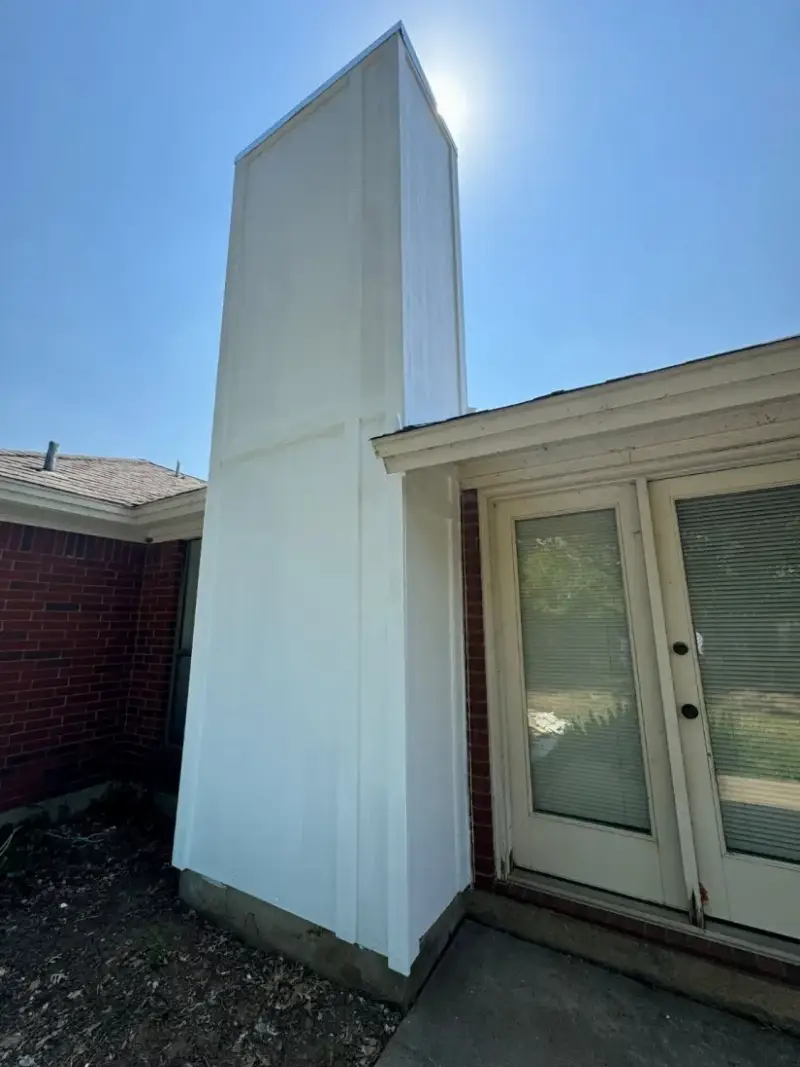
What chimney masonry repair covers
Masonry repair is the broad category for restoring the brick-and-mortar body of your chimney. Depending on what's failing, it can include:
- Replacing spalled brick, brick that has flaked, chipped, or popped its face off is cut out and swapped for sound brick that matches.
- Repairing cracks in the brickwork and rebuilding small failed sections before they spread.
- Correcting the water source that caused the damage, so the repair actually lasts.
Two neighboring services live under this same umbrella but have their own distinct scope. Tuckpointing is the specific technique of grinding out deteriorated mortar joints and packing in fresh, matched mortar, it addresses the mortar, not the brick. A chimney rebuild is the larger job of taking the chimney down to a sound course and building it back up when damage is too widespread to patch. If your situation calls for either, we'll say so on site rather than force-fitting a repair.
Signs your chimney masonry needs attention
- Brick faces that are flaking, crumbling, or lying as sandy debris on the roof or ground
- Gaps, soft spots, or missing mortar between bricks
- White, chalky staining on the brick (efflorescence), a sign water is moving through the masonry
- Visible cracks running through brick or joints
- Damp patches or stains on interior walls or the ceiling near the chimney
- Loose or shifting brick anywhere on the stack
What to expect from the process
Sound masonry work starts with an on-site assessment. Brick and mortar problems can't be diagnosed from a photo, a technician needs to see the full stack, check how far the damage runs, and identify where water is getting in. From there the typical sequence is:
- Assessment of the affected area and the moisture source behind it.
- Removal of spalled or failed brick and any crumbling mortar around it.
- Restoration with matched brick and appropriate mortar, keyed into the surrounding masonry.
- Water management, addressing the cap, crown, flashing, or a sealant recommendation so the same failure doesn't repeat.
Cost depends on how much brick is involved, the height and access of the chimney, and whether the underlying water problem needs correcting too, so masonry work is quoted after the assessment rather than off a flat price. We'll walk you through what we found and what it will take before any work begins.
Why this is a job for a professional
Matching mortar is not a detail to guess at. Mortar that's harder than the surrounding brick transfers freeze-thaw stress into the brick face and can actually cause more spalling, so the wrong mix speeds up the very damage you're trying to stop. A professional matches the mortar to the brick, keys new units in so the repair is structural rather than cosmetic, and, just as importantly, finds and fixes the water source. Patching brick while ignoring a leaking crown or missing cap simply resets the clock. This is also rooftop work at height on a structure that may already be compromised, which is not a safe DIY project.
Why chimneys in wet climates are especially vulnerable
Your Local Area gives masonry a hard time. Long wet stretches keep brick saturated, and our shoulder-season swings around freezing drive the freeze-thaw cycle that acts like a slow jackhammer on soaked brick and mortar. Older chimneys around the region often used softer brick that suffers most when moisture gets in. That combination is exactly why local chimneys spall and why keeping water out, through timely repair and a sound cap and crown, matters more here than in a dry climate. You can learn more about our full range of chimney services if you're not sure which one fits.
Frequently Asked Questions
Is chimney masonry repair the same as tuckpointing?
Not quite. Masonry repair is the broad category that covers restoring brick and mortar together, including replacing damaged brick. Tuckpointing is one technique inside that category: it grinds out and replaces failed mortar joints but doesn't address the brick itself. Which you need depends on whether the brick, the mortar, or both have failed, and that's determined on site.
Can spalled brick be repaired, or does the whole chimney need rebuilding?
It depends on how widespread the damage is. A few flaking or popped bricks can usually be cut out and replaced. When spalling is extensive and the structure is compromised over a large area, a rebuild of the affected section may be the sounder option. A technician can only tell which after seeing the full chimney.
Will repairing the brick stop my chimney from leaking?
Only if the actual water source is corrected too. Spalling is usually a symptom of water getting in, so lasting repair means finding where the water enters, often the cap, crown, or flashing, and fixing that alongside the brickwork. Replacing brick while leaving the leak in place just leads to the same failure again.
How urgent is a leaning or badly cracked chimney?
Treat it as urgent. A chimney that appears to lean, bow, or pull away from the house is a structural hazard that can worsen quickly, especially after a storm or ground movement. Stop using the fireplace and have it inspected promptly rather than waiting.