
By the Miles Chimney Sweep team · Published Aug 21, 2026
Yes, and it happens more often than you might think. No chimney is beyond saving, but some are beyond a brush. A standard sweep removes the loose, sooty creosote that builds up in most fireplaces. Third-degree creosote, a hardened, glassy tar layer called glaze, is a different material entirely. It bonds to the flue lining, and brushing alone will not take it off. Removing it requires specialized treatment, and only an inspection can confirm how far things have progressed.
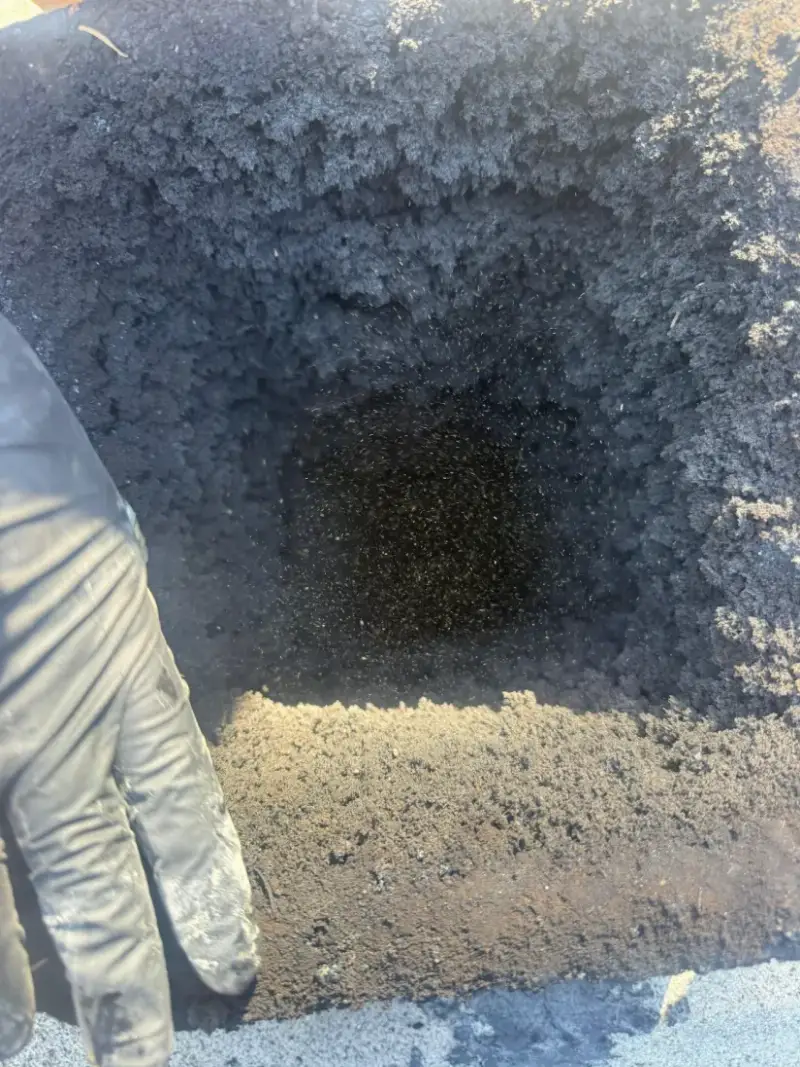
Here is the twist: the chimney that looks filthiest is often the easiest to clean, while a flue wearing a thin, shiny black coating can be the most stubborn, and the most dangerous. Appearance tells you very little. Stage matters more than mess.
What a standard chimney sweep actually does
A standard sweep is mechanical. Brushes matched to your flue's size and shape are run the length of the chimney on flexible rods while a filtered vacuum keeps dust out of your living room. That approach is very effective against the first two stages of creosote, the loose and crusty deposits that make up most buildup in a regularly used fireplace. The Chimney Safety Institute of America (CSIA) recommends sweeping a masonry fireplace once sooty buildup reaches about 1/8 inch, and sooner if any glaze is present. That last clause is the entire story of this article.
Keep the order of operations straight, too: an annual chimney inspection is the standard, and cleaning happens when the inspection finds deposits or conditions that call for it. If you are not sure where you stand, start with how often a chimney should be swept.
The three stages of creosote, and where brushes stop working
Creosote is condensed wood smoke, and it does not accumulate in just one form. CSIA notes that every form can show up in the same chimney at the same time, in different sections of the flue:
- Stage one: velvety soot. Light, dusty, and easily brushed away. This is what a routine sweep handles without drama.
- Stage two: crunchy tar flakes. Harder, shinier deposits with less loose ash. Still removable by brushing, though it takes more passes and more effort.
- Stage three: glaze. A dense, hardened, often shiny coating that has repeatedly melted and re-hardened in layers, bonding to the flue lining. Standard brushing does not remove it.
Stage three is where "too dirty for a standard sweep" becomes literally true. It is also the most concerning stage, because glaze is concentrated fuel sitting exactly where a chimney fire would burn.
Why glaze shrugs off a brush
Glaze forms when wood smoke condenses on a cool flue surface faster than it can dry out, then gets reheated by later fires and hardens again. Layer builds on layer until the deposit is fused to the liner. Run a brush over it and you remove a little surface shine, the coating underneath stays put.
Removal absolutely exists; it just comes from a different toolbox. Professionals can apply industrial-grade chemical modifiers, often poultice or powder products, that change the creosote's composition so it loses its grip on the flue, after which it can be swept out. In some situations mechanical cleaning heads are appropriate instead. Which route is right depends heavily on the condition of the liner, which is why the process starts with an inspection rather than with tools: aggressive cleaning on cracked or fire-damaged flue tiles is the wrong move. That assessment is the heart of a chimney deep cleaning or a dedicated creosote removal visit.
How a flue gets this far
Glaze is not bad luck. It is the predictable result of burning conditions that keep smoke cool and wet:
- Wet firewood. Energy that should heat the flue gets spent boiling water out of the logs. The EPA's Burn Wise program recommends burning wood at under 20 percent moisture, a real challenge in wet climates, where a woodpile left uncovered through a wet winter rarely gets anywhere close.
- Smoldering, air-starved fires. Closed glass doors, a half-open damper, or long overnight burns keep flue temperatures low and condensation high.
- A cold chimney. Flues on exterior walls run cooler, which encourages smoke to condense before it exits.
- Skipped inspections. Glaze takes seasons to develop. An annual inspection catches stage-two buildup while a standard sweep can still handle it.
Signs your chimney may be past a standard sweep
- A shiny, black, glassy surface visible above the damper instead of dull gray-black soot
- Tar-like streaks, drips, or runs on the flue walls or smoke chamber
- A strong burnt-tar odor on humid days, common in homes, where damp air pulls smells out of creosote deposits
- Puffy, bubbled, or honeycomb-looking residue after an unusually hot fire
- Any evidence of a past chimney fire, even a brief one
None of these is a diagnosis. The stage of the creosote and the condition of the liner can only be confirmed on-site, usually with a camera run through the flue. If you spot glaze-like buildup, the prudent move is to hold off on fires until it has been assessed.
What you can safely do, and what to leave to a pro
From the ground, you can do plenty. Shine a flashlight up past the open damper and note what the deposits look like. Check your firewood with an inexpensive moisture meter. Pay attention to odors and to how your fires burn. What you should not do: climb on the roof, rent rotary cleaning equipment, chip or scrape at glaze, or count on a sweeping log to solve it.
A professional starts with an inspection to establish the creosote stage and the liner's condition, then chooses the method, a standard sweep if brushing will genuinely do the job, or a treatment-and-removal sequence if it will not, and verifies the result afterward. No honest sweep will promise a diagnosis over the phone; the flue has to be seen.
Keeping a swept chimney sweepable
- Burn seasoned wood under 20 percent moisture, split it, stack it off the ground, and keep the top of the pile covered through our rainy months
- Give softwoods at least six months to dry and hardwoods about a year, per EPA guidance
- Burn hot, active fires rather than slow smolders, with the damper fully open
- Keep the annual inspection habit, and sweep when buildup calls for it
Do that, and your chimney should never meet the question in this article's title. If it is already past that point, the fix is routine for the right equipment, call 866-309-2130 and start with an inspection.
Frequently Asked Questions
Do creosote sweeping logs remove glazed creosote?
No. At best, chemical logs alter the composition of some deposits, the residue still has to be physically removed from the flue, and hardened glaze typically requires professional-grade treatment. CSIA cautions against using chemical products as a substitute for inspection and sweeping.
Does glazed creosote mean my chimney is ruined?
Not at all. Glaze is removable with the right treatment sequence, and many flues come out of the process in good shape. The real question is the liner's condition underneath, which is exactly what the pre-cleaning inspection determines. If the liner has cracks or fire damage, that gets addressed as its own repair.
Why does glaze removal cost more than a regular sweep?
Because it is a different job: chemical treatment often takes one or more applications plus a return visit to sweep out the released material, and severity, flue size, access, and liner condition all affect the work involved. Pricing varies by company, region, and over time, so treat any figure as an estimate until your flue has been inspected.
Can I just burn a very hot fire to burn the creosote out?
Never. Deliberately igniting creosote is simply starting a chimney fire, the exact event all of this maintenance is designed to prevent. Chimney fires can crack flue tiles and expose the home's framing to heat. There is no safe version of this idea.
How is the creosote stage actually confirmed?
By an on-site inspection, usually including a camera run through the flue. A flashlight look from the firebox can hint at what is there, but stage and liner condition cannot be reliably judged from below, or over the phone.