
By the Miles Chimney Sweep team · Published Aug 21, 2026
Yes, and it happens more often than most people would guess. The Chimney Safety Institute of America notes that many chimney fires are slow, air-starved events that never produce the dramatic flames or freight-train roar people expect. They smolder quietly inside the flue, burn themselves out, and leave the household none the wiser, until a later inspection turns up the evidence: puffy, honeycomb-textured creosote, warped metal components, or cracked flue tiles.
Here is the part that surprises homeowners: the quiet version is not a milder version. A slow-burning chimney fire can still reach temperatures high enough to split a clay liner, quietly dismantling the very barrier that keeps future fires away from the wood framing of your house.
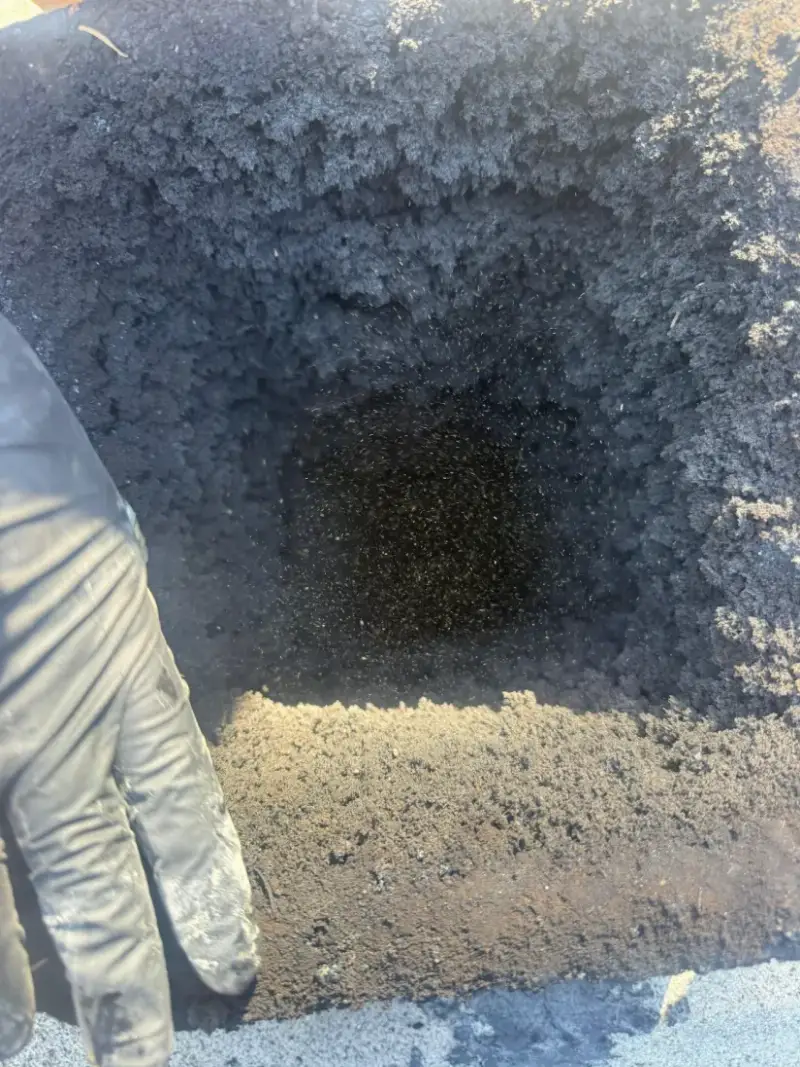
Why a Fire Inside Your Flue Can Stay Invisible
A chimney fire starts when creosote, the tar-like residue that wood smoke deposits inside the flue, ignites. When the fire gets plenty of fuel and plenty of air, you get the version everyone pictures: a low rumble or roar, cracking sounds, dense smoke, sometimes sparks or flame visible at the chimney top. Neighbors call. Nobody misses it.
But a flue is a narrow, partially closed passage, and most fires that start inside one never get that much oxygen. Instead they smolder, slow, quiet, fully contained within the chimney walls, and can die out on their own without anyone in the living room noticing a thing. According to the Chimney Safety Institute of America, these slow-burning chimney fires frequently go undetected, yet they reach temperatures high enough to damage the chimney structure and endanger nearby combustible parts of the house just as badly as the spectacular kind.
The Evidence a Quiet Chimney Fire Leaves Behind
Because the event itself is invisible, past chimney fires are usually diagnosed months later, from physical evidence found during a routine inspection:
- Puffy or "honeycomb" creosote. Ordinary creosote is flat, crusty, or shiny. Creosote that has ignited expands into a puffed, porous, often ash-gray texture, the single clearest calling card of a past flue fire.
- Warped metal. Dampers, connector pipes, or factory-built chimney components distorted by heat they were never meant to see.
- Cracked or collapsed flue tiles. The rapid, extreme temperature swing of a flue fire can split clay liner tiles or break chunks out of them entirely.
- A discolored or distorted rain cap. Intense heat exiting the top of the flue can scorch or deform the cap.
- Creosote flakes where they don't belong. Puffed creosote fragments on the roof, in gutters, or dropped down into the firebox.
- New cracks or heat damage in exterior masonry.
One clue alone may have another explanation. Several together tell a story worth confirming before the fireplace is used again.
Why a Fire You Never Noticed Still Matters
The flue liner has one job: keep heat, flame, and combustion gases sealed away from the structure of your home. A past fire that cracked tiles or opened joints has quietly punched holes in that barrier, so the next fire you light can push heat and gases into mortar joints and framing they could never touch before.
There is a second problem: the conditions that caused the first fire usually still exist. The National Fire Protection Association identifies failure to clean, mostly creosote buildup in chimneys, as a leading factor in home heating fires, which is why its public guidance calls for chimneys to be inspected every year by a qualified professional. A flue that has already had one unnoticed fire usually still holds fuel for a second, and now has damage that makes it more dangerous.
What You Can Check Without Leaving the Ground
You should never get on the roof, and you don't need to. A few ground-level checks tell you whether it's time to make a call:
- Look at the rain cap from the yard, with binoculars if you have them. Discoloration or distortion is worth flagging.
- Open the damper and shine a bright flashlight up from the firebox. Puffy, gray, popcorn-like deposits look very different from flat black soot.
- Check the firebox and hearth for tile shards or crunchy, expanded creosote flakes.
- Scan the ground and gutters below the chimney for dark, lightweight flakes.
Treat this as screening, not diagnosis, most of the flue simply cannot be seen with a flashlight from either end. If you spot even one of these signs, or you know you have heavy buildup that has never been evaluated, stop using the fireplace until it has been looked at.
How a Professional Actually Confirms It
Confirming a past chimney fire is a two-step process. First the flue is swept, because loose soot hides the surfaces an inspector needs to read. Then a camera is run the full length of the liner to examine every tile face and mortar joint for cracks, gaps, and heat damage, the kind of close-quarters exam described in our guide to the levels of chimney inspection. This is genuinely not something anyone can diagnose from a photo or a phone description; a cracked liner has to be found on site, tile by tile.
If a fire is confirmed, the fix depends on what the camera found. Sometimes a few damaged tiles or components are replaced; heavier damage may call for relining the flue. Badly ignited deposits can also leave hardened glaze behind that a routine sweep cannot remove, a situation we cover in can a chimney be too dirty for a standard sweep. Ask for photos of anything found, useful for your records and, depending on your policy, any claim you file.
Keeping the Quiet Fire From Ever Starting
Chimney fires run on creosote, and creosote is controllable:
- Keep the annual inspection. An inspection every year is the standard; sweeping happens when the deposits found actually require it. Our article on how often a chimney should be swept explains how that decision gets made.
- Burn genuinely dry wood. The EPA's Burn Wise program recommends seasoned wood below 20 percent moisture. In wet climates, wood left uncovered through a wet winter rarely gets there, stack it off the ground with the top covered and the sides open to the wind.
- Favor hot, active fires over long smoldering ones. A smoldering fire makes cool, smoky exhaust, and cool smoke condensing in a cool flue is exactly how creosote forms fastest.
- Don't choke the fire down. Overloading the firebox or closing the air supply too far turns a clean burn into a creosote factory.
If you burned all last winter and can't remember the last time anyone looked inside your flue, that is reason enough to schedule an inspection, not because something is necessarily wrong, but because the whole point of a quiet chimney fire is that you can't rule it out from the couch.
Frequently Asked Questions
What does a chimney fire sound like when it is noticeable?
The dramatic version produces a low rumble or roar, often compared to a freight train or low-flying plane, along with cracking or popping sounds, and sometimes dense smoke or sparks visible at the chimney top. But slow-burning chimney fires make no obvious noise at all, so the absence of drama never proves one hasn't happened.
What does puffy or honeycomb creosote actually mean?
It means the creosote in your flue has ignited at some point. Burning makes the deposit expand into a porous, puffed, often gray texture that looks nothing like ordinary flat or glazed creosote. It is the strongest single indicator of a past chimney fire, and the flue should be inspected before the fireplace is used again.
I found pieces of clay tile in my firebox. Was that a chimney fire?
Possibly, the thermal shock of a flue fire is a common cause of cracked and broken liner tiles, though age and freeze-thaw damage can crack tiles too. Either way, tile fragments mean the liner is compromised somewhere, so stop using the fireplace and have the flue camera-scanned to find the source.
Can a chimney fire happen twice in the same flue?
Yes. If creosote remains after the first fire and burning habits don't change, the fuel simply rebuilds. Worse, a flue that has already had one fire often carries hidden damage, so a second event has easier paths to the structure of the house. Sweep, inspect, and repair before the fireplace goes back into service.