
Chimney cap repair is the work of restoring an existing cap that has taken damage but is still fundamentally sound - straightening a bent or dented lid, replacing torn or missing spark-arrestor mesh, and tightening or replacing the fasteners and band that hold it to the flue. A serviceable cap is worth repairing when the body and base are solid and only a component has failed. The repair keeps rain out of your flue, keeps birds and squirrels from nesting inside, and keeps the mesh doing its spark-arrestor job. If the cap itself has rusted through, corroded at the seams, or blown off entirely, that's a replacement or a new install instead - a different job with a different fix.
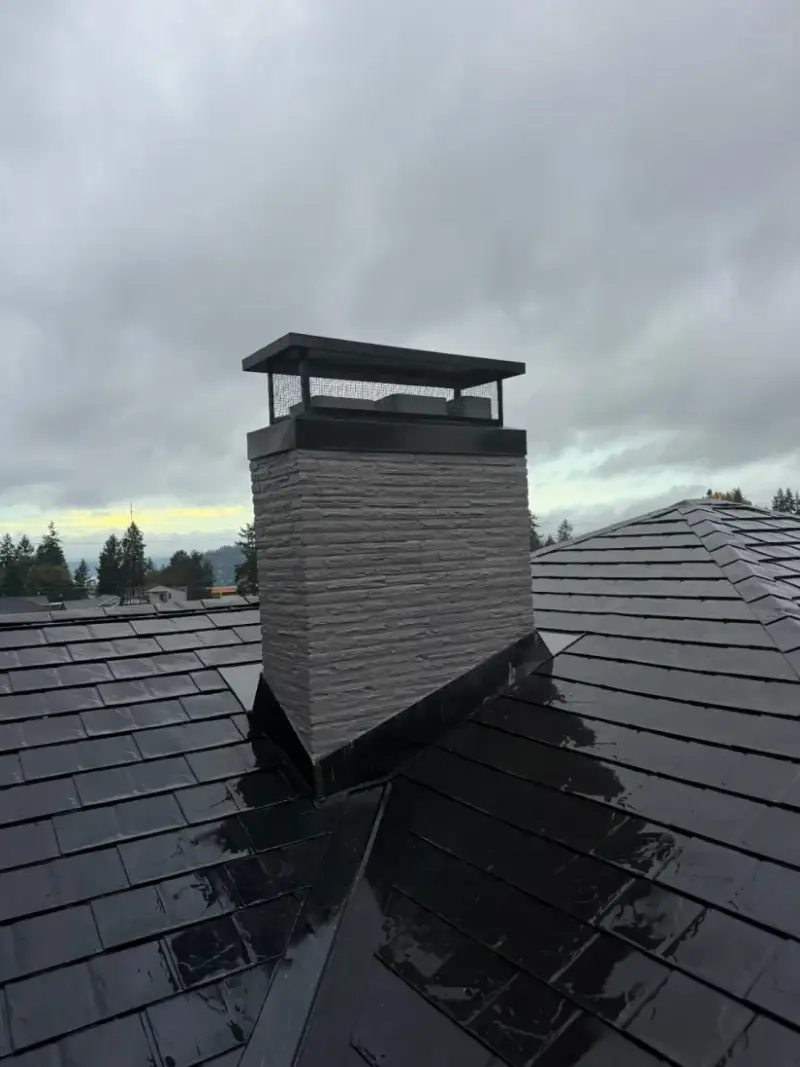
What chimney cap repair covers
A chimney cap sits over the top of the flue and does three jobs at once: it sheds rain and snow away from the flue opening, its mesh screen blocks birds, squirrels, and raccoons from getting in, and that same mesh acts as a spark arrestor, catching embers before they land on your roof. When one part of the cap fails but the rest is intact, a targeted repair restores all three functions without replacing the whole unit. Typical repairs include:
- Straightening a bent or dented lid - from a fallen branch, hail, or someone stepping on it - so it sheds water properly again.
- Replacing torn, corroded, or missing mesh so it once more keeps animals out and works as a spark arrestor.
- Tightening or replacing loose fasteners, screws, and the mounting band so the cap sits tight and stops rattling in the wind.
- Re-seating a cap that has shifted on the flue tile or crown but is otherwise undamaged.
If the cap is beyond straightening or the metal has failed, that crosses into cap replacement. And a cap is a different component from a chase cover - the flat metal top that covers a framed, factory-style chimney chase. Our chimney cap vs chase cover article walks through which one you have; the repair approach differs for each.
Signs your chimney cap needs repair
Most cap problems are visible from the ground or show up as symptoms inside the house. Watch for:
- A visibly bent, crooked, or leaning lid on top of the chimney.
- A rattling or banging sound from the chimney top on windy days - usually loose fasteners.
- Rain sounds inside the flue, or damp, musty odors from the fireplace after storms.
- Birds, squirrels, or nesting sounds coming from the chimney - a sign the mesh is torn or gone.
- Rust streaks running down the crown or brick from the cap.
- Debris, leaves, or twigs falling into the firebox.
What to expect from the repair
A technician starts by assessing the cap on-site, because the repair-versus-replace decision genuinely can't be made from the ground or from a photo. From the roof, they inspect the lid, mesh, base, and fasteners and check how the cap is anchored to the flue or crown. If the body is sound, they straighten the lid, fit new mesh, and secure the fasteners or band. If the metal has corroded through or the frame is deformed past repair, they'll tell you a replacement is the honest fix rather than patching something that will fail again in a season. Either way you get a clear explanation and a quote before any work proceeds.
Why use a professional
Cap work happens at the very top of the chimney, on the roof, and it's not a DIY job - the height, the roof pitch, and the wet, moss-slick conditions common here make it genuinely dangerous. A professional also reads the cap in context: a leak at the top of the chimney isn't automatically the cap. Water can enter through a cracked crown, failed flashing where the chimney meets the roof, or the masonry itself, and only an on-site look tells the difference. Fixing the cap when the real problem is the crown just wastes your money and leaves the leak. That's why cap repair is usually done as part of a proper top-of-chimney evaluation.
Why it matters in a damp climate
your region's long wet season is exactly what a chimney cap is built to defend against. A bent lid or a gap at the base lets persistent rain run straight down the flue, where it soaks masonry, rusts a metal firebox or damper, and speeds up freeze-thaw damage when temperatures dip. Because our winters are wet more than they are deeply frozen, water intrusion is the slow, steady threat - and the cap is the cheapest part of your chimney standing between that rain and an expensive repair inside. Keeping the cap sound is basic, high-value maintenance in this climate. If you're not sure whether your cap is worth repairing, see our full range of chimney services or request an on-site assessment.
Frequently Asked Questions
Can a chimney cap be repaired, or does it always need replacing?
It depends on the cap's condition. If the body and base are solid and only the lid is bent, the mesh is torn, or the fasteners are loose, a repair restores it. If the metal has rusted through or corroded at the seams, replacement is the honest fix. A technician makes that call on-site, since it can't be judged reliably from the ground.
Why does my chimney cap rattle or bang in the wind?
That noise is almost always loose or backed-out fasteners, or a mounting band that's no longer gripping the flue tightly. It's a simple repair - the fasteners are tightened or replaced and the cap re-seated - but worth doing before wind works the cap loose entirely and it blows off.
My cap's mesh screen is torn. Is that urgent?
It's more than cosmetic. The mesh does double duty: it keeps birds and animals out of the flue and, on a wood-burning chimney, acts as the spark arrestor that catches embers before they reach the roof. A torn screen leaves both jobs undone, so it's worth repairing promptly rather than waiting for nesting season or heavy burning.
Water is getting into my chimney - is the cap definitely the problem?
Not necessarily. A cap can be the cause, but water also enters through a cracked crown, failed flashing where the chimney meets the roof, or porous masonry. That's why we assess the whole top of the chimney on-site instead of assuming the cap and replacing it blindly.