
Chimney water damage repair is the work of restoring the masonry and components that water has already broken down: brick faces that have popped off (spalling), mortar joints that have washed out, a firebox or damper gone rusty, a cracked or crumbling crown, and brown staining on the ceiling or wall beside the chimney. It is different from stopping a leak. Repairing damage assumes water has been getting in for a while and has done measurable harm. In a wet climate, where masonry stays damp for months and goes through repeated freeze-thaw cycles, that harm accumulates faster than most homeowners expect. We assess the extent on-site, then rebuild what has failed.
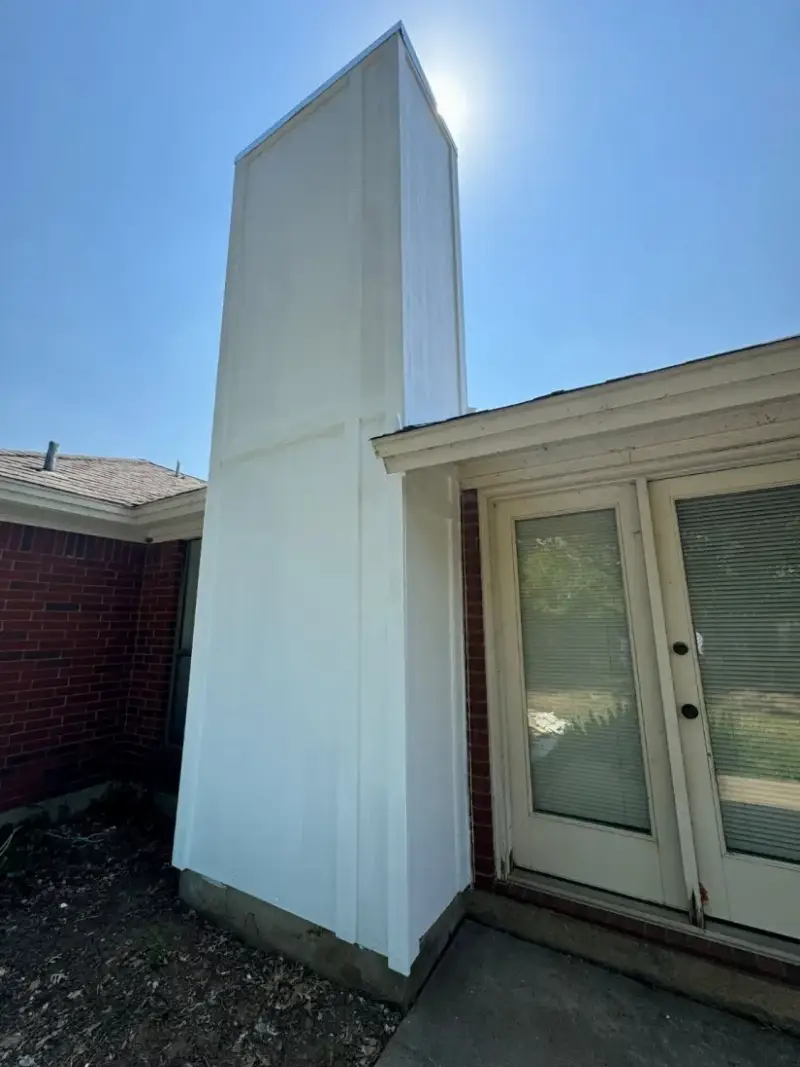
What chimney water damage repair covers
This service addresses the visible and structural results of long-term moisture, not the entry point itself. Depending on what our technician finds on-site, that can include:
- Spalled and cracked brick, replacing brick faces that have flaked, popped, or crumbled where water froze and expanded inside the masonry.
- Failed mortar joints, grinding out washed-out or crumbling mortar and repointing (also called tuckpointing) to restore the joints that hold the structure together.
- Deteriorated crown, patching or, where too far gone, rebuilding the concrete or mortar wash at the top that has cracked and let water in.
- Rusted components, dampers, chase covers, and metal parts corroded by chronic moisture.
- Interior and ceiling staining, the brown water marks on drywall and the efflorescence (white powder) on brick that signal water has been traveling through the structure.
Where the deterioration is limited and localized, spot repairs restore it. Where water has undermined a large portion of the stack, a partial or full rebuild may be the honest answer, something we only recommend after seeing it in person.
Signs you need water damage repair, not just a cleaning
- Brick faces flaking, pitting, or lying as sandy debris at the base of the chimney.
- Gaps, gouges, or missing mortar you can rake with a fingernail.
- Brown or yellow stains on the ceiling or wall near the chimney, especially after rain.
- White, chalky deposits on the exterior brick (efflorescence), mineral salts left as water evaporates out of the masonry.
- A rusty firebox, damper, or metal cover.
- A crown with visible cracks, or chunks of it missing.
We cover two of these in more detail in our articles on white stains on chimney bricks and why your chimney bricks are crumbling.
What to expect from the process
We start on-site because water damage cannot be diagnosed remotely, the same brown ceiling stain can trace back to a failed crown, worn flashing, a missing cap, or bricks acting like a sponge, and the fix differs for each. Our technician documents the extent of the deterioration, identifies whether the water source is still active, and gives you a written scope with a quote. Because every chimney is a different size, age, and condition, we price from ranges and variables rather than a flat number; brick and mortar work also needs dry, above-freezing conditions to cure properly, which shapes scheduling here in the Northwest.
A typical sequence is: confirm and stop the water source (leak repair), let the masonry dry, then rebuild the damaged brick, mortar, crown, or components. Once the structure is sound, waterproofing and a proper cap help keep new water out, those are separate services we can bundle so the repair lasts.
Why this is a job for a professional
Matching new brick and mortar to old, rebuilding a crown that sheds water correctly, and judging whether a leaning or heavily spalled stack is still structurally safe all require training and roof access. Improperly mixed mortar or a patched-over-but-still-leaking crown simply traps moisture and accelerates the next round of damage. We do not recommend homeowners attempt roof-level masonry or gas-appliance work.
Why it matters in a wet climate
Your Local Area gives masonry a hard time: long wet stretches keep brick saturated, and the freeze-thaw cycles at higher elevations and colder snaps act like a slow jackhammer, prying cracks wider each winter. Damage that might take a decade in a dry climate can show up here in a few seasons. Catching and repairing it early, while it is spalled brick and not a collapsing stack, is far less costly than waiting.
Frequently Asked Questions
Do you fix the leak too, or only the damage it caused?
Both should happen together. Repairing spalled brick or a washed-out joint without stopping the water source means the new work deteriorates again. On-site we identify whether the cap, crown, or flashing is still letting water in and scope the leak repair alongside the damage repair.
Can spalled brick be patched, or does it have to be replaced?
Once a brick face has popped off, that brick can't be un-spalled, the damaged units are cut out and replaced, and the surrounding mortar is repointed. How many need replacing depends on how far the moisture spread, which we confirm in person.
Will interior ceiling stains go away after the repair?
Stopping the water and repairing the chimney prevents new staining, but existing marks on drywall or plaster usually need to be sealed and repainted separately. We can point out which stains are cosmetic and which signal moisture still trapped in the wall.
Is efflorescence (white powder) a sign I need repairs?
It's a sign water is moving through the masonry and evaporating out, carrying mineral salts to the surface. On its own it's cosmetic, but it tells us the brick is absorbing water, which, over freeze-thaw cycles, leads to spalling. It's worth an inspection to see how far along the damage is.