
Chimney chase repair fixes localized problems in the framed, sided structure that encloses a factory-built (prefab) chimney, short of tearing it down and rebuilding. That means replacing rotted or lifting siding, resetting failed trim, sealing the seams and penetrations where water sneaks in, and correcting minor framing damage before it spreads. The chase is the tall, house-sided box you see on the roofline of many many homes, not a brick-and-mortar stack. When the damage is contained and the underlying framing is still sound, a repair restores a weather-tight enclosure at a fraction of the cost and disruption of a rebuild.
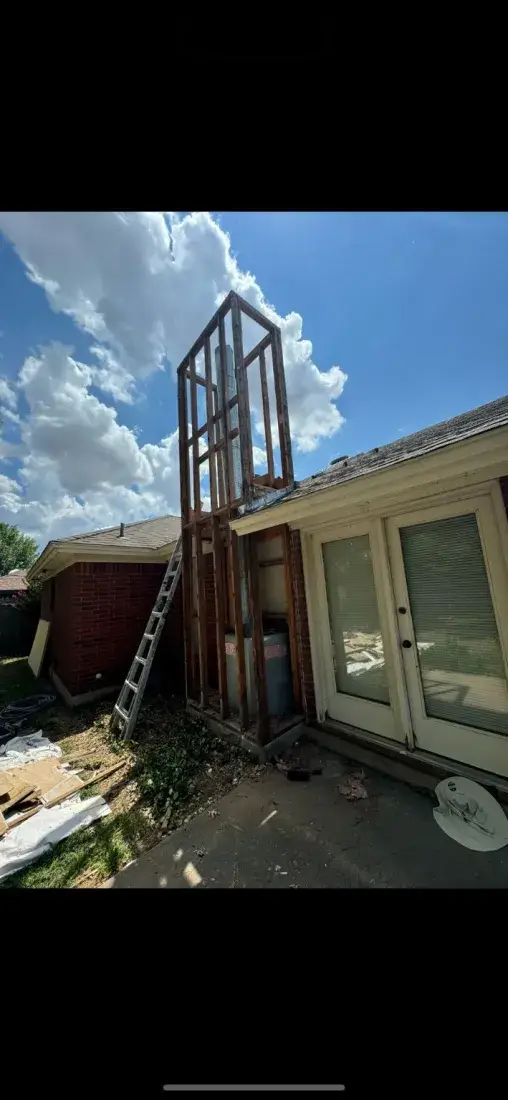
What a chase is, and what chase repair covers
On homes with a factory-built or zero-clearance fireplace, the chimney is not a solid masonry stack. It is a metal flue running up through a chase, a framed wooden box finished on the outside with siding, trim, and a metal cover on top. The chase protects the flue and blends the chimney into the roofline. Because it is built largely of wood and sheet metal, it is vulnerable to exactly the kind of wet, wind-driven weather wet weather throws at it for much of the year.
Chase repair addresses damage that is localized and correctable, including:
- Rotted, warped, or lifting siding panels on the chase walls
- Failed or pulling-away trim, corner boards, and skirt detailing
- Open seams, gaps, and penetrations where water is finding its way in
- Deteriorated caulk and sealant at joints and transitions
- Minor, contained framing repair where a limited area has been affected
- Flashing corrections where the chase meets the roof
The neighboring parts have their own scopes. The metal lid on top is the chase cover, replaced or repaired as its own item. When rot or structural failure runs through the framing itself, that is a chase rebuild, a larger reconstruction we treat separately. Naming those boundaries matters because a quote for one is not a quote for the others.
Signs your chase needs attention
Chase damage almost always traces back to water. Watch for:
- Stains, streaks, or rust marks running down the chase sides
- Siding that is soft, spongy, cupped, peeling, or visibly separating
- Trim or corner boards that have loosened, cracked, or fallen away
- Visible gaps, open seams, or daylight where panels should meet tightly
- Water stains on the ceiling or wall near where the chimney passes through the house
- A musty smell or dampness in the area around the firebox
A leak showing up inside the home is a signal to act, not wait. If you are trying to trace where chimney water is coming from, our blog on why a chimney leaks when it rains walks through the usual culprits.
What to expect from the repair
Every chase repair starts with an on-site assessment. Water damage hides, and what looks like a single bad siding panel can sit over framing that is either perfectly sound or quietly rotting. We inspect the chase body, the cover, the flashing, and the framing behind the finish to judge how far the damage runs. That inspection is what decides whether a targeted repair is the right call or whether the honest answer is a larger rebuild.
When a repair is appropriate, the work typically includes removing and replacing the damaged siding and trim with materials chosen to match your home's exterior, sealing the seams and penetrations that let water in, correcting flashing where the chase meets the roof, and addressing any limited framing damage found underneath. The goal is a chase that sheds water and looks like it belongs, not a visible patch.
The repair-versus-rebuild threshold
This is the single most important judgment on a chase, and it cannot be made from the ground or over the phone. A repair makes sense when the framing is still structurally sound and the damage is confined to the finish and a small area behind it. A rebuild becomes the right answer when rot has spread through the studs and sheathing, when the structure has lost integrity, or when so much of the box is compromised that patching it would only buy a season or two. Paying for a repair on a chase that truly needs a rebuild is money spent twice. We would rather tell you which one you are facing after we have actually looked.
Why this is a job for a professional
A chase sits at roof height, wraps a working flue, and hides its worst damage behind finished surfaces. Diagnosing it means safely accessing the structure, reading how water is traveling, and telling sound framing from failing framing. Done wrong, a cosmetic repair traps moisture against wood and accelerates the rot it was meant to stop. It also keeps the clearances and flashing around a factory-built flue correct, which matters for how the chimney sheds heat and water. This is not a caulk-and-paint afternoon; it is a repair that has to be right where you cannot easily see it.
Why it matters in a wet climate
Our long wet season and repeated freeze-thaw cycles are hard on a wood-framed, sided chase. Persistent damp finds every open seam and tired sealant joint, and water that gets behind siding has months to sit and rot framing before anyone notices a stain inside. Catching chase damage while it is still localized is what keeps a manageable repair from becoming a full rebuild. If you have spotted staining, soft siding, or a leak near the chimney, it is worth a look now rather than after another winter. See our full chimney services for related work.
Frequently Asked Questions
Is a chimney chase the same as a masonry chimney?
No. A chase is a framed wooden box finished with siding and a metal cover, built to enclose a factory-built or prefab metal flue. A masonry chimney is a solid brick-and-mortar stack. Because a chase is largely wood and sheet metal, its repairs center on siding, trim, sealing, and framing rather than brick and mortar.
How do I know whether my chase needs a repair or a full rebuild?
It comes down to the framing. If the studs and sheathing are still structurally sound and the damage is confined to the finish and a small area behind it, a targeted repair usually works. Once rot has spread through the framing or the box has lost integrity, it crosses into rebuild territory. That call requires an on-site inspection, often behind the finished surfaces, and cannot be made from the ground.
My chase cover is rusted. Is that a chase repair?
The chase cover is the metal lid on top of the chase, and it has its own repair or replacement path separate from the sided body below it. A rusted or pooling cover is a very common source of chase leaks, so we look at it as part of the assessment, but replacing a cover is a distinct job from repairing the siding, trim, and framing of the chase itself.
Can chase damage be diagnosed over the phone or from photos?
Not reliably. The most consequential damage on a chase, the condition of the framing, sits hidden behind siding and trim. Photos can show staining or lifting panels, but they cannot confirm whether the wood underneath is sound. We give a firm scope and quote only after an on-site look.