
A chimney chase cover is the flat metal lid that seals the top of a factory-built (prefab) chimney chase, the boxed-in framed structure often wrapped in siding or stucco. It is not the same as a chimney cap: the chase cover covers the entire top opening like a shoebox lid, while the cap is the smaller hood over the flue itself. Most builder-installed chase covers are thin galvanized steel that rusts within several years, especially where water pools in a low center. Once it rusts through, rain runs straight into the chase, and rust-laden runoff streaks down your siding. Replacement with stainless steel or copper solves both problems.
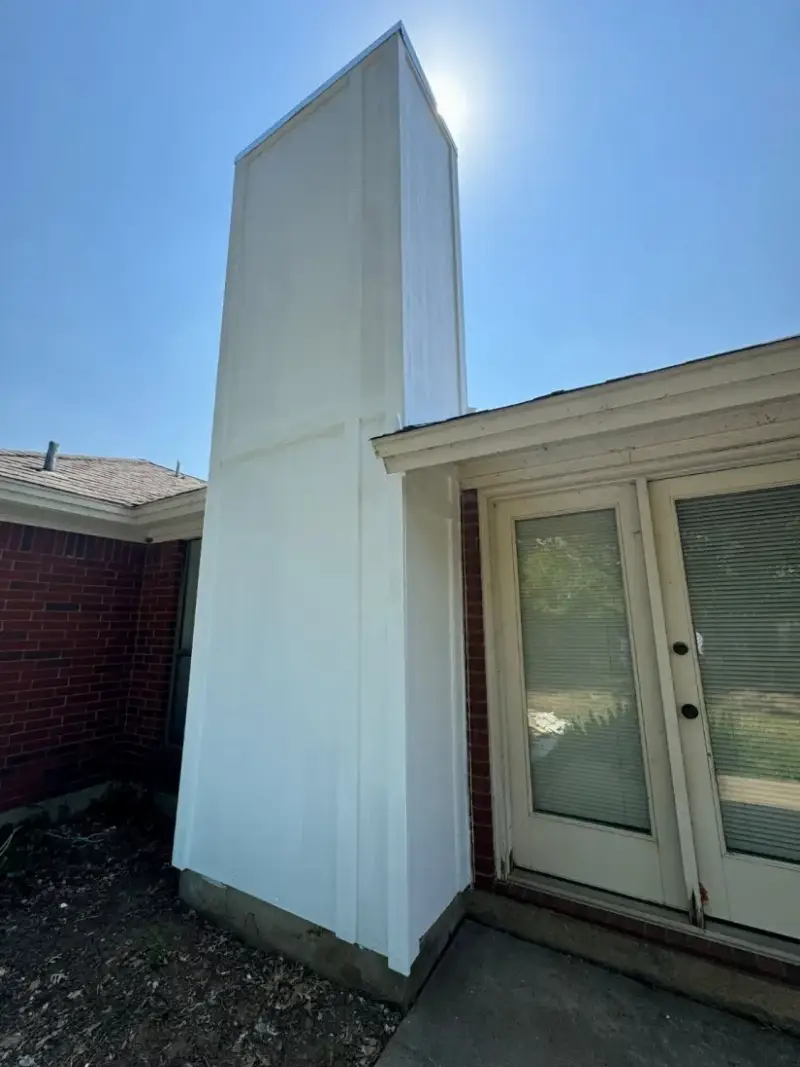
What a chase cover is and what it covers
Factory-built chimneys are not solid masonry. They are a wood-framed box, the chase, that houses a metal flue pipe, and the top of that box has to be sealed against weather. The chase cover is the flat metal pan that caps the whole opening, with one or more holes cut for the flue and storm collar to pass through. Its only job is to shed water off the top of the chase and keep rain, snowmelt, and debris out of the framed cavity below.
This is a distinct part from the chimney cap, which sits above the chase cover and shields just the flue opening from rain and animals. Our cap-focused pages cover that component; here the scope is the full lid itself. If you are unsure which part you are looking at, our blog on chimney cap vs chase cover shows the difference clearly.
Signs your chase cover needs replacement
- Rust streaks on the siding or stucco below the chimney, the most common and most visible symptom.
- Standing water or a sagging center on the cover, which tells you it was installed flat and now holds water instead of draining.
- Visible rust, pitting, or rust-through holes anywhere on the metal, especially at seams and around the flue opening.
- Water stains inside the firebox or on the ceiling and walls near the chimney after rain.
- A loose, lifting, or poorly sealed storm collar where the flue passes through.
Because a leak at a prefab chimney can also come from the cap, the flue seams, or flashing where the chase meets the roof, the source needs to be confirmed on site. We do not diagnose the exact leak point remotely. Our page on chimney leak diagnosis covers how cap, crown, and flashing leaks are told apart.
What to expect from the service
We start with an on-site inspection to confirm the chase cover is the problem and to measure the chase accurately, since prefab tops vary in size and in the number and placement of flue holes. A proper replacement is custom-fabricated to your dimensions, not a generic pan forced to fit. The new cover is built with a slight slope or cross-break so water drains toward the edges instead of pooling, sized with an overhang and drip edge so runoff falls clear of the chase sides, and sealed at the flue penetration with a new storm collar and high-temperature sealant.
We also look at the surrounding conditions while we are up there, because a new cover on top of rotted framing or failed flashing only solves half the problem. If we find related issues, we explain what we see and let you decide the scope. Pricing depends on the size of the chase, the material you choose, the number of flue openings, and access, so we provide a written quote after measuring rather than a phone estimate.
Why stainless steel or copper is worth it
The reason builder covers fail so predictably is the material. Thin galvanized steel has a zinc coating that breaks down over years, and once it is scratched during installation or worn at the seams, rust takes hold. A stainless steel chase cover resists rust and corrosion and typically lasts far longer, which is why it is the common upgrade choice. Copper offers the same corrosion resistance with a distinctive look that weathers to a patina. Both eliminate the rust-streak problem at its source instead of repainting over it, and both hold their drainage shape rather than sagging into a puddle.
Why this matters in your local area
The a damp climate is hard on a flat, rusting metal lid. Long stretches of rain keep the top of the chase wet for months, and any low spot that holds water accelerates corrosion and freeze-thaw stress in colder weather. A galvanized cover that might last a decade in a dry climate can streak and perforate faster here. Getting ahead of it protects the framed chase below from the slow, hidden water damage that a wet cavity invites.
Why use a professional
Chase cover work happens at the very top of the chimney and involves accurate measuring, custom fabrication, and a watertight seal around the flue. We do not recommend homeowners climb onto the roof to measure or install one. A professional confirms the leak source, fabricates a cover that actually fits and drains, and seals the flue penetration correctly so the new cover does not become a new leak. To review our full range, visit our services page.
Frequently Asked Questions
Is a chase cover only for factory-built chimneys?
Yes. Chase covers are the metal lids on prefab, wood-framed chimney chases. A solid masonry chimney is topped instead by a concrete or mortar crown, which is a different repair. If you are not sure which you have, an on-site look settles it quickly.
Can a rusted chase cover just be repainted or sealed instead of replaced?
Paint or sealant may hide staining briefly, but it does not restore a cover that is thinning, pitted, or already perforated, and it does not fix a flat pan that pools water. Once galvanized steel is rusting through, replacement with stainless or copper is the lasting fix.
How is the new chase cover measured and sized?
We measure the length, width, and side overhang of your chase and note the number, size, and placement of flue openings, then have the cover custom-fabricated. Prefab chases vary, so an off-the-shelf pan rarely fits well or drains correctly.
Will replacing the chase cover stop the rust stains on my siding?
If the streaks are coming from a rusting galvanized cover, a stainless steel or copper replacement stops new staining at the source because those materials do not rust. Existing stains on the siding may need separate cleaning.