
By the Miles Chimney Sweep team · Published Aug 21, 2026
A chimney cap and a chase cover do two different jobs, and mixing them up is one reason prefab chimney leaks go unfixed for years. A chimney cap is the small hood that sits over the flue opening itself, keeping rain, sparks, and animals out of the pipe. A chase cover is the large flat metal lid, like a shoebox lid, that covers the entire top of a boxed-in (factory-built) chimney chase. Here is the part that surprises people: on a prefab chimney you typically need both, and the wide chase cover, not the little cap, is the piece most likely to rust through and leak.
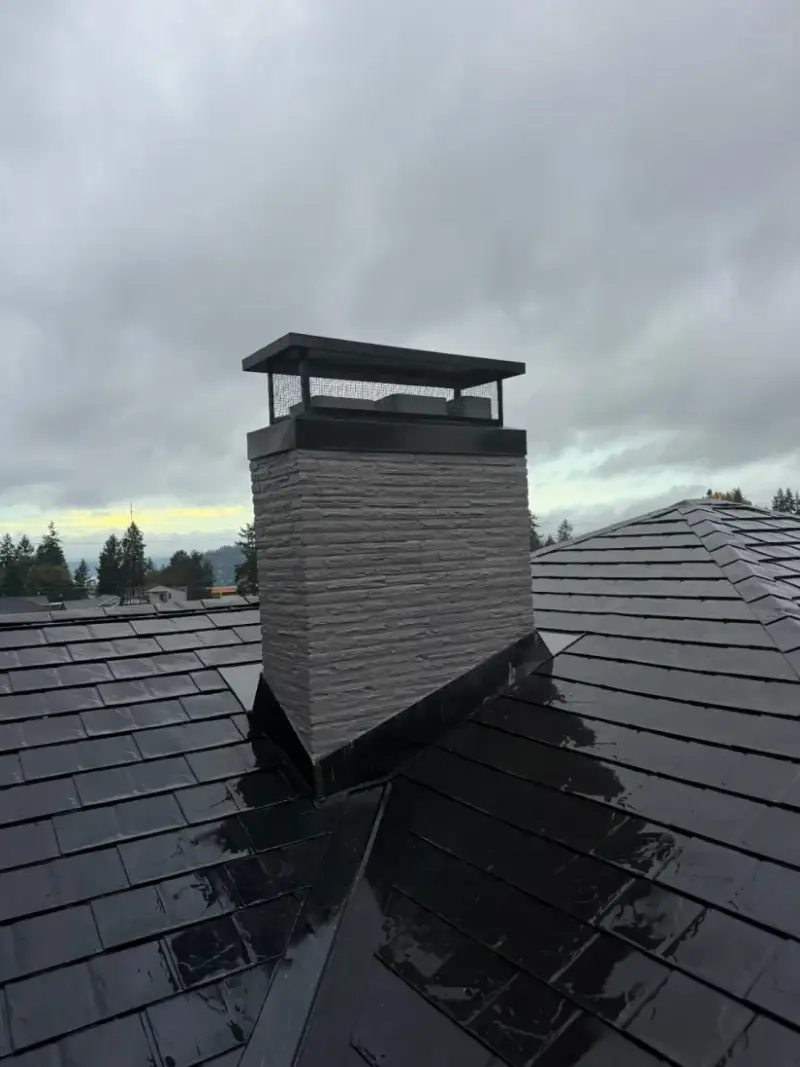
What a chimney cap does
A chimney cap is the covering that sits directly over the flue, the actual passage smoke travels through. It is found on both masonry and factory-built chimneys. A good cap does three things: it keeps rain out of the flue, it screens out birds, squirrels, and raccoons, and its mesh helps stop burning embers from landing on the roof. Caps are relatively small and are usually stainless steel or copper.
If you are still deciding whether you need one at all, our guide on whether a chimney cap is worth it walks through the reasons a cap earns its place.
What a chase cover does (and why it is different)
A chase cover, sometimes called a top pan or chase pan, only exists on prefabricated (factory-built) chimneys. These chimneys are not solid masonry. Instead, the metal flue pipe runs up inside a framed, boxed-in enclosure called a chase, often finished with siding to match the house. The chase cover is the metal sheet that lids that entire box, sloping slightly and folding down over the edges a few inches like a shoebox lid. The flue pipe pokes up through a hole in the chase cover, and the chimney cap mounts over that opening.
Because the chase cover is the whole top surface, it takes the full load of rain, snow, and standing water. That is exactly why it is such a common leak source.
Why rusted chase covers leak
Factory chase covers are frequently thin galvanized steel with little support underneath. Over time three things go wrong:
- Rust perforation. Galvanizing slows corrosion but does not stop it. Once the coating fails, the steel rusts and eventually develops pinholes.
- Ponding water. A flat or sagging cover holds water instead of shedding it, which accelerates rust and can freeze and expand in damp winters.
- Bowing. With no bracing, the weight of rainwater, ice, or an animal bends the cover into a bowl, making the ponding worse.
The result is water dripping down inside the chase, soaking framing, insulation, and eventually the ceiling below, long before anyone spots a stain.
Warning signs to watch for
- Orange rust streaks running down the siding just below the chimney top.
- Rusty stains on the chimney cap or a rust ring around the flue opening.
- Water spots on the ceiling or wall near the fireplace or where the chimney passes through.
- A musty smell or damp insulation in the attic near the chase.
If you are seeing water indoors, our article on why chimneys leak when it rains covers the other common entry points too.
What you can safely do, and what to leave to a pro
From the ground or a window you can look for rust streaks and check whether the cap is still seated. That is the safe limit for a homeowner. Do not climb onto the roof to inspect or reseal a chase cover yourself; the work sits at the roofline and a proper repair means confirming the cover size, slope, flue-hole placement, and metal type on site. A caulk patch over a rusted cover is a temporary bandage, not a fix.
A professional solution is to replace a failed galvanized chase cover with a custom-fabricated stainless steel one, cut to your exact chase, cross-broken so it sheds water, and paired with a properly fitted cap. Getting the two pieces matched to your chimney type is the whole point, which is why chimney cap installation and chase cover work are done together.
Prevention
The best defense is the annual inspection recommended for both masonry and factory-built chimneys. A yearly look catches early rust, ponding, and a loose cap while the fix is still a small one, before water reaches the framing. Choosing stainless steel or copper the next time either part is replaced buys you decades instead of years.
Frequently Asked Questions
Does my chimney have a chase cover or just a cap?
Look at the chimney's shape. If it is solid brick or stone masonry, it has a cap over each flue and a masonry crown, but no chase cover. If the chimney is a boxed-in enclosure, often sided or framed to match the house, it is a prefab chimney and has a metal chase cover across the whole top with a cap mounted over the flue opening.
Can I put a new cap on without replacing a rusted chase cover?
You can, but it does not solve a leak. The cap and the chase cover are separate pieces. If the chase cover is rusted through, water still gets into the chase around and under the cap. A rusted chase cover needs its own replacement regardless of how new the cap is.
What metal is best for a chase cover in your area?
Stainless steel is the common long-life choice, with copper as a premium option. In a wet climate the thin galvanized covers that ship from the factory tend to rust fastest, so upgrading to stainless when you replace one is usually worth it.
How much does replacing a chase cover cost?
It varies with the chase size, the metal chosen, roof access, and whether a new cap is included, so a firm number needs an on-site look. Stainless costs more up front than galvanized but typically lasts far longer. We would rather measure your chimney and request a quote than guess a figure that misleads you.