
By the Miles Chimney Sweep team · Published Aug 21, 2026
Blackened fireplace glass almost always means one thing: your fire is not burning completely. When flames cannot get the right balance of fuel and air, unburned carbon (soot) condenses on the coolest nearby surface, and the glass door is usually the coolest thing in the firebox. The reason for that incomplete burn is different depending on your appliance. On a gas fireplace, it is often flame impingement, shifted logs, a dirty burner, or a mis-set air shutter. On a wood fireplace, it is usually wet or unseasoned wood, a fire burning too cool, or a starved air supply.
A little haze that wipes off is normal. Heavy, fast, greasy black film, especially on a gas unit, is worth a closer look because it can point to combustion that needs a professional adjustment.
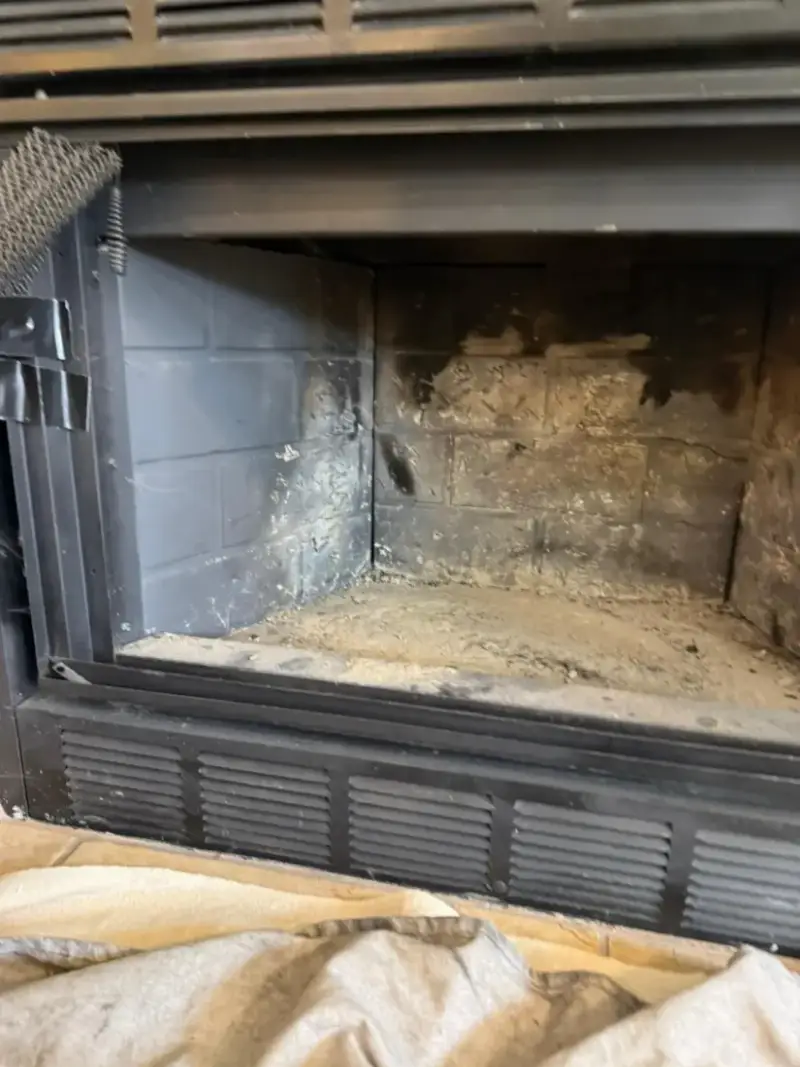
Gas fireplace: why the glass blackens
A gas fireplace is engineered to burn clean. The ceramic logs, the burner ports, and the air shutter are all positioned to produce a specific flame shape that fully combusts the gas. When any of that is disturbed, you get soot. The most common causes:
- Flame impingement. The flame is supposed to dance around the logs, not stab directly into them. If a flame tip hits a cold ceramic surface it quenches, and quenched flame drops carbon onto the logs and glass.
- Logs out of position. Gas logs must sit exactly where the manufacturer placed them. Bump one during cleaning and you can redirect the flame into a soot-making path.
- Dirty or clogged burner ports. Dust, pet hair, and spider webbing narrow the ports and unbalance the fuel-to-air mix.
- Air shutter or gas pressure off. Too much gas and too little air is a rich, dirty burn. That yellow, lazy, sooty flame is the visible symptom.
Here is the part homeowners miss: a gas flame that is meant to look yellow (many decorative log sets do) will still throw a little soot by design. But a burner that is sooting heavily, blackening glass within a session, or leaving thick soot on the logs is burning incompletely, and incomplete combustion of gas is exactly the condition you do not want to guess about. That belongs to a technician, not a rag.
Wood fireplace: why the glass blackens
With wood, black glass is a report card on your fire. The three big culprits:
- Wet or unseasoned wood. Fresh-cut or rain-soaked wood can be well over 20% moisture. The fire spends its energy boiling off water instead of making heat, the firebox runs cool, and cool smoke condenses on the glass as soot and creosote. The EPA's Burn Wise program recommends seasoned wood at or below 20% moisture for exactly this reason.
- Burning too low and slow. A smoldering, damped-down fire never reaches the temperature that burns off smoke. Low-and-slow overnight burns are the classic glass-blackener.
- Not enough air. Closing the air control too far starves the fire, and a starved fire smokes instead of flames.
The through-line is temperature. A hot, well-fed wood fire keeps its own glass much cleaner because the heat pushes combustion to completion. This is the same chemistry behind chimney creosote, so if your glass is caking up, your flue is likely accumulating deposits too. If you want the deeper version, see what creosote is and why it is dangerous and which firewood produces the least creosote.
Warning signs worth acting on
- Glass that blackens within a single fire, every fire
- A gas flame that has turned lazy, yellow, and sooty compared to how it used to burn
- Soot building on the ceramic logs, not just the glass
- Any odor, or soot appearing on the wall or mantel above the opening
- Wood fires that are hard to start or keep going, a sign of poor draft or wet fuel (see why your fire is hard to start or keep burning)
What you can safely do yourself
For a wood unit, the fixes are in your hands. Burn wood that has been split, stacked, and dried for a year or more; open the air control and build hotter fires; and clean the cool glass with a damp cloth dipped in fine ash or a hearth-glass cleaner once the appliance is fully cold. For a gas unit, confirm the logs sit exactly where the manual shows and keep the area free of dust, but do not start adjusting the air shutter, gas pressure, or burner yourself. Those are combustion settings, and getting them wrong is worse than a dirty glass.
When to call a professional
Bring in a pro when a gas fireplace is sooting heavily, the flame character has changed, or you smell anything unusual. Burner cleaning, log realignment to the manufacturer's spec, and air-mixture adjustment are technician work. For a wood fireplace, if you have dialed in dry wood and hotter fires and the glass still blackens fast, the real issue may be draft or a flue already loaded with deposits, which calls for an inspection. Either way, the annual chimney inspection is the standard for spotting these problems before they grow. You can request a quote or call us at 866-309-2130.
Frequently Asked Questions
Does black glass on my gas fireplace mean it is dangerous to use?
Not automatically, but it is a reason to stop guessing. Light soot can be normal on decorative yellow-flame log sets, but heavy, fast soot on the glass and logs signals incomplete combustion. Because incomplete combustion in any gas appliance can raise carbon monoxide concerns, have it professionally inspected rather than just cleaning the glass.
Why does my glass blacken even though I bought firewood recently?
"Recently bought" is not the same as "seasoned." Wood often needs to be split, stacked, and air-dried for a year or more to fall below the roughly 20% moisture the EPA recommends. Freshly delivered wood can still be wet inside, which cools your fire and coats the glass with soot.
Will cleaning the glass fix the problem?
Cleaning removes the symptom, not the cause. If the glass re-blackens every fire, something in the burn is off: wet wood, a fire running too cool, starved air on a wood unit, or a dirty burner or misplaced logs on a gas unit. Fix the underlying burn and the glass stays cleaner on its own.
Is the black film on my glass the same as chimney creosote?
It is closely related. Both come from incomplete, cool combustion condensing unburned carbon and tar onto cold surfaces. The glass just shows it first because it is the coolest surface you can see. If your glass cakes up quickly, your flue is likely collecting deposits too, which is worth an inspection.
Can I adjust my own gas fireplace to stop the sooting?
You can confirm the ceramic logs sit exactly where the manual shows and keep the area free of dust and pet hair. You should not adjust the air shutter, gas pressure, or burner yourself. Those are combustion settings that require a technician to set safely.