
By the Miles Chimney Sweep team · Published Aug 21, 2026
The short answer: dry, well-seasoned dense hardwoods, oak, maple, madrone, and similar, produce the least creosote, because they burn hotter and cleaner than soft or wet wood. But here is the part most homeowners get backwards: the species matters far less than the moisture. A perfectly split piece of premium oak that is still green and wet will smoke, smolder, and coat your flue with creosote worse than a modest hardwood that has been seasoned to under 20% moisture.
In the damp a damp climate, that distinction is everything. Wood that felt "dry enough" in the shed can still hold too much moisture to burn clean. Below, we cover what to burn, what to avoid, and why even the best firewood does not let you skip a regular sweep.
Why dry wood produces less creosote
Creosote forms when the smoke from an incomplete, cool-burning fire condenses on the inside of your chimney. Wet or green wood spends much of the fire's energy just boiling off water instead of producing heat, so it burns cooler and smokier. That cool, particle-heavy smoke is the raw material for creosote buildup. The EPA's Burn Wise program notes that wood burns best at a moisture content below 20 percent, dry wood produces a hotter, more efficient fire and far less of the smoke that leads to deposits.
Want the full picture on what creosote actually is and why it is dangerous? See our explainer on creosote.
Best firewood for a clean-burning fire
Dense hardwoods hold more energy per log and sustain the high flue temperatures that keep smoke moving up and out rather than condensing. Good choices in the your region include:
- Oak, dense, long-burning, low creosote when properly seasoned
- Maple, burns hot and clean once dry
- Madrone (madrona), one of the hottest-burning regional hardwoods
- Birch and ash, solid heat output when seasoned
- Douglas fir, a softwood, but a widely used, acceptable option here when very dry (it seasons faster than dense hardwoods)
The common thread is not the species name, it is that every one of these must be seasoned. A resin-heavy softwood like pine or spruce burned wet is a fast route to buildup, but even those burn far cleaner dry than a wet hardwood does.
Firewood to avoid
- Green or freshly cut wood, needs at least six months of seasoning, often longer for dense hardwoods
- Softwood-heavy loads burned wet, pine, spruce, and fir are resinous and smoke heavily until fully dry
- Driftwood, salt content produces corrosive combustion byproducts
- Painted, pressure-treated, or manufactured wood, releases toxic chemicals and burns dirty; never burn it
- Wrapping paper, cardboard, and foam packaging, these flare, float embers, and add to deposits, not heat
How to tell your wood is seasoned
Properly seasoned firewood is darker and grayed on the ends, often has cracks radiating from the center, feels lighter than green wood, and makes a hollow clunk rather than a dull thud when two pieces are knocked together. An inexpensive wood moisture meter is the surest check, you want a reading under 20%. Store your wood off the ground with only the top covered, so the sides can breathe; wrapping the whole stack in a tarp traps moisture in.
Even the best wood still builds creosote
Here is the honest caveat: burning clean, dry hardwood slows creosote buildup, but it does not stop it. Creosote is a natural byproduct of any wood fire. Startup and shutdown, cooler overnight burns, and normal use all deposit some material over a season. That is why the standard is an annual inspection, with cleaning done whenever the deposits or condition of the flue call for it, not on wood choice alone.
Watch for warning signs between visits: a strong campfire smell in the room, dark flakes in the firebox, reduced draft, or fires that are hard to start or keep going. Any smoke rolling back into the room is a reason to investigate, never something to shrug off.
The safe homeowner action
You can control what you burn, buy or split early, season it well past six months, keep it dry, and burn hot, bright fires rather than slow smoldering ones. What you cannot do from the living room is judge how much creosote has built up inside the flue, or whether any of it has hardened into the stubborn glazed form. That assessment needs a professional look. If you are unsure how often to schedule, our guide on sweeping frequency walks through it.
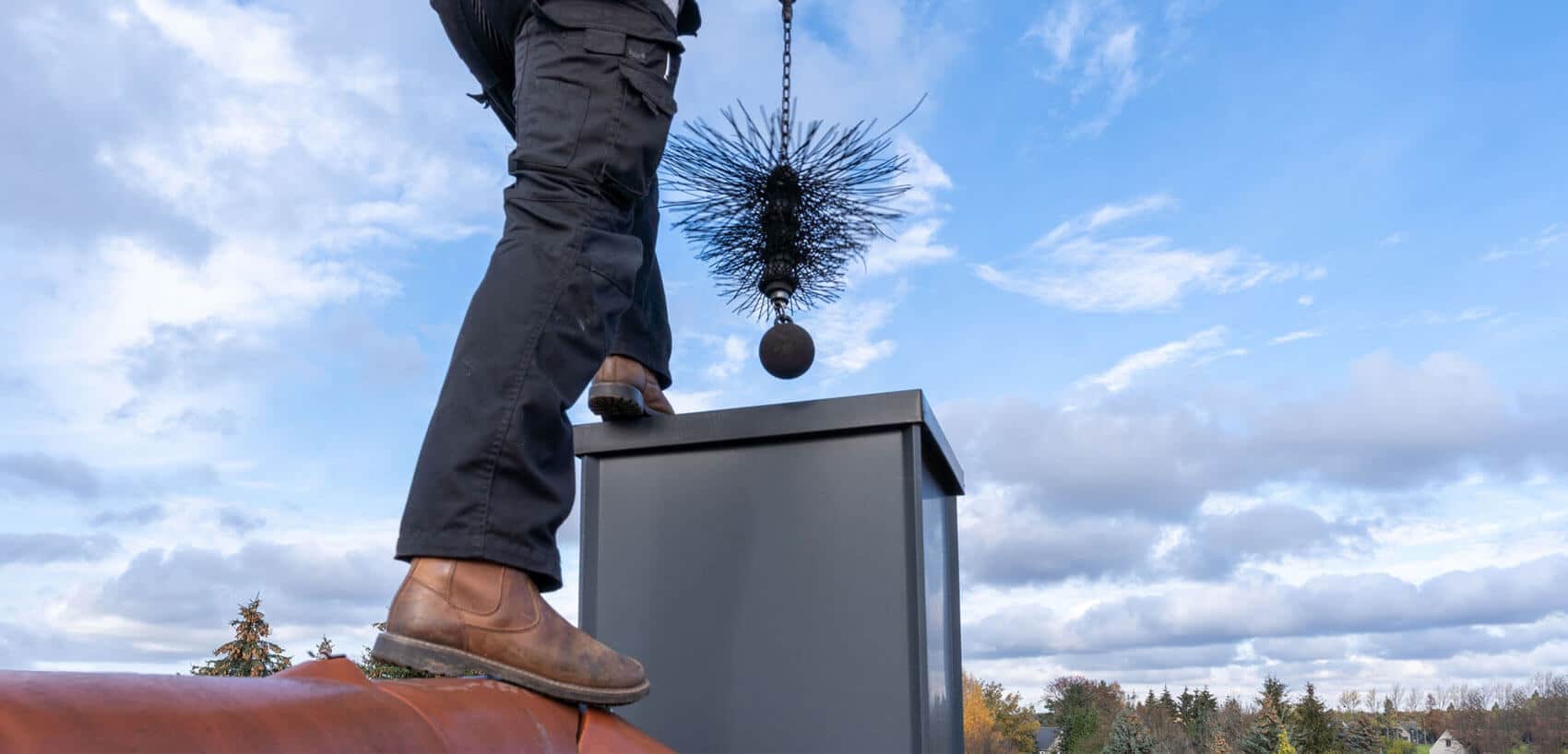
A professional chimney sweep measures the actual buildup, removes it with proper mechanical brushing, and inspects the flue for the hidden problems a good firewood habit can hide but not fix. Burn smart, and let a sweep confirm the inside is as clean as your woodpile suggests. Questions? Call us at 866-309-2130.
Frequently Asked Questions
Does burning oak or hardwood mean I can skip my chimney sweep?
No. Dense, seasoned hardwood produces less creosote than wet or soft wood, but every wood fire deposits some. The standard remains an annual inspection, with cleaning done when the flue's actual condition calls for it, regardless of how good your firewood is.
Is softwood like pine or fir always bad for my chimney?
Not always. Softwoods are more resinous and smoke heavily when wet, but Douglas fir and similar burn acceptably clean when they are very dry. Dryness is the deciding factor. A fully seasoned softwood fire beats a green hardwood fire for creosote every time.
How long does firewood need to season in your area?
Plan on at least six months, and often a year or more for dense hardwoods, especially given the region's damp air. Split it, stack it off the ground with only the top covered, and confirm it reads under 20% moisture before burning.
Can wet wood cause the hardened, glazed creosote?
Cool, smoky fires from wet or green wood are a major contributor to heavy buildup, which can bake into a glazed layer over time. Whether glaze is present, and how severe, can only be judged on-site. See our article on whether glazed creosote can be removed.
What's the single most important thing I can do to reduce creosote?
Burn dry wood, hot. Keep moisture under 20% and run bright, active fires rather than slow, smoldering ones. Low, damped-down burns produce the cool smoke that creosote is made from.