
By the Miles Chimney Sweep team · Published Aug 21, 2026
A fireplace that smells while it sits cold and unused is almost always two problems working together. First, the flue holds creosote, soot, and sometimes debris left over from past fires, and those deposits give off a smoky, sour odor whenever moisture reaches them. Second, and this is the part most homeowners miss, air is being pulled down the chimney and into the room instead of drifting up and out. That downward airflow carries the smell off the sooty flue walls and delivers it straight into your living space.
So cleaning the chimney removes the source of the odor, but the direction your chimney is breathing is often the real reason you smell it at all. Understanding both halves is the key to actually making the smell stop instead of just masking it.
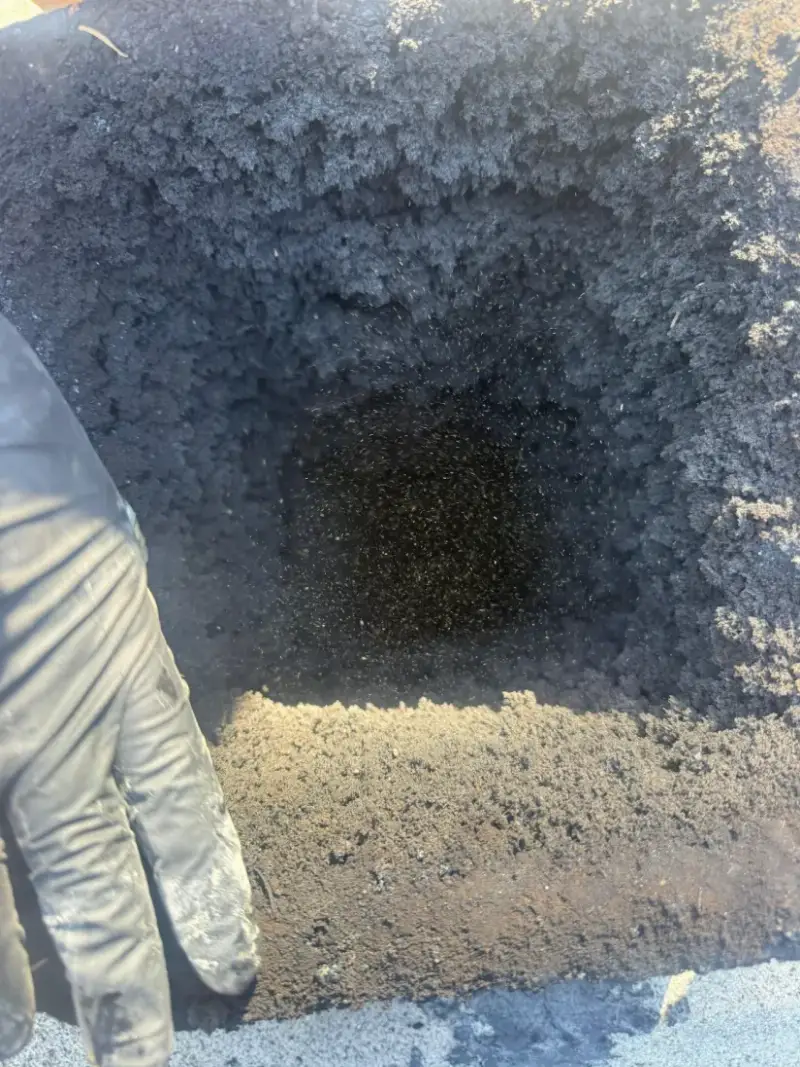
Where the smell actually comes from
Every wood fire leaves creosote and soot on the inside of the flue. That residue is naturally acrid, and when humidity or rain reaches it, the odor gets stronger and more sour. This is why a fireplace that seemed fine all winter suddenly smells in summer, when your area air is damp and warm. Along with creosote, a flue can collect leaves, twigs, or animal nesting material, all of which add a musty, rotting layer to the smell.
Creosote is also worth taking seriously beyond the odor. If you want to understand the deposit itself, see what creosote is and why it is dangerous and the different types of creosote that build up in a chimney.
Why you only smell it sometimes
Here is the piece that surprises people. The smell is not constant because the airflow is not constant. A chimney flue is one of the largest openings in your home's shell. When the pressure inside your house drops below the pressure outside, air gets pulled in through any opening it can find, and the flue is a big one. That incoming air travels down the chimney, sweeps across the creosote-coated walls, and pushes the odor into the room.
What creates that indoor pressure drop? Everyday things: a running clothes dryer, a kitchen or bath exhaust fan, a forced-air furnace, or a tightly sealed, well-insulated home that has few other places to draw make-up air. The Chimney Safety Institute of America notes that this reverse airflow, often called a downdraft, is a common driver of chimney odor. It is closely related to why smoke sometimes comes back into the house during a fire, and it is why the odor frequently gets worse in humid weather.
Warning signs worth noticing
- A smoky or sour smell that gets stronger on damp, warm days.
- Odor that appears or intensifies when the dryer, range hood, or bathroom fan is running.
- A musty, rotting note that suggests debris or an animal in the flue.
- Any actual smoke or fumes entering the room while a fire is burning. That is never just a nuisance and should be investigated promptly.
What you can safely do yourself
- Keep the damper fully closed when the fireplace is not in use, so there is less open pathway for air and odor.
- Run bath and kitchen fans and the dryer only as needed, and crack a nearby window if the smell spikes when they run, which helps balance the pressure.
- Make sure the chimney has a proper cap to keep out rain and animals, but do not climb onto the roof to check or install one. Leave rooftop work to a professional.
- Avoid pouring deodorizers or sealants down the flue as a permanent fix. They cover the symptom while the creosote and the airflow issue remain.
How a professional solves it
A thorough chimney cleaning removes the creosote, soot, and any debris that give off the odor in the first place, which is the necessary starting point. From there, a chimney professional can evaluate the airflow problem: checking the damper seal, recommending a top-sealing damper that closes the flue tightly from above, confirming the cap is doing its job, and talking through make-up air if your home runs negative. Because glaze severity, liner condition, and draft behavior can only be judged on site, an in-person look is the honest way to tell which fixes your chimney actually needs.
Remember the underlying distinction the industry draws: chimneys should be inspected annually regardless of how often you burn, and cleaned when the deposits or condition call for it. An odor is exactly the kind of sign that warrants having yours looked at. If you are not sure whether yours is due, our guide on how to know if your chimney needs cleaning can help.
Preventing it from coming back
- Keep up with annual inspection and clean the flue when it is warranted, so creosote never has time to accumulate into a strong-smelling layer.
- Burn only well-seasoned, dry wood, which produces far less creosote than green or wet wood.
- Maintain a tight-sealing damper and a sound chimney cap.
- Address household negative pressure if the odor tracks with fans and appliances running.
If you are dealing with a lingering smell in the your local area area, you can request a quote or call us at 866-309-2130 to have your chimney evaluated in person.
Frequently Asked Questions
Is the smell coming from the chimney or from the room itself?
Usually the chimney. The odor originates from creosote, soot, and sometimes moisture or debris inside the flue, and you notice it in the room only when air is flowing down the chimney into the house. If it is strongest right at the fireplace opening and fades as you step away, the flue is almost always the source.
Will a chimney cap stop the fireplace smell?
A cap helps by keeping out rain and animals, which reduces moisture and debris odors, but it does not address creosote already inside the flue or the negative-pressure airflow pulling odor into your home. It is one piece of the solution, not the whole fix. Do not climb onto the roof to inspect or install one yourself.
Does the smell mean my chimney is dangerous to use?
The odor itself points to creosote and airflow issues that should be evaluated, and creosote buildup does carry a fire risk. If you ever notice actual smoke or fumes entering the room during a fire, stop using the fireplace and have it inspected. Only an on-site professional can judge whether it is safe to burn.
Will a good cleaning permanently stop the odor?
A thorough cleaning removes much of the creosote and debris that create the odor, so it often reduces the smell significantly. If airflow is still pulling flue air into the house, though, some odor can linger, which is why a cap, a sealed damper, and correcting negative pressure round out a lasting fix.
Why does the smell get stronger when I run my dryer or bathroom fan?
Those appliances pull air out of your house, dropping the indoor pressure below the outdoor pressure. Air then gets drawn in through the chimney flue, sweeping across the sooty walls and carrying the odor into the room. It is a strong sign the airflow direction, not just a dirty flue, is part of the problem.