
A smoking fireplace means smoke is spilling into your living space instead of drawing up the flue. That is not something to live with - it stains walls, fills the room with fine particulates, and can signal a venting or safety problem. Our smoking fireplace repair service is about diagnosis first: an on-site technician watches how your fireplace actually behaves, then traces the smoke back to its cause. Common culprits include a cold or undersized flue, a closed or damaged damper, a rough smoke chamber, negative pressure inside the house, an obstruction, or simply wet wood. We identify which one is yours and repair it.
What a smoking fireplace actually is
Your fireplace is a venting system. A healthy fire creates hot gases that rise, and the chimney's height and warmth pull those gases up and out. When that upward pull - the draft - is weaker than the volume of smoke the fire makes, the excess has nowhere to go but out the front of the firebox and into your room. Smoking fireplace repair is the work of finding the specific weak link in that system and correcting it.
What we check and cover
Because several very different problems produce the same symptom, we work through them methodically on site:
- Damper - a partly closed, warped, or rusted-shut damper chokes the flue before smoke ever reaches the chimney.
- Flue and chimney draft - a cold flue, an undersized or oversized flue, or a chimney that is too short can all leave the draft too weak to clear the fire.
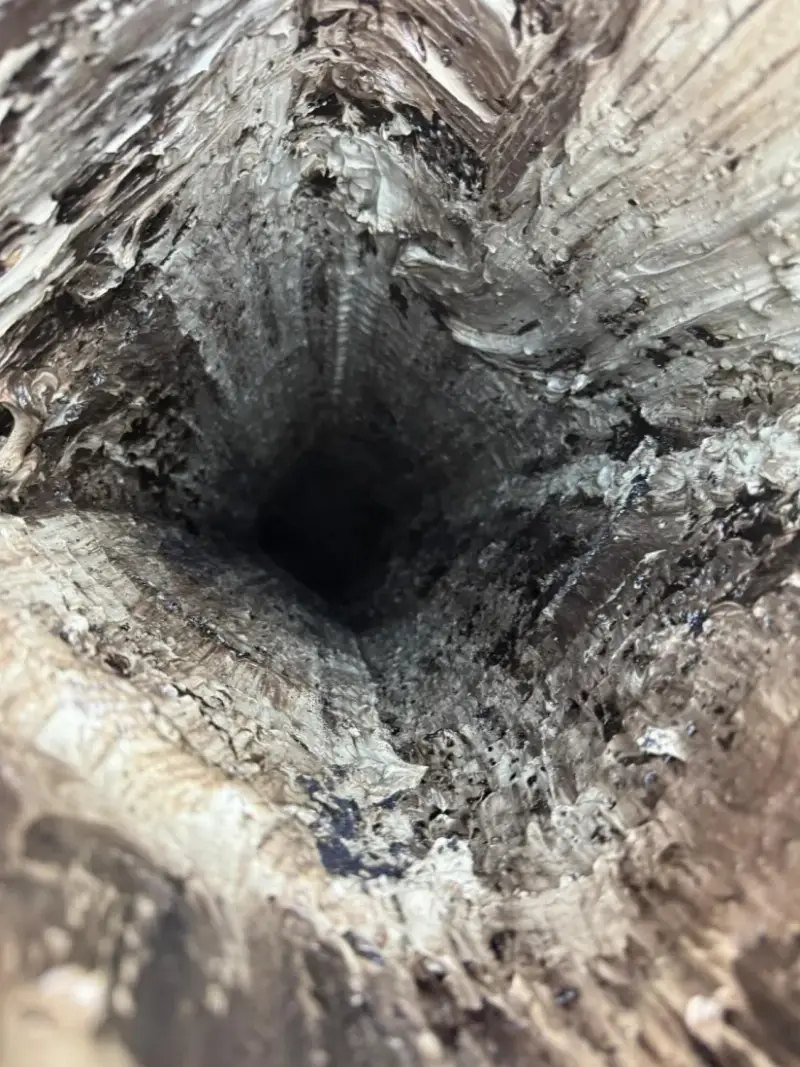
- Smoke chamber - the funnel-shaped space just above the damper. Rough brick, sharp steps, or damaged parging create turbulence that stalls the rising smoke and pushes it back into the room.
- Obstruction and buildup - creosote layers, debris, or a nest narrow the passage and shrink the effective flue.
- House pressure - tight modern homes, kitchen and bath exhaust fans, and HVAC systems can pull the house into negative pressure that reverses the chimney.
- Fuel and operation - wet or unseasoned wood, an overloaded firebox, or a fire built too far forward all make smoke a fireplace was never going to clear.
This page is about a fireplace that smokes when you are burning it. If the underlying issue is a persistent reverse draft that pushes cold air and odors down even when there is no fire, that is chimney downdraft repair; if the smoke chamber itself is misshapen or its parging has failed, that is smoke chamber repair. We name those here so you know they are related, but each is its own scope of work - the diagnosis tells us which one your fireplace needs.
Signs you have a smoking fireplace problem
- Smoke curls out of the top of the fireplace opening when you light a fire.
- The room fills with haze or a smoky smell every time you burn.
- Soot staining appears on the wall or mantel above the opening.
- The fire is sluggish, hard to start, or dies down without a strong draw.
- You feel cold air spilling out of the fireplace between uses.
For more on why this happens, see our articles on why smoke comes back into your house and what causes a chimney downdraft.
What to expect from the service
A technician arrives and, where it is safe, observes the fireplace in use to see how and when the smoke spills. We inspect the damper, firebox, smoke chamber, and accessible flue, and we consider how the rest of the house is affecting pressure. From there we explain what we found and the options - which may range from clearing an obstruction or freeing a damper, to correcting a smoke chamber, adding a smoke guard, or addressing draft and pressure issues. You get a plain explanation and a written quote before any repair begins.
Why this needs a professional
The symptom is always the same, but the cause is never obvious from the living room, and each cause has a different fix. Guessing wrong wastes money and leaves you breathing smoke. A trained technician can tell an undersized flue from a smoke chamber issue from a negative-pressure house - distinctions you cannot make by watching the smoke alone. Because a smoking fireplace can also mean combustion gases are not venting safely, it is worth getting right the first time. If you ever smell gas near a gas appliance, leave the home and call your gas utility or 911 from outside; do not attempt gas-line work yourself.
Serving your local area
wet weather works against draft. Cool, damp air and mild temperature differences between inside and outside can leave a flue reluctant to establish a strong pull, and the region's well-sealed, energy-efficient homes are especially prone to the negative-pressure problems that make a fireplace smoke. We diagnose with local conditions in mind for homeowners in your area and the surrounding communities.
Frequently Asked Questions
Why does my fireplace only smoke when I first light it?
A cold flue holds a column of dense, cool air that resists the fire's rising smoke until the chimney warms up. The startup spill is often a draft problem, but if it continues once the fire is established, the cause is usually elsewhere - flue size, smoke chamber, or house pressure - which is why an on-site look matters.
Can opening a window really stop my fireplace from smoking?
Sometimes, temporarily. If cracking a nearby window fixes it, that points to negative pressure in the house rather than a chimney fault - exhaust fans or HVAC pulling harder than the flue can supply. It is a clue for diagnosis, not a permanent fix, and it tells the technician where to focus.
Is a smoke guard a real fix or just a band-aid?
A smoke guard reduces the height of the fireplace opening so the existing draft can clear the smoke, and for a genuinely undersized flue it can be a proper, lasting solution. Whether it is right for your fireplace depends on the diagnosis - it is one tool among several, not a universal answer.
Does a gas fireplace smoke the same way a wood one does?
Gas fireplaces do not produce wood smoke, but they still vent combustion byproducts, and a blocked or poorly drawing vent is a safety concern. If you see soot, smell exhaust, or your CO alarm sounds, stop using it and have a licensed technician inspect it. Never disassemble gas lines or valves yourself.