
Chimney downdraft repair addresses a specific problem: air moving the wrong direction, pushing cold drafts or smoke down the flue and into your living space instead of drawing it up and out. A healthy chimney pulls a steady updraft. When that reverses, the cause is almost always one of a handful of things, a flue that terminates too low, a blocked or missing cap, negative pressure inside a tight home, or a stuck damper. Because those causes look identical from your armchair but call for very different fixes, downdraft work starts with an on-site diagnosis. We identify what is actually driving the reversal, then correct it so your fireplace drafts the way it should.
What a downdraft actually is
Your chimney works on draft, the natural upward pull created when warm, light flue gases rise and pull fresh air in behind them. A downdraft is that process running in reverse. Instead of rising, air sinks down the flue, carrying cold outdoor air, smoke, or odor into the room. You may notice it only on windy days, only when the furnace kicks on, or every time you try to light a fire.
Because several unrelated forces can each reverse a draft, downdraft repair is diagnostic before it is mechanical. The fix for a chimney that is simply too short is nothing like the fix for a house under negative pressure, and guessing wastes money. Our first job is to determine which cause, or combination, is at work.
Common causes we check
- A flue that terminates too low. National fire code (NFPA 211, echoed in the residential building code) sets the widely used "3-2-10" rule: the chimney should rise at least 3 feet above where it exits the roof and at least 2 feet above anything within 10 feet. A chimney that falls short sits in the wind's turbulence zone, where gusts can push air straight back down.
- A blocked, damaged, or missing cap. A crushed cap, a debris-clogged screen, or a nest can choke the opening enough to stall the updraft. A missing cap leaves the flue fully exposed to wind and rain.
- Negative pressure inside the house. Kitchen and bath exhaust fans, a running clothes dryer, or a tight, well-sealed home can pull the interior below outdoor pressure. The chimney then becomes the easiest place for makeup air to enter, so it flows in rather than out. This "stack effect" is especially common in modern, weatherized homes.
- A cold exterior chimney. A masonry stack on an outside wall can hold a column of cold, heavy air that simply sinks. Until that column is warmed and reversed, the fire struggles to start and smoke spills back.
- A damper or flue restriction. A damper that will not fully open, or an undersized or partially obstructed flue, limits how much air can move and makes reversal easy.
Signs you have a downdraft problem
- Cold air pouring out of the fireplace opening when no fire is burning.
- Smoke rolling back into the room when you light or tend a fire.
- A persistent smoky or musty smell, worse on damp or windy days.
- A fire that is hard to start or will not stay lit.
- Draft trouble that changes with the weather or when appliances turn on.
These overlap with other airflow issues, which is exactly why an on-site look matters. For the underlying mechanics, our guides on what causes a chimney downdraft and why smoke comes back into your house go deeper.
What to expect from the visit
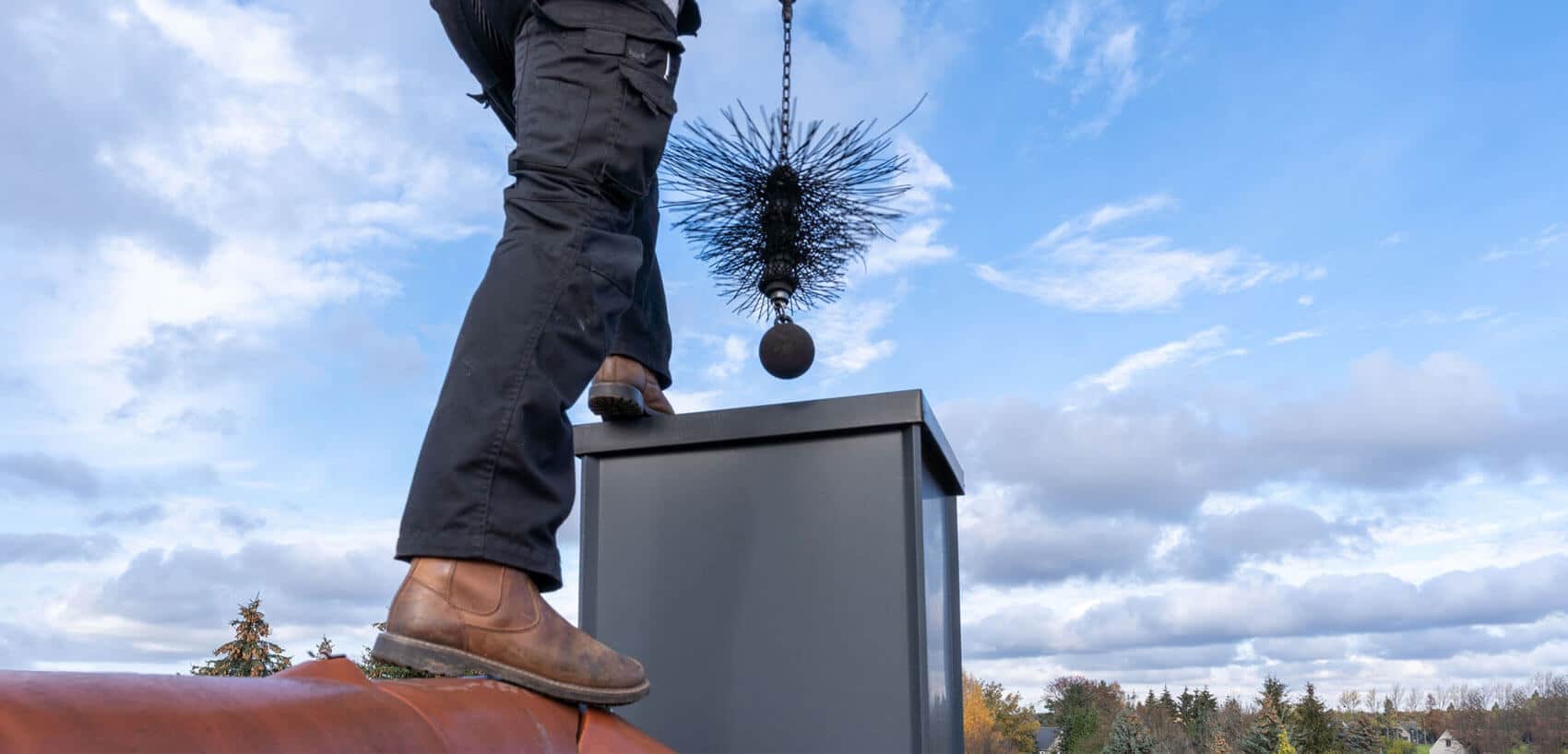
A technician evaluates the chimney inside and out: measuring termination height relative to the roofline and nearby obstructions, inspecting the cap and crown, checking the damper's operation, and looking for blockages or liner problems that restrict flow. We also consider the house itself, since exhaust fans and air sealing can be the real culprit even when the chimney is sound. From there we explain what is driving the reversal and lay out the options.
Repairs depend entirely on the finding. Raising a short flue, fitting or replacing a cap, clearing an obstruction, freeing a damper, or advising on makeup air and appliance use are all common outcomes. Some fixes are quick; others, like extending masonry, take more planning. We give you an honest scope and a quote rather than a one-size answer.
Why this is professional work
Downdraft causes hide behind one another. A cap looks fine from the ground while a flue sits two feet too short; a chimney passes a visual while household pressure quietly reverses it every evening. Sorting real cause from coincidence takes measurement, and often a look up the flue. Diagnosis also involves roof access and, at times, work at height, which is not safe DIY territory. Getting the cause right the first time is what separates a lasting fix from a string of gadgets that never quite solve it.
your local area homes
Our wet, cool climate makes downdrafts more noticeable. Long heating seasons mean chimneys sit cold for months, and damp air carries odor back into the room more readily on a downdraft. Tightly built and weatherized many homes are also prone to the negative-pressure version of the problem, where the house out-competes the chimney for air. We factor the local conditions into every diagnosis rather than treating your chimney like it sits in a dry climate.
Frequently Asked Questions
Is a downdraft dangerous or just annoying?
It can be both. A cold draft and occasional smoke spillage are mostly a comfort and cleanliness nuisance, but the same reversal can pull combustion byproducts, including carbon monoxide, back into the home when an appliance or fire is running. That is why we treat persistent downdraft as a safety item, not only a comfort one, and why a working carbon monoxide alarm matters.
Will a new chimney cap fix my downdraft?
Sometimes, but not always. If a damaged or missing cap is genuinely the cause, correcting it can solve the problem. If the real driver is a short flue or negative pressure inside the house, a cap alone will not fix it, and a specialty draft-increasing cap only helps in certain situations. That is exactly why we diagnose the cause before recommending a part.
Can you diagnose my downdraft over the phone or from photos?
No. Downdraft causes look identical from a distance and often stack on top of one another, so an accurate answer requires measuring flue height, checking the cap and damper, and sometimes looking up the flue. We can talk through what you are seeing to prepare, but the actual diagnosis happens on site.
Why does my downdraft only happen on windy days or when a fan runs?
That pattern is a strong clue about the cause. Wind-driven reversals often point to a flue that terminates too low and sits in the roof's turbulence zone. Reversals that start when an exhaust fan, dryer, or furnace runs usually point to negative pressure inside the house. Noting when it happens helps us zero in faster during the visit.