
By the Miles Chimney Sweep team · Published Aug 21, 2026
A chimney downdraft happens when air flows the wrong way, down the flue and into your room instead of up and out. At its core, it is a contest of air pressure. A working chimney relies on warm, buoyant flue gases being lighter than the cooler, denser air outside; that difference is what pulls smoke upward. A downdraft occurs when something reverses or overpowers that pull: your house is pulling harder than your chimney, the flue is too cold to lift anything, wind is pushing down the top, or the chimney simply is not tall enough to reach clean air.
Understanding the physics is the fastest way to fix it, because the same symptom, smoke rolling back into the room, can come from four very different causes. Here is how air actually moves through your home and chimney.
Your house and your chimney compete for air
Every chimney needs a supply of air to move smoke upward. So do your furnace, water heater, dryer, kitchen range hood, and bathroom fans. When your home is sealed tightly, which describes a great deal of newer newer construction, there may not be enough incoming air for everything at once. The appliance with the strongest pull wins, and a fireplace with a cool flue is often the weakest competitor in the house.
When the pressure inside drops below the pressure outside, your home looks for makeup air anywhere it can find it. An unused chimney is a wide-open hole to the outdoors, so the house happily pulls cold outside air down the flue. That is negative pressure, and it is one of the most common downdraft causes.
Common negative-pressure culprits
- Powerful kitchen range hoods, high-capacity hoods can depressurize a room enough to overpower a fireplace on their own.
- Bathroom and whole-house exhaust fans running while a fire is lit or a chimney is cold.
- Clothes dryers, which push a surprising volume of air outdoors.
- Tight, well-insulated homes with few natural air leaks to supply makeup air.
- A second chimney or vent that draws better and steals the air your fireplace needs.
The stack effect: warm air rises, and it pulls
Warm air is lighter than cold air, so in winter the heated air inside your home rises and tries to escape through the upper levels. This is the stack effect. As that warm air leaves high in the house, replacement air gets pulled in low, through the basement, crawlspace, and any opening near the bottom, including a ground-floor or basement fireplace. In tall homes and split-levels, the stack effect can be strong enough to reverse a fireplace's draft entirely, especially before a fire has warmed the flue.
A cold flue has nothing to lift
Draft is created by the temperature difference between the flue gases and the outside air. If the masonry and the column of air inside the flue are stone cold, because the fireplace has sat unused, or the flue runs up a cold exterior wall, there is no warm, buoyant column to start the upward pull. Cold air is dense, and a chimney full of it can actually flow downward until it is warmed. This is why the first minutes of a fire are the most likely to smoke, and why a cold chimney and negative pressure so often combine into a stubborn backdraft. We cover the symptom side of this in detail in why smoke comes back into your house.
Height, roofline, and nearby obstructions
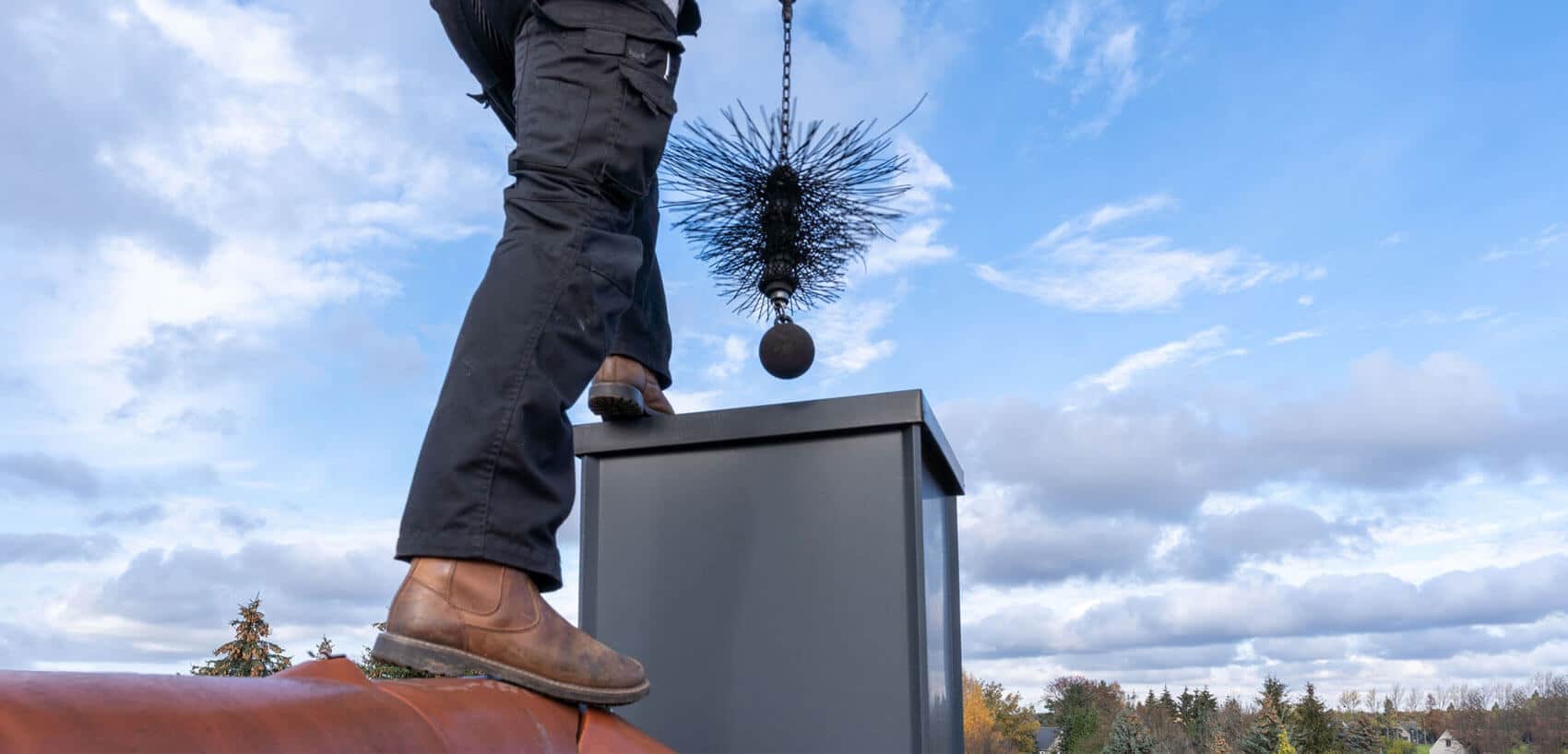
Wind is the outdoor half of the equation. When wind hits a nearby roof peak, a taller section of the house, a dormer, or a stand of tall evergreens, common on wooded local lots, it can create a zone of turbulence and positive pressure right at the chimney top. Instead of drawing across the opening, the wind pushes down into it. This is most likely when the chimney is too short relative to what surrounds it.
The long-standing guideline is that a chimney should extend at least three feet above the roof where it exits and at least two feet higher than anything within ten feet of it. A chimney that falls short of that clearance sits in disturbed air and is prone to wind-driven downdrafts.
Warning signs you are dealing with a real downdraft
- Smoke rolls into the room when you first light a fire, then settles once things warm up.
- You feel a steady flow of cold air spilling out of the fireplace when it is not in use.
- Downdrafts worsen on windy days or when an exhaust fan is running.
- A lingering smoky or campfire smell inside, strongest in damp or humid weather.
What you can safely do, and where a pro comes in
There are safe steps a homeowner can take from inside. Provide makeup air by cracking a nearby window before lighting a fire. Warm a cold flue by holding a rolled, lit newspaper up near the damper for a minute, or by running the fireplace's own priming routine, before adding logs. Turn off competing exhaust fans while you get the fire established. Burn only dry, well-seasoned wood, which the EPA's Burn Wise program recommends because it produces hotter, cleaner-burning fires that establish draft faster. If you fight a weak, smoky fire regularly, our guide to why a fire is hard to start or keep burning pairs well with this one.
What you should not do is climb onto the roof to assess height, cap, or clearance yourself. Whether the fix is a taller flue, a wind-directional or anti-downdraft cap, a top-sealing damper, or correcting an oversized flue is a diagnosis that belongs on-site. The Chimney Safety Institute of America and NFPA 211 also call for an annual chimney inspection regardless of how often you burn, and a downdraft that will not quit is exactly the kind of thing that inspection is meant to catch. A technician can measure your draft, evaluate the roofline, and separate a house-pressure problem from a chimney-construction problem before you spend money on the wrong fix.
Frequently Asked Questions
Why does my fireplace only downdraft when it is not in use?
That cold air spilling out of an idle fireplace is usually the stack effect and negative pressure at work. With no fire warming the flue, the cold, dense column of air inside simply flows downward, and the house pulls outdoor air down the open chimney to replace air leaving elsewhere. Warming the flue and providing makeup air before lighting a fire typically reverses it.
Can a taller chimney really fix a downdraft?
It can, when the cause is wind and inadequate height. If the chimney sits below nearby roof peaks or tall trees, its top is in turbulent air and wind pushes down into it. Whether added height, a wind-directional cap, or another solution is right depends on an on-site look at your roofline, it is not something to judge or attempt from the roof yourself.
Is a downdraft dangerous, or just annoying?
Smoke entering the room should always be investigated, never dismissed as a nuisance. Beyond the odor and soot, a downdraft can pull combustion byproducts back into your living space. For any fuel-burning appliance, working carbon monoxide alarms are essential, and persistent backdrafting warrants a professional check rather than repeated workarounds.
Why is my downdraft worse in a brand-new, energy-efficient home?
Tightly sealed modern homes have very few natural air leaks, so when a range hood, dryer, or bath fan pushes air out, there is little makeup air coming in. The house then pulls replacement air down the easiest opening, often the chimney. The tighter the home, the more it matters to supply dedicated combustion or makeup air near the fireplace.
Does burning wet wood cause downdrafts?
Wet or unseasoned wood does not cause a downdraft by itself, but it makes one much likelier to bite. Damp wood burns cooler and struggles to heat the flue, so the chimney is slow to establish an upward draft, the exact window when negative pressure and a cold flue can send smoke into the room. Dry, seasoned wood builds draft faster and cleaner.