
By the Miles Chimney Sweep team · Published Aug 21, 2026
It depends on the crack. The firebox is the chamber where your fire actually burns, and fine hairline cracks in its firebrick, mortar, or refractory panels are extremely common, usually cosmetic, and often safe to keep using. What changes the answer is depth and width: a deep or wide crack, an open mortar joint, or a gap where a refractory panel has split can let extreme heat pass through to the wood framing behind and around your fireplace, and that is a genuine fire risk. The tricky part is that a hairline and a hazard can look nearly identical from your armchair, so the crack that matters is often the one you would never think to worry about.
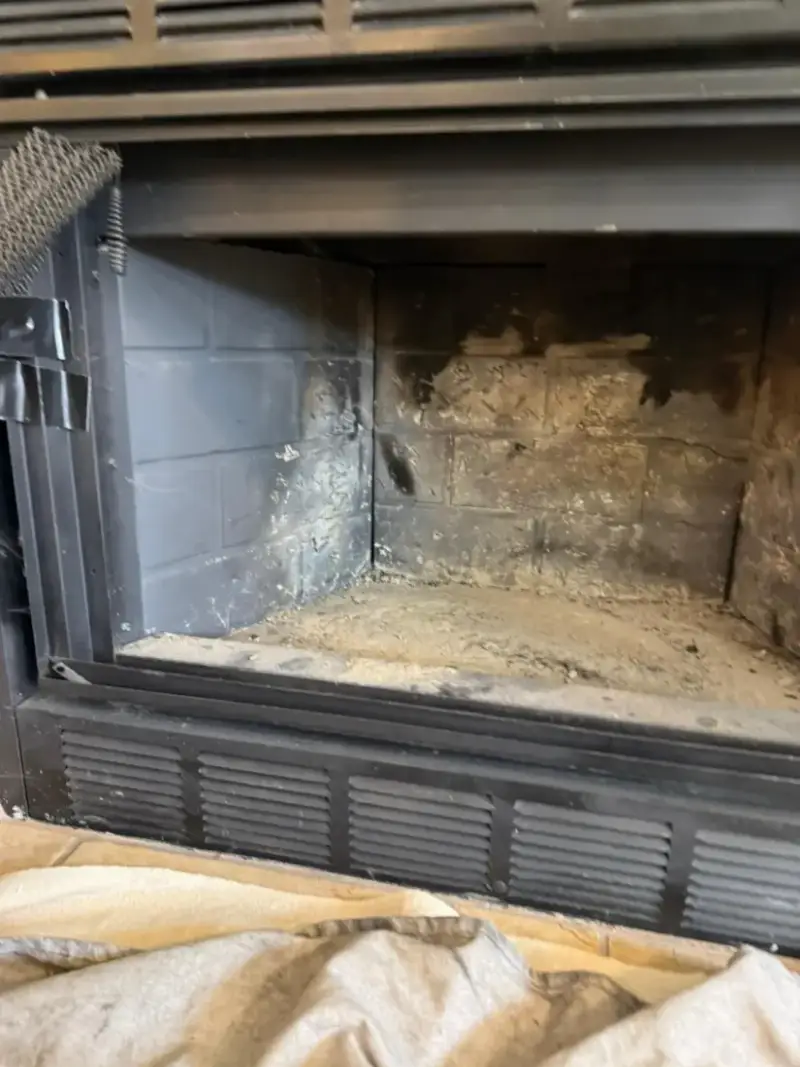
Why a firebox cracks in the first place
Your firebox absorbs enormous, repeated temperature swings. A wood fire pushes surface temperatures into the hundreds of degrees, then everything cools back down overnight. That expand-and-contract cycle, year after year, is the single biggest reason masonry and refractory materials develop cracks. Other common causes include a sudden dousing with water to put out a fire, oversized or overly hot fires, settling of the chimney structure, and simple age. None of that is a sign you did something wrong. It is what fireboxes do over time.
The two most common firebox types crack differently. A masonry firebox is built from individual firebricks joined with heat-resistant mortar, so it tends to fail at the mortar joints or through a split brick. A prefabricated (factory-built) firebox uses molded refractory panels, which develop surface cracks and can eventually split or crumble at an edge.
Which cracks are dangerous, and which are not
The distinction comes down to whether heat can travel through the crack to something that can burn. A very thin surface line stays within the firebrick and poses little risk. A crack that opens up, deepens, or runs all the way through gives heat a path toward the framing, subfloor, or wall behind the fireplace.
- Usually cosmetic: fine hairlines you cannot fit a fingernail into, light surface spidering on a refractory panel, minor discoloration.
- Get it evaluated: a crack wide enough to slip a coin edge into (roughly 1/16 inch or more), a mortar joint that is crumbling or missing, a panel surface worn or flaking noticeably, or a crack that has grown between seasons.
- Stop using it now: a gap you can see daylight or metal through, a loose or shifting brick, a refractory panel that has split into pieces, or any crack paired with smoke or heat escaping where it should not.
Warning signs worth acting on
Beyond the crack itself, watch for these:
- Pieces of firebrick, mortar, or refractory material falling into the firebox or hearth.
- A crack that is visibly longer or wider than last season.
- Smoke staining or scorch marks appearing outside the firebox opening.
- A stronger smoke smell in the room, which can signal gaps in the firebox or smoke chamber above it.
- Any sign of heat, discoloration, or a hot spot on the wall or mantel surround.
What you can safely do yourself
You can look. Let the firebox cool completely, then inspect the back and side walls, the floor, and every mortar joint with a flashlight. Note the location and rough width of anything you find, and take photos so you can compare over time. You can also gently clean out loose ash and debris. What you should not do is patch a structural crack with hardware-store caulk or mortar and assume the problem is solved, or try to judge from photos alone whether the framing behind the firebox is safe. A firebox crack is one of those defects that genuinely needs an on-site look, and often a camera to check the smoke chamber and flue above it, because damage frequently extends past what you can see from the room.
How a professional fixes it
The right repair depends on the material and severity. Deteriorated mortar joints in a masonry firebox are typically raked out and repacked with refractory (high-heat) mortar, not ordinary mortar, which cannot survive firebox temperatures. Cracked or split refractory panels in a prefabricated fireplace are usually replaced with panels matched to the unit rather than patched, because a compromised panel can let heat reach the metal shell and framing behind it. In more serious cases, a cracked liner or smoke chamber above the firebox may also need attention, which is why a cracked chimney liner should always be evaluated for safety as part of the same visit. If deep firebox damage is found, the fix falls under firebox repair, and a technician can tell you on-site whether a repair or a more extensive rebuild is appropriate.
Prevention that actually helps
You cannot stop a firebox from ever cracking, but you can slow it down. Burn only seasoned, dry wood, keep fires a reasonable size for the firebox, and never pour water on a fire to extinguish it, because the thermal shock is hard on masonry. Most importantly, follow the annual standard: the Chimney Safety Institute of America and NFPA 211 both call for a professional inspection at least once a year, which is when small firebox cracks get caught before they become a hazard. That yearly look is also your best defense against a related hidden danger, since carbon monoxide can enter through the chimney when the firebox, damper, or flue are not sound. Regular use plus a yearly inspection is far cheaper than waiting for a crack to force a full rebuild.
Frequently Asked Questions
Can I still use my fireplace with a small hairline crack in the firebox?
Often yes. A fine hairline you cannot catch a fingernail in and that has not changed between seasons is usually cosmetic. That said, the only way to be sure a crack is shallow rather than deep is an on-site inspection, so mention it at your next annual visit and stop use if it starts widening or lengthening.
How wide does a firebox crack need to be before it is a problem?
As a rough field guide, a crack you can slip a coin edge into, roughly 1/16 of an inch or wider, is worth having evaluated, and anything you can see daylight, metal, or the framing behind is a reason to stop using the fireplace immediately. Width is not the whole story, though; depth and whether the crack runs all the way through matter just as much, which is why a technician checks it in person.
Is a cracked refractory panel repaired or replaced?
Cracked or split refractory panels in a factory-built fireplace are generally replaced with panels matched to that unit rather than patched, because a compromised panel can let heat reach the metal shell and surrounding framing. A masonry firebox, by contrast, is often repaired by repacking the mortar joints with high-heat refractory mortar. A technician confirms which applies to your fireplace on-site.
Can I patch a firebox crack myself with mortar or caulk?
It is not recommended for anything beyond the most superficial surface line. Ordinary hardware-store mortar and caulk are not rated for firebox temperatures, and a cosmetic patch can hide worsening damage that reaches the framing. Firebox repairs use specialized refractory materials and a professional assessment of how far the damage extends.
Does a cracked firebox mean I need a whole new fireplace?
Usually not. Many firebox cracks are handled with targeted repairs like repointing mortar joints or replacing a single panel. A full rebuild is reserved for extensive structural damage. Only an on-site inspection can tell you which end of that range your fireplace is on.